Rainfall Brings Relief to Northeast India After Prolonged Dry Spell
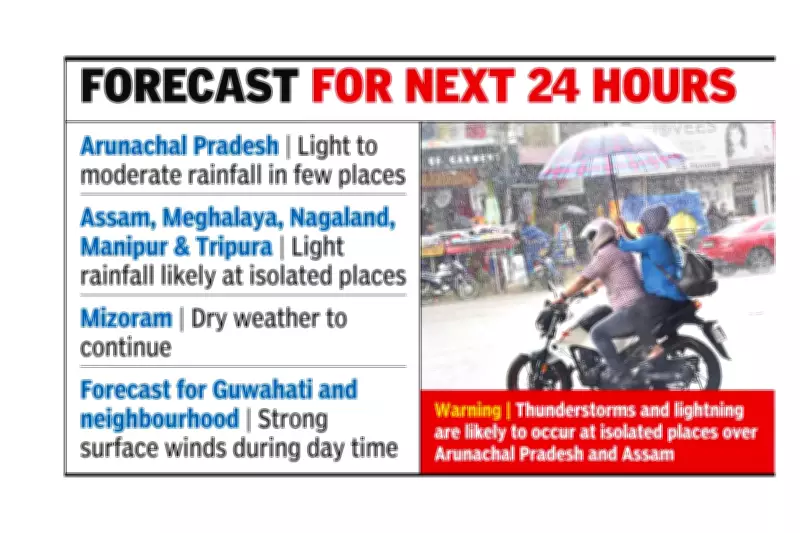
Guwahati: In a welcome change, Arunachal Pradesh and parts of upper Assam have begun experiencing rainfall, signaling an end to the recent dry spell in the northeast region. Meteorological officials announced on Sunday that while these areas are now receiving precipitation, most parts of Assam, including lower regions, are expected to see rain only after the Holi festival.
Detailed Rainfall Patterns from February 25 to March 1
According to data from the India Meteorological Department (IMD), daily rainfall in Arunachal Pradesh showed a steady increase in both coverage and intensity over the past week. On February 25, isolated areas received light rain, with a maximum of 3.5mm recorded. February 26 and 27 saw light rain at a few places, with peak readings of 11.5mm and 6.0mm respectively.
By February 28, light to moderate rain was observed at many locations, with Wakro receiving the highest amount at 25.0mm. On Sunday, March 1, Arunachal Pradesh experienced light to moderate rain at most places, with Sarli recording the peak at 18.0mm.

In upper Assam, IMD data from February 25 to March 1 indicated light rain at one or two places, with Majuli receiving the highest rainfall of 11.0mm on Sunday.
Meteorological Causes and Future Predictions
A senior IMD official explained that the rainfall in the northeast, particularly in Assam and Arunachal Pradesh since last week, was primarily due to cyclonic circulations observed over central Assam or northeast Assam adjoining Arunachal Pradesh in the lower tropospheric levels. However, he added that for lower Assam, including Guwahati and other parts of the region, rainfall may still be a few days away.
IMD predictions for the pre-monsoon period (March to May) indicate that both maximum and minimum temperatures in the northeast are expected to remain above normal. Additionally, rainfall in March is likely to be below normal, raising concerns about ongoing dry conditions.
Impact on Public Health and Daily Life
The prolonged lack of rain has significantly disrupted daily life in Guwahati and other parts of Assam, with dust accumulation adversely affecting public health. Many individuals, including working professionals and children, have visited doctors for acute respiratory illnesses and allergy-related problems.
Kasturi Bhattacharya, a homemaker from the Bharalumukh area, expressed her concerns: "Temperature is rising already and dust swept everything in the city. We hope for some rain during Holi. Otherwise, we may keep ourselves confined to our homes due to fear of allergy."
Temperature Forecast and Regional Outlook
On Sunday, the IMD forecast a gradual rise in maximum temperatures by 2-3°C across the northeast over the next four days, with no significant change expected during the following three days. This warming trend, combined with below-normal rainfall predictions, underscores the need for continued monitoring of weather conditions in the region.
As the northeast navigates this transitional period, residents remain hopeful for more widespread rain to alleviate dust-related health issues and restore normalcy to daily activities.