

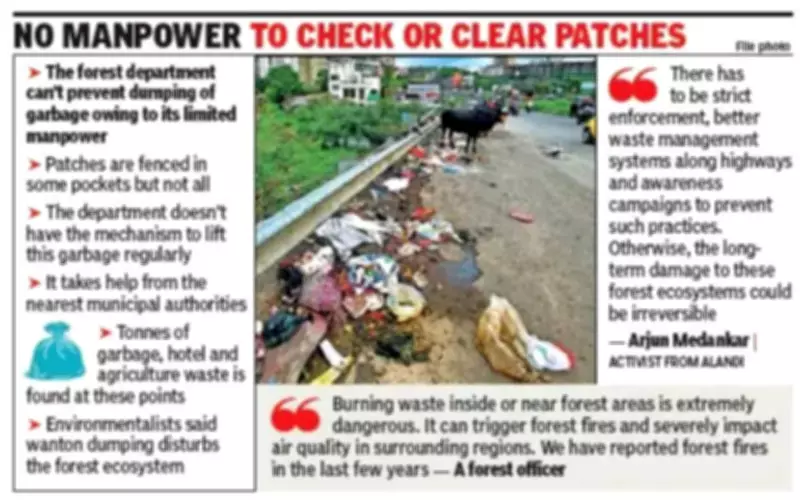
Pune Forest Garbage Crisis: Wildlife at Risk from Unchecked Dumping
Unchecked garbage dumping across forest pockets in the fringe areas of Pune and Pimpri Chinchwad municipal limits is emerging as a serious ecological concern, endangering wildlife and disrupting the natural balance of these green zones. Forest officials and environmentalists have issued urgent warnings about the escalating problem, which threatens both natural ecosystems and human health.
Highway Corridors Become Dumping Grounds
The problem is particularly visible along major highways, including:
- Pune-Nashik highway
- Mumbai-Bengaluru route
- Old Pune-Mumbai highway
- Pune-Solapur corridor
- Pune-Ahmednagar road
Along these transportation arteries, mounds of plastic, food waste, and debris have become a common sight within or near forested patches. Officials from the forest department confirm the situation has worsened significantly over the past few years, with little mechanism in place to remove the accumulating waste.

Ecological Threats and Wildlife Endangerment
"These dumping sites are not just an eyesore but a major ecological threat," emphasized Mangesh Tate, the assistant conservator of forest for Pune division. "Wildlife often consumes plastic and other harmful materials, which has proven fatal in several instances reported in the district."
The casual attitude of commuters and locals is compounding the issue dramatically. People on their daily commute routinely throw garbage into these forest pockets without understanding the ecological consequences. This irresponsible behavior directly disturbs the food chain and habitat of numerous animal species.
Environmentalists have identified multiple ways this dumping harms ecosystems:
- Alters soil composition and fertility
- Contaminates natural water sources
- Attracts scavengers and changes wildlife behavior patterns
"When animals begin feeding on waste, it leads to long-term ecological imbalance," explained an environmental activist working in the region. "Herbivores ingest plastics, while carnivores are drawn closer to human settlements, increasing the risk of human-wildlife conflict."
Burning Garbage Creates Additional Hazards
Adding to the concern is the frequent burning of dumped garbage by unidentified individuals. Forest officials report such fires often continue for days, releasing toxic fumes and posing risks not only to wildlife but also to residents of nearby villages.
"The smoke from burning garbage lingers for days and causes breathing issues, especially among children and the elderly," said Nagesh Yelwande, a resident from Moi village living near one of the affected forest patches along the Pune-Nashik highway. "We have complained multiple times, but there is no regular clean-up mechanism."
Multiple Sources Contribute to the Problem
Farmers have also been contributing to the dumping, often disposing of agricultural waste and leftover produce in these areas. While biodegradable waste may seem less harmful initially, experts caution that it still disrupts natural ecosystems when dumped in large quantities, altering nutrient cycles and attracting non-native species.
The forest department faces significant challenges in addressing the crisis:
- Limited manpower prevents effective monitoring of dumping activities
- Patches are fenced in some areas but coverage remains incomplete
- No regular mechanism exists for garbage removal from forest areas
- Department must rely on nearest municipal authorities for assistance
Urgent Calls for Coordinated Action
Environmentalists stress the critical need for coordinated action between municipal corporations, the forest department, and local communities. Forest officials echo this urgency, warning that without immediate intervention, the region's already fragile forest zones could face further degradation, putting both wildlife and human populations at increased risk.
"We have even registered cases against violators and asked them to clean the areas," stated Tate. "It is practically impossible for us to deploy forest guards at each such location. People also need to adhere to basic civic discipline."

Environmental activists emphasize that burning waste inside or near forest areas is extremely dangerous, as it can trigger forest fires and severely impact air quality in surrounding regions. "There has to be strict enforcement, better waste management systems along highways, and awareness campaigns to prevent such practices," urged Arjun Medankar, an activist from Alandi. "Otherwise, the long-term damage to these forest ecosystems could be irreversible."
The situation represents a critical environmental challenge requiring immediate attention from authorities, communities, and individual citizens to protect Pune's valuable forest ecosystems from further degradation.





