

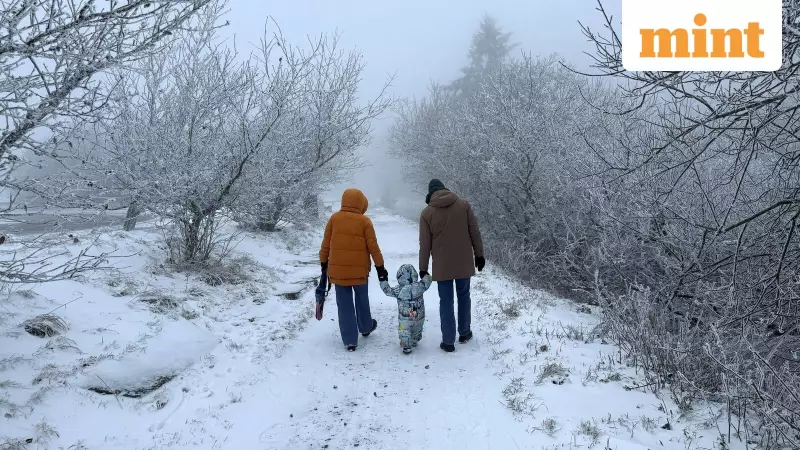
A significant atmospheric shift is unfolding high above the North Pole, an event that could dramatically reshape global weather patterns as we head into December. Scientists are closely monitoring a major disruption in the stratosphere that may pave the way for a colder and snowier start to winter across large sections of the Northern Hemisphere.
What is Happening to the Polar Vortex?
Think of the stratospheric polar vortex as a powerful, fast-moving ring of wind that acts like a fence, corralling the frigid Arctic air at the top of the world. Right now, this vortex is undergoing a dramatic change. A phenomenon known as a sudden stratospheric warming event is causing temperatures high in the stratosphere to rise sharply.
According to Amy H. Butler, a meteorologist at the National Oceanic and Atmospheric Administration who spoke with CNN, this warming high above us is weakening the polar vortex. The winds within this vortex could even reverse direction. This event is particularly notable because it is one of the earliest significant disruptions to the polar vortex since satellites began their monitoring.

Potential Impacts on Global Weather
When the polar vortex weakens, its grip on the cold air loosens. This allows icy Arctic air to plunge southwards into populated regions like the Lower 48 of the United States, Europe, and Asia. The consequences of this can be severe, often preceding the strongest polar vortex cold outbreaks.
Judah Cohen, a research scientist at MIT, has pointed out that an event of this strength is highly unusual for November. Over the next two weeks, the impacts may begin to manifest across North America, Europe, and Asia as the disturbed vortex shifts southwards, behaving like a spinning top that is losing its balance.
This comes as a stark reversal for several parts of the United States, which are currently experiencing record-breaking heat just days before the Thanksgiving holiday. While a major winter blast is not guaranteed, forecasters are watching for below-average temperatures to develop in the world's mid-latitudes over the next month.
Uncertainty and Long-Term Outlook
Researchers still do not fully understand why these sudden stratospheric warming episodes occur, but they are clear about the potential aftermath. Once disrupted, the vortex can take several weeks to recover, as noted by Andrea Lopez Lang of the University of Wisconsin–Madison.
The key uncertainty lies in pinpointing which specific regions will feel the brunt of the cold. Long-range temperature outlooks have yet to fully reflect this developing pattern, leaving meteorologists and the public watching closely. The stage is set for a potentially dramatic shift from unseasonable warmth to winter's chill.






