Weather experts have predicted that the summer heat in Odisha this year is likely to be above normal but not as extreme as the scorching conditions witnessed in the last few years. This projection is based on current and evolving climate patterns over the Pacific Ocean.
The Climate Pattern Behind the Forecast
The key factor influencing the forecast is the El Niño-Southern Oscillation (ENSO), a major climate phenomenon in the tropical Pacific Ocean. ENSO has three phases: El Niño (associated with warming), La Niña (associated with cooling), and a neutral phase, each influencing global weather and rainfall patterns.
Weather scientist Umashankar Das explained that weak La Niña conditions are currently prevailing but are expected to collapse soon, leading to a neutral phase. Subsequently, there is a probability of an El Niño developing during the summer in the northern hemisphere. Typically, El Niño phases lead to increased temperatures across the Indian subcontinent.

Why This Summer Might Be Different
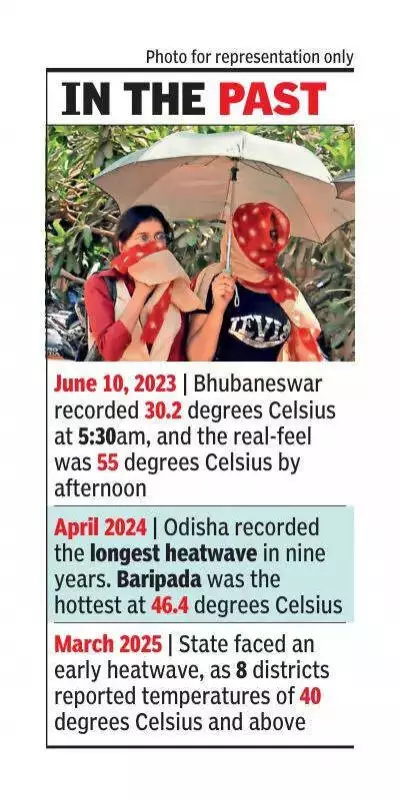
However, Das provided a crucial nuance. "This is a developing El Niño. Research shows that a developing El Niño does not increase the temperature significantly," he stated. He referred to a December forecast from Columbia University, USA, indicating that temperatures in March, April, and May may remain above normal, but will not be as harsh as in 2023 and 2024.
Climatologist Surendranath Pashupalak supported this view, noting that unlike recent years, summer is not expected to begin early in February this time. He indicated that El Niño is likely to arrive by June-July, potentially leading to an erratic monsoon. "Before this, as there will be a neutral phase, there will be no prolonged heatwave in Odisha," Pashupalak said, adding that the season would witness intermittent rainfall due to Kalboisakhis (nor'westers).
Local Factors That Could Amplify Heat
Despite the relatively moderate large-scale forecast, experts issued a strong caution about local conditions. In recent years, Odisha has been experiencing significant Industrial Heat Island (IHI) and Urban Heat Island (UHI) effects, which trap heat and push temperatures higher.
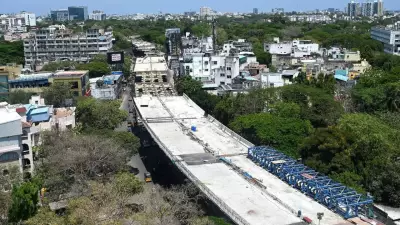
They specifically highlighted that heat in Bhubaneswar will be unusually high due to rapid urbanisation and vehicular pollution. "Though Bhubaneswar has green cover, it is primarily plantations and not forests, and the former has little impact in bringing down temperature," an expert noted.
Similarly, regions with heavy industrial activity and less forest cover, such as Jharsuguda, Angul-Talcher, and the Keonjhar-Baripada mining belt, are likely to face harsher heat.
Manorama Mohanty, director of the regional IMD centre in Bhubaneswar, offered a note of caution, stating it is too early for definitive predictions. "There is no correlation between the existing winter and approaching summer, and a clear picture will emerge only towards the end of February," she said.
In summary, while Odisha braces for a summer with above-normal temperatures, the consensus suggests a reprieve from the intense heat of the immediate past years. However, the mitigating effect of broader climate patterns may be offset by intense local heating in urban and industrial zones across the state.