

Government Acts to Protect Fragile Himalayan Ecosystem
The Union Ministry of Environment, Forest and Climate Change (MoEFCC) has expressed serious concern about the rapid and unregulated construction activities along the Uttarkashi-Gangotri highway in Uttarakhand. In a significant development, the ministry informed the National Green Tribunal (NGT) that a monitoring committee has been established to ensure strict compliance with the Bhagirathi Eco-Sensitive Zone (BESZ) norms.
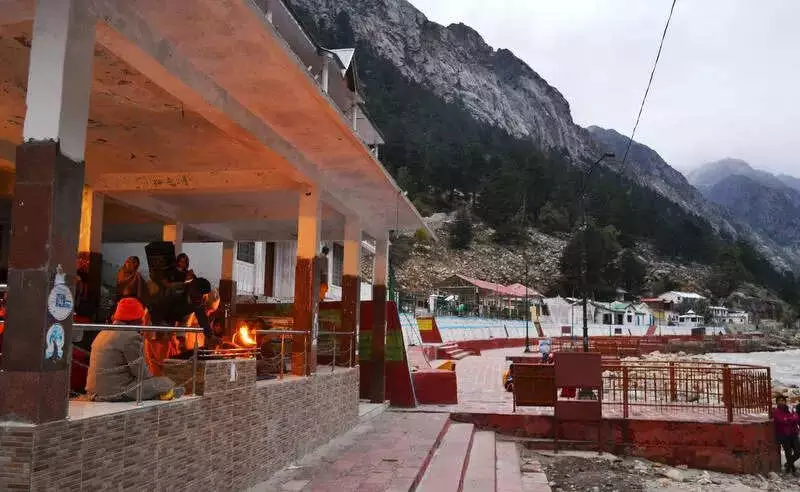
The ministry highlighted the area's vulnerability to landslides, erosion, and glacial dynamics, warning that unchecked construction could endanger the ecologically fragile Gangotri Dham region. This sacred pilgrimage site faces potential threats from development activities that ignore environmental safeguards.
Recent Disaster Highlights Urgent Need for Action
The urgency of the situation became tragically apparent on August 5 this year when large-scale construction in eco-sensitive Uttarkashi led to a major disaster. In Dharali village, over a hundred houses collapsed like a house of cards, resulting in a devastating human toll.

Four bodies have been recovered from the rubble, while twelve missing individuals have been officially declared dead. Approximately forty people, including twelve Nepalese citizens, remain missing as search and rescue operations continue.
Environmental activists have repeatedly sounded alarms about unregulated construction in Uttarakhand's high-altitude areas, pointing to the region's delicate ecological balance and increased disaster risks.
Monitoring Committee Empowered to Enforce Compliance
The NGT had earlier taken suo motu cognisance of the matter following media reports that highlighted the escalating scale of construction activity in the high-altitude pilgrimage corridor. The tribunal subsequently demanded a comprehensive report on the situation.
In its affidavit, MoEFCC clarified the committee's mandate: "To ensure compliance with BESZ notification, a monitoring committee has been set up, wherein its chairperson or member secretary shall be the competent authority to file complaints under Section 19 of the Environment (Protection) Act, 1986."
Under the 2012 BESZ notification, several activities fall under regulated categories, including hotel and resort construction and solid waste management. The newly formed monitoring committee will oversee compliance for all these regulated activities.
Evolution of the Bhagirathi Eco-Sensitive Zone
The BESZ notification was initially issued on December 18, 2012, covering 4,179.59 square kilometers of the Bhagirathi river watershed stretching from Gaumukh to Uttarkashi. This regulatory framework was designed with multiple objectives: safeguarding the river's fragile ecosystem, protecting traditional rights of local communities, and promoting eco-friendly development that doesn't undermine regional livelihoods.
The notification has undergone several amendments based on stakeholder consultations. On April 16, 2018, following submissions from the Uttarakhand government and discussions with the Ministry of Road Transport and Highways and the India Road Congress, the first amendment was implemented.
A subsequent amendment on November 10, 2022, transferred the approval authority for the Zonal Master Plan from the central government to the state government, reflecting the evolving approach to environmental governance.
The notification required the state government to prepare a Zonal Master Plan under the monitoring committee's supervision and enforce the provisions of the original 2012 notification. After extensive consultations with the Ministry of Jal Shakti, MoEFCC, and other stakeholders, the Zonal Master Plan received approval on August 16, 2020, though with specific conditions attached.
This comprehensive approach represents the government's commitment to balancing development needs with environmental protection in one of India's most ecologically significant regions.






