When picturing Meghalaya, one typically imagines lush, mist-covered hills and cascading waterfalls. However, this northeastern Indian state holds a far more profound global significance—it has etched its name directly onto the official timeline of our planet's history. Welcome to the Meghalayan Age, the most recent and officially recognized chapter in Earth's vast 4.6-billion-year story.
What is the Meghalayan Age?
In a landmark decision in 2018, the International Union of Geological Sciences (IUGS) formally ratified the Meghalayan Age. This age represents the latest subdivision of the Holocene Epoch, which began roughly 11,700 years ago after the last major ice age retreated. Specifically, the Meghalayan Age encompasses the most recent 4,200 years of Earth's history.
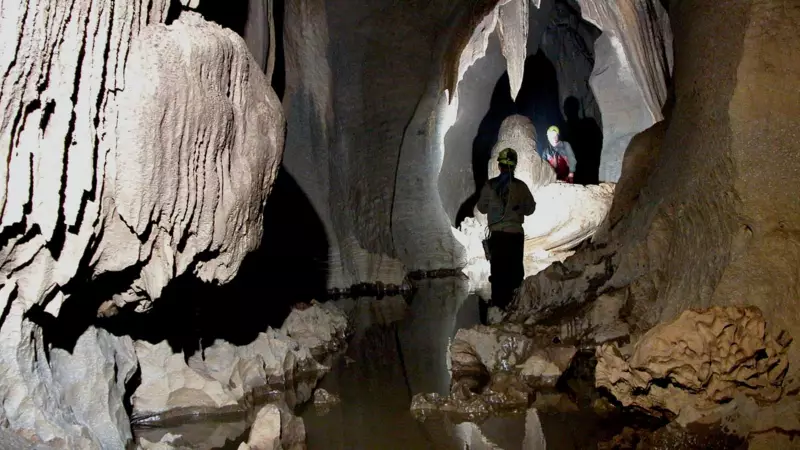
This period is scientifically defined by a severe and prolonged global drought that had catastrophic consequences for early human civilizations. Researchers discovered the chemical signature of this mega-drought preserved within ancient stalagmites—the mineral formations that rise from the floors of caves. The specific cave that provided the clearest and most complete record of this event was Mawmluh Cave, located near Cherrapunji in Meghalaya, a region otherwise famous for being one of the wettest places on the planet.

The Scientific Discovery in Mawmluh Cave
How did a cave in India become a global geological benchmark? The answer lies in the patient work of scientists who analyzed the stalagmites within Mawmluh Cave. They identified a distinct layer rich in a specific type of oxygen isotope, a chemical clue that pointed unmistakably to a major climatic shift.
This evidence pointed to a devastating drought that began around 2200 BCE. Crucially, this was not an isolated local event. Similar chemical patterns were found in geological records across the world, from the heart of ancient Egypt and Mesopotamia to the lands of China. The timing of this drought coincides with the documented collapse of several powerful ancient civilizations, including:
- The Akkadian Empire in Mesopotamia
- The Old Kingdom of Egypt
- The Indus Valley Civilization in the Indian subcontinent
Because the stalagmite record from Mawmluh Cave provided the most definitive “golden spike” for this global event, the IUGS honored the region by naming this new geological age after it.
Why the Meghalayan Age Matters in the 21st Century
The designation of the Meghalayan Age is more than a mere academic exercise. It serves as a powerful reminder of the profound and often disruptive role climate has played in shaping human destiny for millennia. The climatic shift that defines this age forced ancient societies into a stark choice: adapt, migrate, or face collapse.
This historical precedent offers a sobering parallel to the climate challenges we face today. As the world grapples with global warming, water scarcity, and unpredictable weather patterns, the Meghalayan Age stands as a testament to both human vulnerability and resilience. It tells the story of how humanity has continually evolved and persevered through dramatic environmental changes, a narrative that is more relevant now than ever before.