Beyond Trending: Understanding Media Framing in Global News Coverage
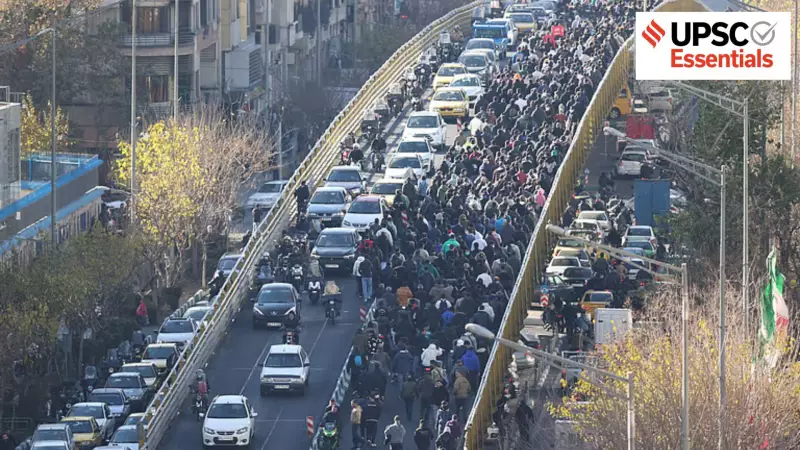
The recent protests in Iran, which began in late December 2025, offer a compelling case study in how media framing shapes public understanding of complex geopolitical events. What started as demonstrations by shopkeepers in Tehran's Grand Bazaar against the plummeting value of the Iranian rial and escalating living costs quickly transformed into a widespread anti-government movement. This evolution from economic grievance to political dissent highlights the critical role that media presentation plays in interpreting such events for global audiences.
The Disinformation Challenge in Digital Journalism
During the initial days of the Iranian protests, a powerful image circulated widely across social media platforms: a young woman lighting her cigarette from a burning picture of Supreme Leader Ayatollah Ali Khamenei. Captioned as "the bravest light in Iran" and celebrated as a symbol of resistance, this visual narrative spread rapidly through digital networks. However, subsequent fact-checking investigations by reputable organizations including Reuters and DW revealed a different story. The footage was actually filmed in Canada, and the woman involved posts on social media under the pseudonym Morticia Addams.
This episode represents just one facet of the disinformation challenges facing contemporary journalism. While such overt falsehoods can often be debunked through rigorous fact-checking processes, more subtle forms of information manipulation persist through sophisticated media framing techniques that shape perception without necessarily presenting outright falsehoods.

Defining Media Framing: Theory and Practice
Media framing represents a fundamental concept in communication studies that examines how information about events or issues is organized, structured, and presented to audiences. This process involves deliberate choices about which aspects to include, emphasize, or exclude, thereby endorsing specific interpretations and perspectives. These frames manifest in news content through various elements including word choice, metaphors, catch-phrases, and visual imagery.
The sociological foundation of framing theory traces back to Erving Goffman's seminal work "Frame Analysis: An Essay on the Organization of Experience" published in 1974. Goffman introduced frame analysis as a method for examining how people construct, organize, and interpret meaning within specific situations. Building on this foundation, media scholar Robert F. Entman provided one of the field's most influential definitions, describing framing as "selecting some aspects of a perceived reality and making them more salient in a communicating text, in such a way as to promote a particular problem definition, causal interpretation, moral evaluation, and/or treatment recommendation."
In practical terms, this means that how a news organization covers anti-government protests—whether focusing on citizens' economic grievances, governance failures, calls for external intervention, or labeling participants as "rioters" or "terrorists"—fundamentally shapes audience understanding of the events.
Framing Iran's Protests: Economic Grievances and Political Interpretations
The Iranian protests that began in December 2025 present a rich landscape for analyzing media framing in action. Initial demonstrations centered on concrete economic concerns: the collapsing value of the Iranian rial, steep inflation rates, soaring food prices, and allegations of corruption within economic systems. Media coverage that focused primarily on these immediate issues employed what scholars term an episodic frame—presenting events as isolated incidents rather than connecting them to broader systemic or historical contexts.
In contrast, coverage that contextualized these economic grievances within larger frameworks—such as international sanctions, the economic aftermath of regional conflicts, or historical patterns of governance—employed a thematic frame. This approach encourages audiences to understand events as part of larger systemic issues rather than isolated occurrences.

Similarly, media treatment of international responses to the protests reveals contrasting framing approaches. Coverage of U.S. threats of military intervention could be presented as either an episodic response to immediate events or thematically anchored in historical context—such as references to the 1953 coup that overthrew Iran's democratically elected Prime Minister Mohammad Mosaddegh. Each framing choice carries distinct implications for how audiences interpret both the protests themselves and potential international responses.
The Human Cost and Global Implications
Beyond theoretical considerations, the Iranian protests have exacted a significant human toll, with reports indicating over 3,000 fatalities resulting from the unrest. This sobering reality underscores the importance of responsible media framing that neither sensationalizes nor minimizes the human dimension of political conflicts. The protests have evolved from their economic origins into a broader movement challenging governmental authority, demonstrating how media framing can influence both domestic and international perceptions of legitimacy, grievance, and appropriate response.
As global audiences navigate increasingly complex information environments, understanding media framing becomes essential for developing media literacy. Recognizing how news organizations select, emphasize, and contextualize information allows consumers to engage more critically with news content and develop more nuanced understandings of world events. The Iranian protests serve as a timely reminder that how we learn about events can be as important as what we learn about them.