

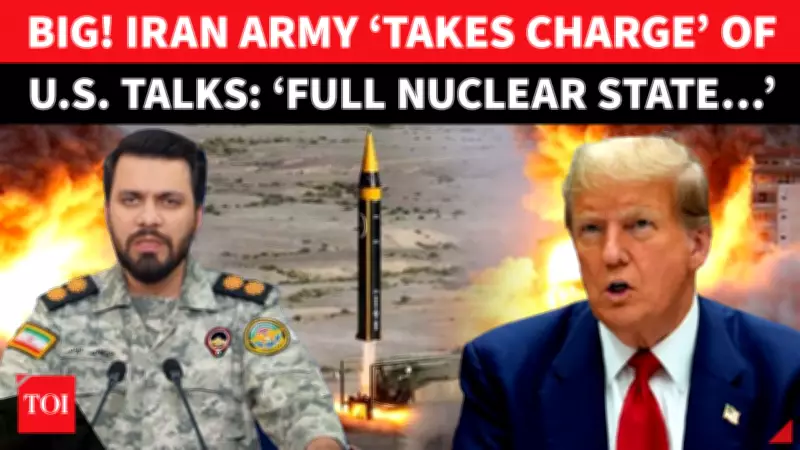
Power Dynamics Shift in Iran as IRGC Assumes Control of US Negotiations
A significant transformation appears to be underway within Iran's power structure, with profound implications for both its diplomatic engagements and military posture. According to analysis from the Institute for the Study of War, the Islamic Revolutionary Guard Corps (IRGC) is increasingly dominating negotiations with the United States, while simultaneously maintaining its traditional command over military operations.
Military Commanders Replace Civilian Diplomats
Under the guidance of Ahmad Vahidi, IRGC leadership is now believed to be directly supervising discussions that were historically managed by civilian diplomatic channels. This represents a fundamental departure from established protocol, signaling a major consolidation of military influence over foreign policy matters.
Recent talks held in Islamabad provided clear evidence of this transition, with senior IRGC commanders participating prominently alongside traditional diplomatic representatives. Their presence underscores a deliberate shift toward a security-focused negotiation framework that prioritizes military considerations over conventional diplomatic approaches.

Strait of Hormuz Becomes Flashpoint for New Strategy
The evolving power dynamic finds its most visible expression in the increasingly volatile Strait of Hormuz, where operational decisions now appear to align more closely with IRGC priorities than with diplomatic signals from Tehran. This strategic waterway has become the primary testing ground for Iran's new approach to international relations.
Military considerations are no longer secondary to diplomatic efforts but have become central to Iran's negotiation strategy. The traditional boundaries between formal diplomacy and military operations have blurred significantly, creating a more complex and potentially volatile international landscape.
Parallel Power Centers Reshape Iranian Foreign Policy
The emerging reality suggests that Iran's negotiation process has expanded beyond conventional diplomatic channels to incorporate multiple centers of power operating in parallel. This development complicates international engagement with Tehran, as decisions may originate from military rather than political leadership.
As the IRGC strengthens its influence over both negotiations and military operations, the potential for miscalculation increases, particularly in sensitive regions like the Strait of Hormuz where tensions continue to escalate. The integration of military and diplomatic functions represents a significant evolution in how Iran approaches international relations and conflict management.






