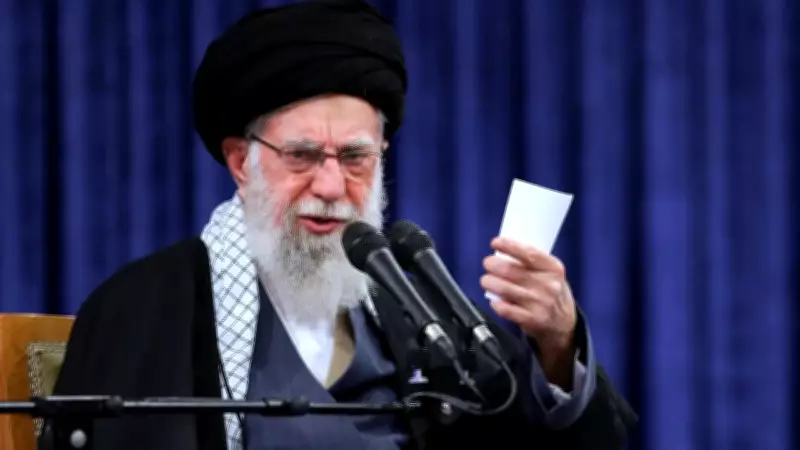
Iran Issues Stern Warning to US Over Killing of Supreme Leader Khamenei
In a dramatic escalation of tensions, Iran has declared that the United States has crossed "a very dangerous red line" by orchestrating the killing of Supreme Leader Ayatollah Ali Khamenei. This bold statement comes as the Middle East grapples with a surge in violence and instability following joint US-Israeli strikes that targeted Iranian military and government sites.
Exclusive Interview Reveals Iran's Stance
In an exclusive interview with CNN, Iranian Deputy Foreign Minister Saeed Khatibzadeh emphasized the gravity of the situation. He asserted that US President Donald Trump's authorization of the strike has triggered serious consequences, with Iran having "no option but to respond." Khatibzadeh highlighted Khamenei's dual role as both a political leader and a major religious figure for millions of Shiite Muslims worldwide, suggesting that his death would provoke widespread reactions across the region and beyond.
Wave of Retaliation Across the Middle East
Following the assassination of the 86-year-old leader, Iran launched an unprecedented wave of missile and drone attacks. Targets included:

- Countries hosting US military bases, such as Bahrain and the United Arab Emirates.
- Israeli territory, with reports of explosions in Tehran as Israel claimed to strike the "heart" of the Iranian capital.
- Major cities like Dubai and Riyadh, disrupting air and sea traffic and causing civilian casualties.
Iran's paramilitary Revolutionary Guard had previously threatened its "most intense offensive operation" ever against Israel and US bases, a promise now being realized in the ongoing conflict.
Iran Warns Gulf States Over US Bases
Khatibzadeh revealed that Tehran has communicated with Gulf Arab states, urging them to shut down American military bases on their soil. He stated, "We communicated with them: either to shut down those American bases that are constantly threatening Iran... or we have no option just to push back." Since Iran cannot directly strike US territory, it plans to target bases under US jurisdiction. In response, several Gulf states, including Kuwait, Qatar, and Bahrain, have reported intercepting Iranian missiles and drones, with Qatar noting injuries among its populace.
Diplomacy in Doubt as Threats Escalate
When questioned about the possibility of diplomacy, Khatibzadeh expressed disillusionment, citing repeated disappointments from Washington. He labeled the conflict a "war of choice" initiated by Trump, warning that if the US did not want retaliation, it should not have started the aggression. Concurrently, Trump has warned Iran against further escalation, threatening an unprecedented US response if attacks intensify.
Uncertain Leadership and Regional Fallout
Amid the turmoil, Iran has moved to stabilize its political system by appointing a three-member leadership council, including cleric Ali Reza Arafi, President Masoud Pezeshkian, and judiciary chief Gholam Hossein Mohseni Ejehei, to govern until a new supreme leader is selected. Israeli officials claim their strikes have eliminated top Iranian military figures, though Iran has not confirmed these reports.
The crisis has spread beyond Iran and Israel, with protests erupting in places like Karachi and Kashmir, and embassies across the region issuing security alerts. US embassies in multiple countries have advised staff and citizens to shelter in place, while several Middle Eastern airports remain closed, stranding thousands of travelers.
Region on Edge as Tensions Mount
With both sides exchanging threats and missiles, and diplomatic channels appearing distant, the killing of Khamenei has plunged the Middle East into one of its most perilous moments in recent years. The ongoing conflict underscores the fragility of regional stability and the profound implications of this geopolitical showdown.