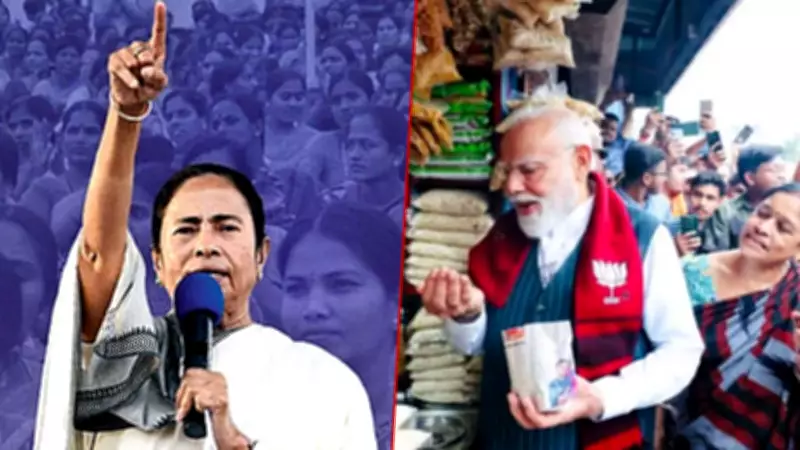
TMC Intensifies Attack on PM Modi Over Jhalmuri Stop Controversy
The political landscape in West Bengal has been set ablaze with fresh controversy as the Trinamool Congress launched a scathing attack on Prime Minister Narendra Modi. The opposition party has accused the Prime Minister of deliberately disrupting opposition campaigning through what they describe as a calculated political maneuver during his recent visit to Jhargram.
Allegations of Campaign Disruption and Forced Return
According to TMC officials, Prime Minister Modi's extended stop for jhalmuri - a popular street food snack - created significant logistical challenges that directly impacted opposition activities. The party claims that the Prime Minister's prolonged presence in the area effectively blocked airspace, preventing Jharkhand Chief Minister Hemant Soren from landing his helicopter as scheduled.
The TMC alleges that this incident forced Hemant Soren to abandon his planned campaign activities and return to Ranchi without completing his electoral commitments. This development has added substantial fuel to the already fiery political atmosphere in West Bengal, where electoral battles have been intensifying in recent weeks.

Accusations of Political Theater and Adivasi Disrespect
The Trinamool Congress has characterized Prime Minister Modi's jhalmuri stop as nothing more than a political "photo opportunity" designed to create media buzz while simultaneously hampering opposition efforts. Party spokespersons have been particularly vocal in their criticism, suggesting that the incident reveals what they term an "Adivasi-birodhi mindset" - essentially accusing the Prime Minister of displaying anti-tribal sentiments.
"This was not just a casual snack break," claimed a senior TMC leader. "This was a calculated move that resulted in the humiliation of an Adivasi leader who was simply trying to fulfill his democratic responsibilities. The timing and duration of the Prime Minister's stop were clearly intended to create maximum disruption."
Escalating Political Confrontation in West Bengal
The controversy has significantly escalated the ongoing political confrontation between the Bharatiya Janata Party and the Trinamool Congress. Both parties have been engaged in a heated electoral battle across West Bengal, with each seeking to gain advantage in the politically crucial state.
The TMC's allegations have added a new dimension to this conflict, framing the incident as symbolic of broader power dynamics and respect for opposition leaders. Party officials have suggested that the forced return of Hemant Soren represents a deliberate attempt to undermine opposition campaigning and demonstrate political dominance.
Broader Implications for Electoral Politics
This incident raises important questions about campaign logistics and the use of public spaces during election periods. Political analysts suggest that such controversies could influence voter perceptions, particularly in tribal communities that form significant voting blocs in several West Bengal constituencies.
The TMC has vowed to continue highlighting what they describe as "undemocratic tactics" employed by the ruling party at the center. Meanwhile, the BJP has yet to issue a detailed response to these specific allegations, though party representatives have generally dismissed TMC criticisms as politically motivated distractions from substantive issues.
As the electoral battle in West Bengal intensifies, this controversy over the jhalmuri stop and its alleged consequences for opposition campaigning is likely to remain a focal point of political discourse in the coming days, potentially influencing campaign strategies and voter outreach efforts across the state.