Iran's Revolutionary Guard Issues Stark Warning Over Strait of Hormuz Data Cable Vulnerability
The Iranian Revolutionary Guard Corps (IRGC) has issued a significant warning regarding the security of undersea data cables passing through the strategically vital Strait of Hormuz. According to a report published Wednesday by Iran's Tasnim news agency, these critical telecommunications arteries are highly susceptible to both accidental damage and deliberate sabotage.
Potential for Severe Regional Internet Outages
The Tasnim agency specifically cautioned that "simultaneous damage to several major cables" could trigger catastrophic internet outages across the entire Persian Gulf region. The report emphasized that such disruptions could occur "whether through accidents or deliberate action," highlighting the precarious nature of this essential infrastructure.
The Strait of Hormuz: A Global Digital and Energy Bottleneck
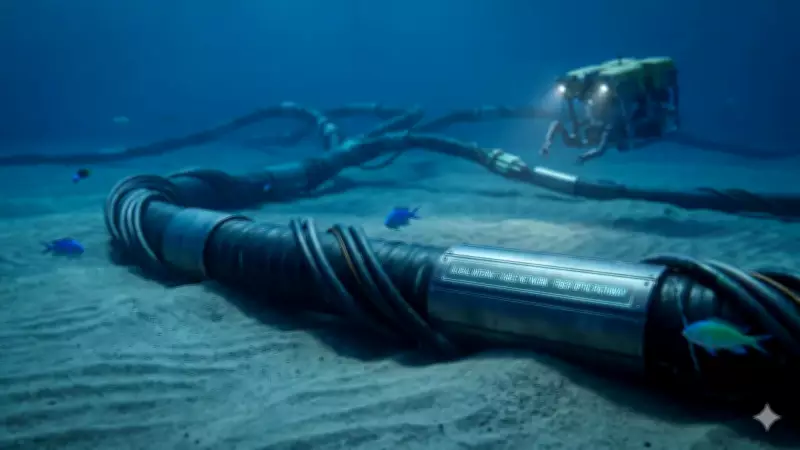
The Strait of Hormuz is globally recognized not only as one of the world's most crucial oil chokepoints but also as a vital digital artery. Beneath its turbulent waters lies a dense network of fiber-optic cables that form the backbone of international communications. These submerged lines carry an estimated 17% to 30% of regional internet traffic, creating essential connections between Asia, Europe, and the Middle East.

The potential consequences of cable damage would extend far beyond the Middle East. These underwater pathways support massive artificial intelligence infrastructure hubs in the United Arab Emirates and Saudi Arabia, backed by technology giants including Amazon, Microsoft, and Google. Furthermore, they facilitate everything from global financial transactions and cloud computing services to daily email communications and video conferencing.
Why India Faces Particular Vulnerability
India's position as one of the world's largest consumers of digital data makes it especially vulnerable to disruptions in this undersea network. The cables connect through landing stations in several countries adjacent to current conflict zones, including Oman, the United Arab Emirates, and Pakistan.
A significant disruption would likely result in:
- Reduced internet speeds affecting millions of users across India
- Unreliability in cloud-based services and digital payment systems
- Substantial economic consequences for India's massive information technology sector
- Disruptions to AI-powered service industries that depend on stable international connections
Previous Warnings and Infrastructure Challenges
This latest warning follows previous indications of strain on the undersea cable infrastructure. Alcatel Submarine Networks, the French state-owned company responsible for laying many of these cables, has previously issued force majeure notices to customers. These legal notifications indicate that unforeseeable events are preventing the company from fulfilling its contractual obligations.
Additionally, Bloomberg has reported that Alcatel's installation ship, the Ile De Batz, became stranded off the coast of Dammam, Saudi Arabia, further complicating maintenance and repair operations. In a related development, Meta (formerly Facebook) has reportedly halted work on undersea cable projects in the region, according to previous Bloomberg reporting.
The combination of geopolitical tensions, technical challenges, and corporate withdrawals creates a perfect storm of vulnerability for the world's most critical digital infrastructure. As global dependence on instant communication continues to grow, the security of these underwater cables becomes increasingly paramount to international stability and economic continuity.