

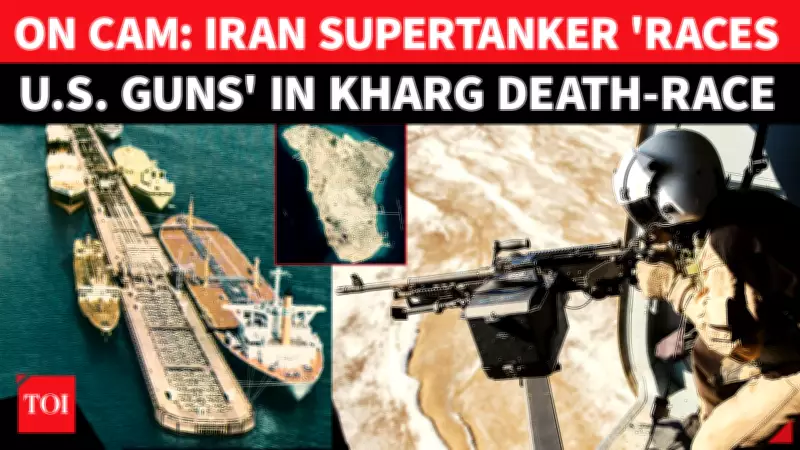
US-Iran Gulf Confrontation Intensifies as Iranian Supertanker Breaches Blockade
A high-stakes maritime confrontation is rapidly escalating in the strategic waters of the Gulf, with an Iranian supertanker at the center of a tense standoff against US naval forces. According to recent reports, a Very Large Crude Carrier (VLCC) has crossed what Iranian sources describe as a US-imposed "siege line," re-entering Iranian territorial waters after completing a significant oil transfer operation.
Iranian Tanker Heads Toward Key Oil Terminal Amid US Opposition
The massive vessel is now on a direct course for Kharg Island, Iran's primary oil export terminal located in the northern Gulf. This movement represents a critical challenge to Washington's ongoing efforts to restrict Tehran's oil exports through economic and military pressure. If the tanker successfully docks at Kharg Island, it would constitute a substantial breach of US sanctions and blockade attempts, potentially reshaping the regional power dynamics.
Newly released footage has added a dramatic visual dimension to the unfolding crisis. The video purportedly shows a US military helicopter hovering near maritime traffic, with a gunner clearly visible aiming directly at a cargo ship. Accompanying audio captures stern warnings being issued, though the specific vessel targeted remains unconfirmed in the circulating footage.

Geopolitical Implications of the Maritime Standoff
This incident occurs against a backdrop of heightened tensions between the United States and Iran, with both nations engaging in a complex dance of military posturing and diplomatic maneuvering. The Gulf region serves as a crucial artery for global oil shipments, making any disruption there a matter of international concern.
The Iranian tanker's defiance of US pressure lines highlights Tehran's determination to maintain its oil export capabilities despite extensive sanctions. Meanwhile, Washington's visible military response underscores its commitment to enforcing restrictions on Iranian petroleum exports, a cornerstone of its broader Middle East policy.
Regional analysts note that such confrontations carry significant risk of escalation, particularly given the history of maritime incidents in these waters. The presence of US warships positioned along the tanker's route creates a volatile situation where miscalculation could lead to more serious military engagement.
Broader Context of US-Iran Relations
This maritime standoff represents just one facet of the multifaceted tensions between Washington and Tehran. Recent months have seen:
- Increased Iranian missile testing and military exercises in the Gulf region
- Continued US sanctions targeting Iran's energy sector and financial institutions
- Ongoing diplomatic efforts by third parties to mediate between the two nations
- Periodic incidents involving commercial shipping and naval vessels in strategic waterways
The outcome of this particular confrontation may influence future interactions between the two adversaries, potentially setting precedents for how both sides approach similar situations. As the tanker continues its journey toward Kharg Island, international observers are closely monitoring developments, aware that the Gulf remains a potential flashpoint for broader regional conflict.






