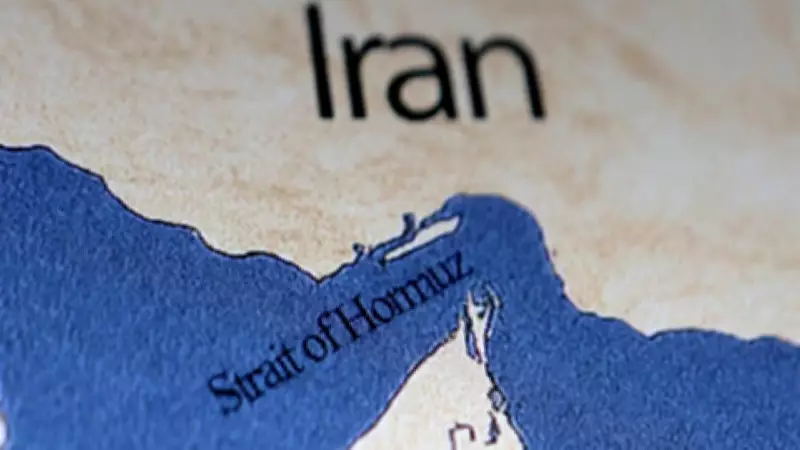
Iran Reverses Decision, Closes Strait of Hormuz Amid Escalating Tensions
In a dramatic escalation of regional tensions, Iran announced on Saturday that it has reversed its earlier decision to reopen the Strait of Hormuz, effectively shutting the critical waterway. The Islamic Revolutionary Guard Corps (IRGC) issued a stern warning to all vessels, prohibiting them from approaching the area until the United States lifts its naval blockade on Iranian ports.
IRGC Issues Direct Warning to Maritime Traffic
The IRGC stated in an official declaration, "Therefore, from this evening, the Strait of Hormuz will be closed until this blockade is lifted." They further cautioned that any ship moving from its anchorage in the Persian Gulf and the Sea of Oman, or attempting to approach the strait, would be considered as cooperating with the enemy. Such vessels, the IRGC emphasized, would be targeted in response.
Additionally, the IRGC urged all ships to rely solely on official communication channels, dismissing statements from US leadership as lacking credibility. This move underscores Iran's firm stance against what it perceives as hostile actions by the United States.

Reports of Attacks and New Maritime Protocols
The escalation coincides with reports of attacks on commercial vessels. British military authorities confirmed that IRGC gunboats opened fire on a tanker, while a container ship was struck by a projectile, resulting in damage to its cargo. These incidents highlight the volatile security situation in the region.
In a related development, Iran has signaled tighter control over maritime traffic through the strait. A senior official, as reported by CNN, announced that vessels complying with new protocols—including payment of security and safety fees—will be granted priority passage. "Given the limitation on the number of vessels that will be allowed to pass, Iran has decided to give priority to those vessels that respond more quickly to the new Strait of Hormuz protocols and pay the costs of security and safety services," the official stated.
The official added that ships failing to pay these fees will face postponed passage, effectively imposing a financial toll on international shipping in the area.
Ceasefire Strains and Accusations
This heightened tension comes as a fragile ceasefire, set to expire on Wednesday, faces mounting strain. Iran has accused the United States of violating the ceasefire terms by maintaining its naval blockade despite earlier understandings. The IRGC asserted, "Due to the violation of the ceasefire conditions, the American enemy did not lift the naval blockade of Iranian vessels and ports."
Further illustrating the tense standoff, Iran's Parliament Speaker Mohammad Bagher Ghalibaf recounted a confrontation during recent talks in Islamabad. He claimed to have warned a US delegation that if their minesweeper moved even slightly from its position, it would be shot. According to Ghalibaf, the US requested 15 minutes to order a retreat, which they subsequently did.
US Response and Global Implications
US President Donald Trump dismissed Iran's actions, warning Tehran against using the strait as leverage. "They (Iran) have no navy, no air force. They have no leaders; they have nothing... They can't blackmail us," Trump stated. He reaffirmed that the US blockade will remain "in full force" until a comprehensive deal is reached.
The latest closure follows a brief reopening of the strait just a day earlier, after a Lebanon ceasefire announcement had temporarily eased oil prices. The Strait of Hormuz, handling nearly 20% of global oil and gas flows, is central to the ongoing conflict. Its renewed shutdown threatens global energy supplies and raises the risk of a broader confrontation as the war enters its eighth week.
This development underscores the fragile geopolitical landscape in the Middle East, with potential ramifications for international trade and security. The situation remains fluid, with stakeholders closely monitoring further escalations or diplomatic breakthroughs.