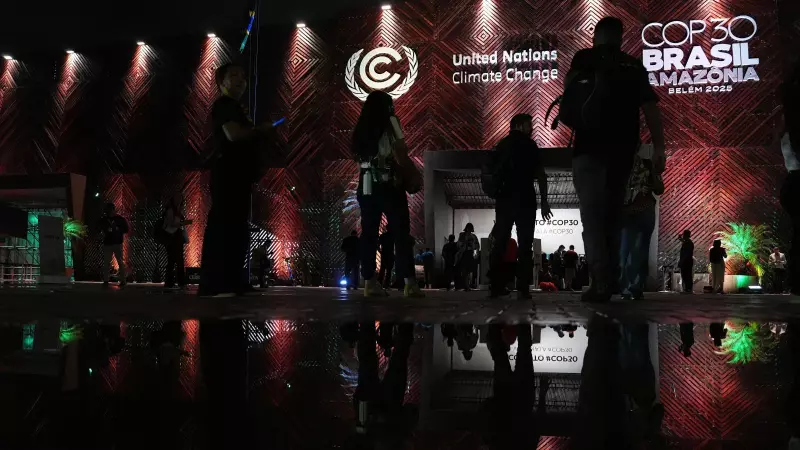
India has taken a firm stance against a one-size-fits-all approach to phasing out fossil fuels during crucial negotiations at the COP30 climate summit in Belem, Brazil. The Indian delegation emphasized that developing nations must be permitted to chart their own pathways toward reducing fossil fuel dependency, taking into account their unique developmental needs and public welfare commitments.
Deadlock Over Fossil Fuel Roadmap
The debate over establishing a comprehensive roadmap for ending fossil fuel use has emerged as a major sticking point in finalizing the political package that Brazil hopes will serve as the centerpiece achievement of this year's UN climate conference. Over 80 countries, primarily led by the European Union and small island nations, have been aggressively pushing for language committing to an early phase-out of fossil fuels in the final agreement.
India clarified that while it doesn't oppose mentioning fossil fuel phase-out in the package, it insists that the document must acknowledge different national circumstances. An official explained that fossil fuels serve distinct purposes across countries, making a uniform approach impractical and potentially harmful to vulnerable populations.

India's Development Imperative
The Indian delegation highlighted the Ujjwala Scheme as a prime example of why fossil fuel subsidies remain essential for public welfare in developing nations. Through this initiative, the government provides subsidized LPG cylinders to households, significantly improving public health by reducing indoor air pollution from traditional cooking methods.
Similarly, the official noted that many African nations continue subsidies for kerosene used by fishing communities to power their boats, representing crucial livelihood support. "Therefore, if you straightaway mandate a uniform phase out of fossil fuels, or a complete ban on subsidies, then it may hurt the public welfare schemes in many countries", the source emphasized.
India maintains that it doesn't provide fossil fuel subsidies for luxury goods and actually imposes higher taxes on petroleum and diesel. The country argues that subsidies supporting essential services and poverty alleviation programs must be protected during the energy transition.
Broad Support and Other Sticking Points
India's position has garnered significant backing from other developing nations. China, Egypt, Saudi Arabia, and Venezuela have aligned with India's stance as part of the Like Minded Developing Countries (LMDC) grouping, creating a substantial bloc opposing uniform phase-out mandates.
The political package being negotiated addresses four critical concerns that couldn't be included in COP30's official agenda. Two key issues important to developing countries include full implementation of finance provisions from the Paris Agreement and opposition to unilateral trade measures like the EU's Carbon Border Adjustment Mechanism (CBAM), which India and China view as discriminatory trade practices disguised as climate action.
Brazilian President Luiz Inácio Lula Da Silva attempted to break the deadlock through day-long negotiations on Wednesday, urging global leaders to envision a future beyond fossil fuels. Despite Brazil's hope to finalize the package by Wednesday, disagreements over language concerning these four issues have prolonged discussions.
Incident and Progress
The COP30 proceedings experienced an unexpected interruption on Thursday afternoon when a fire broke out at the venue, necessitating evacuation of all delegates and deployment of emergency services. Preliminary reports indicated the fire originated in the country pavilion hall, though fortunately no injuries were reported.
Despite challenges in reaching consensus on the political package, delegates made notable progress on establishing provisions for carbon markets, representing a significant step forward in market-based climate mechanisms.
As negotiations continue, the world watches whether climate diplomats can bridge the gap between developed nations pushing for aggressive fossil fuel phase-out and developing countries seeking flexibility to address their unique economic and social challenges.