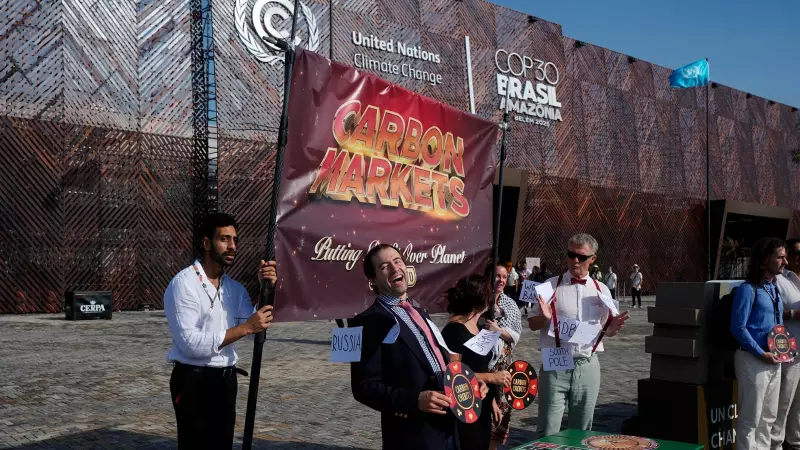
As international pressure intensifies for a global roadmap to phase out fossil fuels, India and China have initiated high-level coordination to align their strategies at the crucial COP30 climate conference in Brazil.
Key Bilateral Meeting Between Major Economies
In a significant development on Wednesday, India's Environment Minister Bhupender Yadav held a bilateral meeting with China's Special Envoy on Climate Change, Liu Zhenmin. The meeting aimed to coordinate their approach on several contentious climate issues that have emerged during the conference.
The coordination between the world's two most populous nations comes at a critical juncture in the climate negotiations, where developed and developing countries remain divided on multiple fronts.

Political Package Negotiations Intensify
Under host Brazil's initiative, countries at the COP30 climate conference are working to finalize a separate 'political' agreement that would address long-standing concerns of different nations. This package aims to bridge gaps on several issues that have historically divided climate negotiations.
The first draft of this political agreement emerged on Tuesday after days of consultations facilitated by Brazilian organizers. The document revealed significant divergences in positions among different countries, with a fresh draft expected later Wednesday evening.
Growing Pressure for Fossil Fuel Phase-Out
Meanwhile, a coalition of more than 80 countries, led by European nations and small island states, has been vigorously pushing for the inclusion of a concrete roadmap on fossil fuel phase-out in the final agreement package.
EU climate commissioner Wopke Hoekstra emphasized the bloc's commitment to this goal, stating: "The EU supports the idea of inclusion for a roadmap to phase out fossil fuels. We are very particular about the ambition in reduction of emission. We in Europe are very much sure about phasing out fossil fuels in the days to come since we plan to reduce our emission rate furthermore, by nine-percent by 2040."
Developing Nations' Key Concerns
Among the four main issues under discussion, two have been consistently raised by India and other developing countries over the past year:
Climate Finance Implementation: India and developing nations are pushing for full implementation of Article 9.1 of the Paris Agreement, which mandates that developed countries "shall provide" financial resources to developing nations for climate action.
Trade-Related Measures: India, China and other developing countries have raised concerns about trade-restrictive measures like the EU's Carbon Border Adjustment Mechanism (CBAM), which imposes tariffs on imported goods with higher carbon footprints during manufacturing.
These nations argue that CBAM represents discriminatory trade practices disguised as climate action, potentially undermining the economic interests of developing economies.
Diverging Priorities Between Nations
The other key issues reflect the concerns of developed nations, who are seeking enhanced mitigation actions to pursue the 1.5 degree Celsius target and greater transparency in reporting climate actions.
As Brazil works overtime to broker consensus on the political package, the conference has highlighted the ongoing tension between immediate emission reduction demands and the need for equitable climate financing and fair trade practices.
The outcome of these negotiations, particularly the India-China coordinated strategy and the fossil fuel phase-out roadmap, could significantly influence global climate policy direction for the coming years.