Himalayan Glaciers Accelerating Mass Loss Since 2000, Study Finds
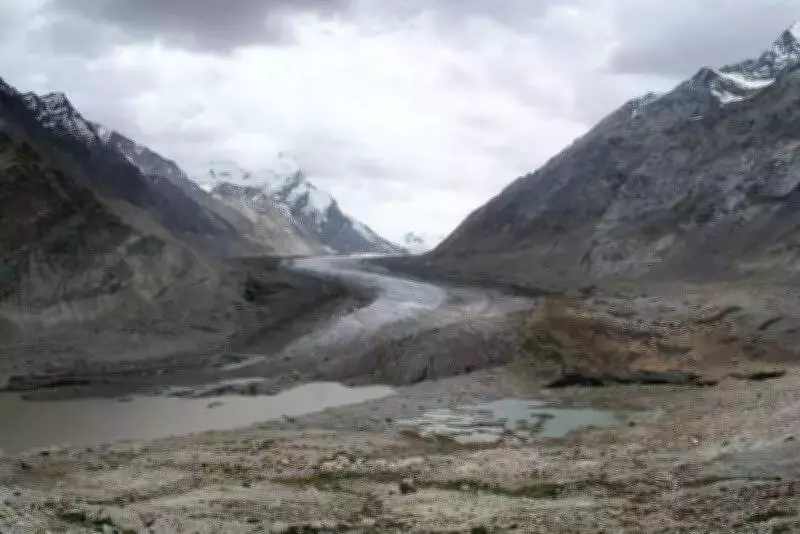
Glaciers across the Himalaya-Karakoram region, often called the "Third Pole" for holding the world's largest ice reserves outside the Arctic and Antarctic, have experienced a sharp acceleration in mass loss since the year 2000. According to a comprehensive new seven-decade study examining five major glaciers, the rate of ice loss has increased by 17% to 267% in some areas compared to the second half of the 20th century.
Study Details and Regional Coverage
The research, titled 'Seven Decades of Mass Balance Change in Selected Large Himalayan and Karakoram Glaciers: Climatic Drivers and Regional Contrasts', reconstructs glacier-wide mass balance from 1950 to 2022. It focuses on five glaciers: Baltoro and Siachen in the Karakoram, and Bara Shigri, Gangotri, and Zemu in the Himalaya. Together, these glaciers cover approximately 2,300 square kilometers, representing about 5.5% of the total glacierized area in the Himalaya-Karakoram region, which spans around 42,500 square kilometers and hosts the largest concentration of mountain glaciers outside polar regions.
Accelerated Loss and Regional Contrasts
Researchers from the International Centre for Integrated Mountain Development in Nepal, the Indian Institute of Technology Indore, and the University of Aberdeen in Scotland found that glacier mass loss intensified markedly after 2000. "In simple terms, glaciers that were already losing ice began losing it much faster," the study stated. Among Himalayan glaciers, Gangotri—one of the largest glaciers feeding the Ganga basin—showed a consistently negative mass balance over the entire 70-year period, indicating sustained and substantial ice loss. Bara Shigri and Zemu glaciers also recorded negative mass balances, reflecting long-term thinning and retreat.

In contrast, Karakoram glaciers—Baltoro and Siachen—remained broadly close to balance over the full study period, with near-neutral to slightly positive mass balance conditions overall. However, even these glaciers shifted towards more negative balances after 2000, suggesting that the long-observed stability in parts of the Karakoram may be weakening, though researchers cautioned that evidence is not yet conclusive.
Climate Drivers and Implications
Glacier mass balance, which refers to the difference between winter snow accumulation and summer melt, serves as a key indicator of glacier health and climate response. A positive balance means accumulation exceeds loss, while a negative balance indicates the reverse. The study found that the acceleration in ice loss coincided with rising temperatures across all five glaciers and generally declining precipitation. In the eastern Himalaya, precipitation increased but largely as rainfall rather than snowfall, limiting its contribution to glacier build-up.
The research highlighted clear regional contrasts, noting that Himalayan glaciers are more sensitive to temperature changes, while snow variability plays a stronger role in influencing glacier behavior in the Karakoram. Over time, temperature has emerged as the dominant driver of mass loss across much of the Himalaya.
Warnings for Water Security
Overall, the findings point to a common trend despite regional differences: glacier systems across the Himalaya-Karakoram are losing mass faster in the 21st century than in the preceding five decades, with significant implications for long-term water security in glacier-fed river basins. The authors emphasized that there is a critical need for in-depth study and continuous monitoring of Himalaya-Karakoram glaciers' responses to ongoing climate change at the glacier scale.