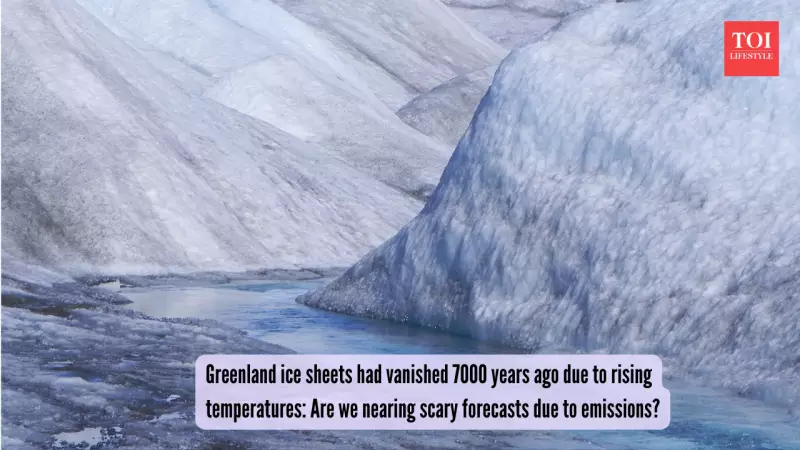
Ancient Greenland Ice Melt Offers Stark Warning for Future Climate
For thousands of years, the massive ice sheets covering Greenland have stood as frozen archives of Earth's climate history, preserving vital clues about past environmental shifts within their icy layers. However, as global temperatures continue their relentless upward climb, these ancient ice formations are now facing unprecedented melting that threatens to rewrite our planet's future.
Ice Sheet Vulnerability Revealed Through Deep Drilling
A groundbreaking study published in Nature Geoscience has uncovered startling evidence about the fragility of Greenland's ice sheet. Researchers from the GreenDrill project conducted an ambitious drilling operation at the Prudhoe Dome site in northwest Greenland, penetrating more than 500 meters through ice to reach the bedrock below.
Using sophisticated luminescence dating techniques, the scientific team made a remarkable discovery: the ice at this location had completely disappeared between 6,000 and 8,200 years ago. This melting occurred during what scientists call the Holocene Warm Period, when temperatures were approximately 3 to 5°C higher than pre-industrial levels—a range alarmingly similar to current end-of-century projections if greenhouse gas emissions remain unchecked.

Risky Operation Yields Crucial Climate Insights
The drilling mission was far from routine. One senior scientist described it as a "highly risky drilling operation that nearly failed", yet the perseverance paid off with invaluable data. The research revealed that the new ice layer showed no traces from the last Ice Age, confirming that the entire ice sheet had retreated completely before reforming as temperatures cooled.
This finding demonstrates that even relatively modest warming can destabilize massive ice formations, regardless of how permanent they might appear. At Prudhoe Dome, the bedrock remained exposed long enough for sediments to bake under direct sunlight before being buried again as climate conditions shifted.
Historical Parallels to Current Climate Crisis
Supporting evidence from EastGRIP ice cores shows similar melt patterns from warmer phases of the Holocene period. What makes today's situation particularly concerning is the accelerated pace of change. Unlike natural climate cycles of the past, current warming is being dramatically intensified by human-caused emissions without the gradual cooling periods that historically followed warm phases.
The Arctic region is now melting at record speeds, with recent years showing nearly 20% faster ice loss. This rapid melting releases massive amounts of freshwater that could potentially disrupt crucial ocean currents that regulate global climate patterns.
Global Implications and Political Dimensions
As ice continues to retreat, new geopolitical challenges are emerging. The United States has turned increased political attention toward Arctic resources, while shrinking ice opens new shipping routes and fuels territorial disputes among nations bordering the region.
Climate projections suggest that sustained temperature increases of 3–5°C could permanently destroy significant portions of Greenland's ice sheet, potentially raising global sea levels by several meters over coming centuries. This would have devastating consequences for coastal communities worldwide, from increased flooding to more extreme weather patterns.
Urgent Call for Climate Action
The Prudhoe Dome findings serve as a powerful reminder that ice sheets are not invincible fortresses but dynamic systems vulnerable to temperature changes. Small climatic shifts can trigger massive ice losses with effects that ripple across the entire planet.
Studies like this underscore the critical urgency of reducing greenhouse gas emissions to avoid reaching irreversible climate tipping points. The ancient melting of Greenland's ice sheet provides both a warning from Earth's history and a sobering preview of what could happen if current warming trends continue unchecked.