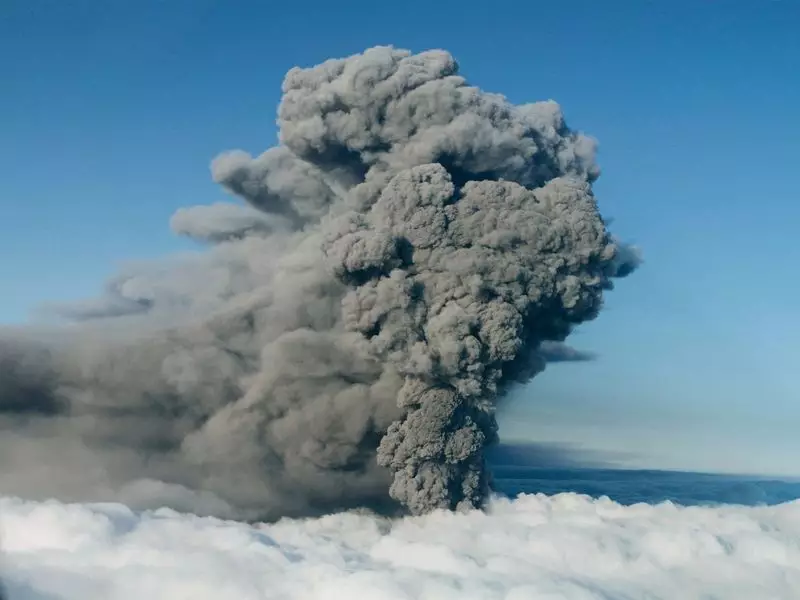
In a remarkable geological event that has captured global scientific attention, Ethiopia's Hayli Gubbi volcano has erupted for the first time in approximately 10,000 years. The dormant giant in northeastern Ethiopia's Afar region has suddenly awakened, creating spectacular lava flows and signaling significant underground activity.
The Awakening of a Sleeping Giant
The Hayli Gubbi volcano, located in one of Earth's most geologically active regions, began showing signs of activity that culminated in a full-scale eruption. This marks the first eruption in roughly 10,000 years, making it an event of immense importance for volcanologists and earth scientists worldwide. The Afar region, known for its unique geological formations and active volcanic systems, has added another chapter to its dynamic history.
Satellite imagery and ground observations confirmed the eruption, showing lava flows extending approximately 4.5 kilometers from the volcanic vent. The magnitude of this eruption provides scientists with unprecedented opportunity to study volcanic processes that occur on millennial timescales. The event represents a rare chance to understand how volcanoes behave after extremely long periods of dormancy.

Scientific Significance and Regional Impact
The eruption of Hayli Gubbi offers valuable insights into the geological processes shaping the Afar region, which sits at the convergence of three tectonic plates. This area is part of the East African Rift System, where the African continent is slowly splitting apart. Volcanic activity in this region contributes to the ongoing formation of new oceanic crust and the gradual separation of tectonic plates.
While the eruption has created dramatic visual displays of flowing lava, initial reports indicate minimal immediate threat to human populations due to the remote location of the volcano. However, scientists are closely monitoring atmospheric conditions and potential impacts on air quality in surrounding areas. The eruption serves as a reminder of the dynamic nature of our planet and the powerful forces constantly reshaping Earth's surface.
Research Opportunities and Future Monitoring
This unprecedented event has generated excitement within the global scientific community. Researchers from multiple countries are coordinating to study the eruption's characteristics, including gas emissions, lava composition, and seismic activity. The data collected will enhance understanding of volcanic behavior patterns and improve hazard assessment capabilities for similar volcanoes worldwide.
Ethiopian geological authorities have established monitoring stations to track the volcano's activity and ensure public safety. The eruption presents a unique natural laboratory for studying magmatic processes that operate over geological timescales. Scientists emphasize that while the current eruption phase is significant, comprehensive research will be necessary to determine whether this marks the beginning of renewed volcanic activity in the area or represents an isolated event.
The awakening of Hayli Gubbi after ten millennia of silence underscores the importance of continuous volcanic monitoring and research in geologically active regions. As scientists continue to observe and analyze this extraordinary event, the world watches with fascination as Earth demonstrates its incredible capacity for change and renewal.