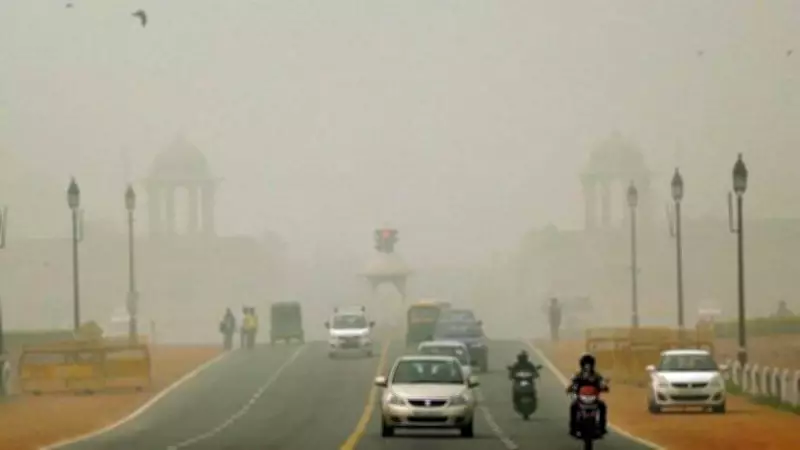
Delhi's Low NCAP Fund Utilisation Highlights Air Pollution Funding Gaps
Delhi has utilised only 14% of the funds allocated under the National Clean Air Programme (NCAP) since 2019, a stark contrast to neighbouring cities in the National Capital Region (NCR) such as Ghaziabad and Meerut, which have spent over 80% of their allocations. This city-wise data was revealed by Union Minister of State for Environment Kirti Vardhan Singh in a written reply to the Lok Sabha on Monday, shedding light on disparities in pollution control efforts.
Budget Context and Pollution Funding Framework
The disclosure came a day after Finance Minister Nirmala Sitharaman presented the Union Budget, allocating Rs 1,091 crore under the Ministry of Environment, Forest and Climate Change's "Control of Pollution" scheme for 2026-27. Notably, this budget allocation represents just one component of pollution-related funding in Delhi-NCR, which is distributed across multiple programmes and institutions, highlighting the complexity of financial mechanisms for air quality management.
Understanding NCAP and Its Implementation Challenges
Launched in January 2019, the NCAP is a central framework aimed at improving air quality in 130 cities across India. It sets city-specific targets for reducing particulate matter pollution, with an overarching goal of achieving up to a 40% reduction in PM10 levels or meeting national standards by 2025-26. The programme is not implemented through a single funding source; instead, funds are released based on performance. Large cities like Delhi receive grants through the Finance Commission, while smaller cities are funded directly by the Environment Ministry.

The programme relies on coordination across multiple ministries, linking nationwide action plans to schemes managed by departments handling transport, energy, urban development, industry, and agriculture. According to Anumita Roychowdhury, Executive Director at the Centre for Science and Environment, "A convergence approach is needed... This means clearly identifying and augmenting financial allocations across multiple ministries."
Other Pollution Funding Streams and Underutilisation Issues
Pollution-related funding in Delhi-NCR also flows through various other channels, including:
- The Commission for Air Quality Management, allocated Rs 35.26 crore for 2026-27, primarily for administrative and coordination functions.
- Funds generated through court and tribunal orders under the polluter pays principle, such as environmental compensation imposed by the National Green Tribunal.
- The Environment Protection Charge (EPC), which applies to diesel cars and SUVs with engine capacity of 2,000 cc and above sold or registered in Delhi and the NCR, operating separately from Union Budget allocations and NCAP funding.
The Central Pollution Control Board maintains the EPC fund and utilises it for air quality management in the region. Roychowdhury emphasised the need for clearer frameworks to ensure that revenues from environmental charges and compensation are channelled into dedicated air pollution control strategies and not left underutilised.
Future Financing and Strategic Recommendations
Roychowdhury further noted, "Funding under the NCAP has so far relied heavily on 15th Finance Commission grants, and since this window is nearing its end, it's important to evaluate future clean air financing. This would require a more deliberate strategy that aligns sectoral spending on transport, energy transition, waste management, and industry with air quality goals." This call for strategic alignment underscores the urgency of addressing funding gaps and improving utilisation rates to combat air pollution effectively in Delhi and beyond.