The Commission for Air Quality Management (CAQM) has proposed significant changes to Delhi-NCR's pollution control strategy, suggesting that key measures like work-from-home and staggered office timings should be implemented at earlier stages of air pollution.
The air quality watchdog presented these recommendations to the Supreme Court on November 19, 2025, as part of a broader effort to strengthen the Graded Response Action Plan (GRAP) against the region's persistent toxic air problem.
What Changes Are Being Proposed?
The CAQM's proposal involves moving several important pollution-control measures to lower GRAP stages, meaning they would be activated when air quality is relatively better rather than waiting for it to deteriorate further.

Under the new suggestions, work-from-home arrangements for offices would be implemented during Stage III instead of Stage IV, while staggered timings for government and municipal offices would move from Stage III to Stage II.
Other significant changes include shifting enhanced public transport measures, uninterrupted power supply, and improved traffic management from Stage II to Stage I of the GRAP framework.
Understanding the GRAP Mechanism
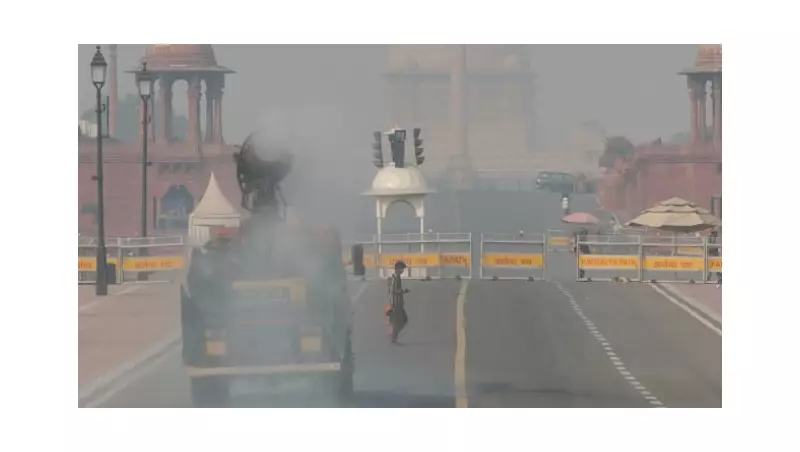
The Graded Response Action Plan operates as a four-stage system that triggers specific anti-pollution measures as air quality deteriorates. Currently, GRAP Stage III is active in Delhi-NCR as air quality fluctuates between 'severe' and 'very poor' levels.
The system works on the principle of early intervention: Stage I begins when AQI reaches 201-300 (poor), Stage II at 301-400 (very poor), Stage III at 401-500 (severe), and Stage IV when AQI exceeds 500 (severe plus).
Each stage builds upon the previous one, creating an escalating set of restrictions designed to prevent air quality from reaching dangerously high levels.
Immediate Impact on Daily Life
If implemented, these changes would mean that Delhi-NCR residents would see earlier interventions in their daily routines during pollution episodes. Staggered office timings would help reduce traffic congestion during peak hours, while work-from-home options would become available at lower pollution thresholds.
The proposal also includes expanding public transport services and increasing metro frequency with differential fares to encourage off-peak travel. Enhanced traffic management and pollution alerts would become standard features during moderate pollution periods.
Beyond GRAP revisions, the CAQM has recommended short-term measures including clearing traffic bottlenecks, deploying more mechanical road sweepers, strengthening surprise checks on industries and construction sites, and pushing Punjab and Haryana to transition brick kilns to cleaner fuel alternatives.
Long-term Vision and Implementation Timeline
The long-term proposals envision a quicker transition to electric vehicles with better incentives, higher costs for diesel SUVs, smoother traffic through IT-enabled systems, and stricter norms for polluting industries.
State governments would also need to improve stubble and waste management practices, reduce road dust, and prevent new coal-based power plants within 300 kilometers of Delhi.
A senior CAQM official indicated that implementation depends on Supreme Court directions, noting that while the proposals are ready, the commission needs to consider earlier court orders before making final decisions.
In a related development, the CAQM has already written to NCR state governments recommending that physical activities for school children be shifted from November and December to cleaner months, demonstrating the proactive approach being adopted.