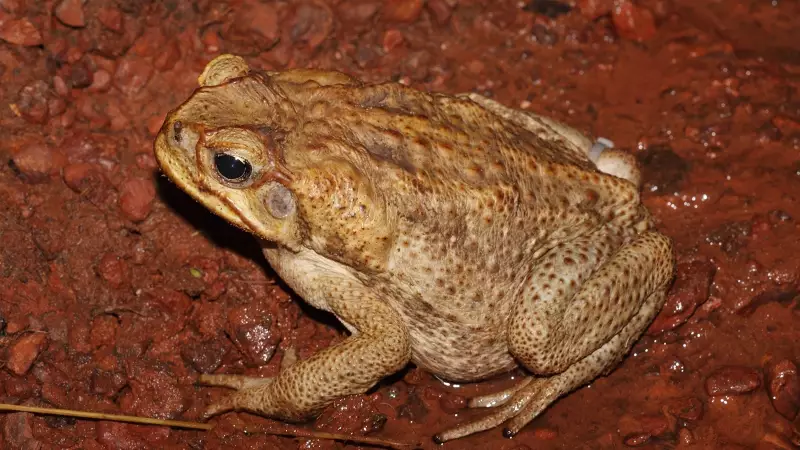
In the annals of ecological disasters, few creatures have wreaked as much havoc as the humble cane toad. What began as a well-intentioned pest control experiment has spiraled into one of the world's most devastating biological invasions, decimating native wildlife populations across Australia and beyond.
The Unintended Ecological Catastrophe
Originally hailing from Central and South America, the cane toad (Rhinella marina) was introduced to various global locations, including Australia, during the 1930s. According to National Geographic, agricultural authorities brought these amphibians to Queensland with a specific purpose: controlling beetle pests that were damaging valuable sugarcane crops.
Instead of becoming the agricultural saviors scientists hoped for, cane toads transformed into ecological nightmares. The solution became a far greater problem than the original issue it was meant to solve, creating ripple effects that continue to challenge conservationists nearly a century later.

A Deadly Defense Mechanism
The cane toad's most destructive feature lies in its powerful biological weapon: bufotoxin. This potent substance gets released from glands positioned behind the toad's eyes and serves as a deadly deterrent to would-be predators.
The impact on native Australian wildlife has been nothing short of catastrophic. Predators including quolls, goannas, various snake species, and even massive crocodiles have suffered devastating population declines after consuming these toxic amphibians. In regions where cane toads have established themselves, many native species have experienced precipitous drops in numbers because their evolutionary history never prepared them to handle this foreign toxin.
Rapid Reproduction and Adaptability
Compounding the toxicity problem is the cane toad's incredible reproductive capacity. Female cane toads can produce staggering numbers of offspring, with each clutch containing between 8,000 to over 30,000 eggs. As noted by Encyclopaedia Britannica, these prolific breeders can reproduce multiple times annually, enabling population explosions that overwhelm ecosystems.
Their adaptability further enhances their invasive success. Cane toads thrive in diverse environments ranging from urban centers to agricultural lands, and they exhibit remarkably catholic eating habits. These amphibians consume virtually anything that fits in their mouths, including insects, small animals, and even garbage, putting them in direct competition with native species for food resources.
Conservation Fightback
Scientists and environmentalists are mounting an impressive counteroffensive against the cane toad invasion. The Guardian reports innovative approaches showing promising results, including conditioning native crocodiles to avoid eating the toxic amphibians by creating negative associations.
Even more revolutionary are genetic interventions currently under development. Researchers are experimenting with gene-edited tadpoles programmed to remain in their juvenile state while consuming cane toad eggs, potentially providing a biological control method to slow population growth.
The Environmental Literary Council documents the sobering reality: some predator populations have declined by up to 90% since cane toads arrived. From their initial introduction in 1930s Queensland, these invaders have spread relentlessly, creating similar ecological crises in other regions like Florida, where they pose threats to household pets.
The story of the cane toad serves as a cautionary tale about biological interventions in complex ecosystems, reminding us that nature often responds to our solutions in unexpected and devastating ways.