

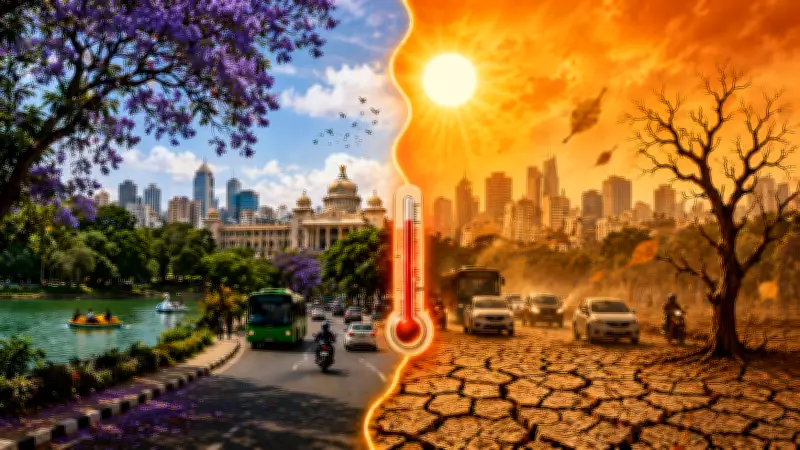
Bengaluru's Climate Identity Crisis: From Sweater Weather to Scorching Heat
For a metropolis celebrated for its pleasant climate and year-round "sweater weather," Bengaluru is confronting a profound identity crisis. The India Meteorological Department (IMD) has issued warnings of steadily climbing temperatures throughout this week, with mercury levels already hovering in the mid-30s and projected to soar to a blistering 38°C. This alarming spike significantly exceeds the city's typical April average, marking a dramatic departure from its cool reputation.
What's Fueling Bengaluru's Unprecedented Heatwave?
Multiple environmental factors are converging to create this intense heat scenario:
- Urbanization Over Green Cover: Rapid, unchecked construction has systematically replaced vital trees and lakes, transforming the city into a heat-absorbing concrete jungle that retains warmth far more effectively.
- Delayed Pre-Monsoon Relief: The customary pre-monsoon showers, which historically provide crucial cooling respite, have been notably weak or significantly delayed this year, exacerbating dry conditions.
- Regional Temperature Escalation: Rising temperatures across southern India are creating a broader thermal blanket, pushing Bengaluru's local mercury readings to unprecedented heights.
- Warmer Nighttime Temperatures: The city is losing its characteristic nighttime cooling capacity, resulting in relentless heat that persists around the clock, disrupting sleep and daily life.
Imminent Water Stress: A Looming Crisis
While an immediate, city-wide water emergency might not be declared yet, unmistakable warning signals are emerging. A comprehensive study conducted by the Indian Institute of Science has identified at least 65 wards as water-stressed this summer, primarily due to plummeting groundwater levels and critical infrastructure deficiencies.

Bengaluru already grapples with a staggering daily water shortfall of approximately 500 million litres, forcing heavy reliance on borewells and private water tankers. This strain is becoming visibly acute: nearly half of the city's borewells—approximately 7,000—have completely dried up, particularly in peripheral and rapidly developing areas.
Compounding these concerns, the IMD has forecast a below-normal monsoon season, which could severely impact reservoir levels and further hinder groundwater recharge. While central districts might manage temporarily, numerous neighborhoods are likely to experience intermittent supply, increased dependence on expensive tankers, and heightened water stress as summer intensifies.
Surge in Cooling Demand and Health Impacts
The escalating heat is triggering significant behavioral and market changes across India:
- Air conditioner and cooling appliance sales have skyrocketed by 25–30% compared to last year.
- Specific brands report even more dramatic growth, with AC sales increasing by 30–35%.
- This surge reflects desperate attempts to cope with unbearable indoor temperatures.
Concurrently, gastroenterologists in Bengaluru are documenting a concerning 20% rise in cases of vomiting and diarrhea this summer. Dr. Tejaswini Dande recently emphasized that extreme heat often triggers gastrointestinal issues and recommended essential precautions:
- Consume only boiled or properly filtered water.
- Avoid cut fruits and street-side juices that may be contaminated.
- Prioritize fresh, hot meals and minimize food storage in heat.
- Maintain rigorous hand hygiene before eating.
- Exercise extreme caution with outside food during peak heat periods.
Historical Temperature Trends: A Warming Pattern
Examining April 16 temperature readings over recent years reveals a disturbing warming trajectory:
- 2023: 34–35°C
- 2024: 36–37°C
- 2025: 32–34°C
- 2026: 35–37°C
This data, sourced from WeatherAPI and WeatherSparks, illustrates the volatile yet generally upward trend in Bengaluru's April temperatures, signaling a fundamental shift in the city's climatic character.






