

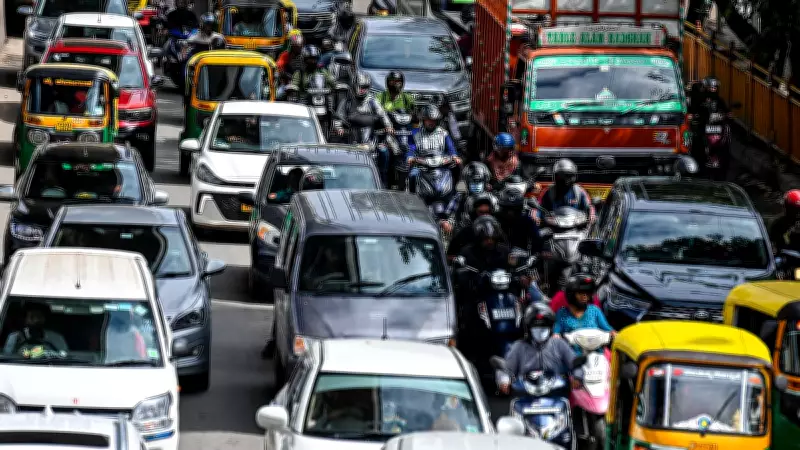
Bengaluru Commuters Voice Concerns Over Congestion Tax Effectiveness
Residents and daily travelers in Bengaluru have raised significant doubts regarding the efficacy of a mere congestion tax in alleviating the severe traffic congestion on the city's Outer Ring Road (ORR). This skepticism follows the introduction of congestion charges by the 5th State Finance Commission in March 2026, aimed at reducing both traffic volumes and associated pollution levels on key urban arteries.
Implementation of Congestion Charges
The 5th State Finance Commission officially rolled out congestion pricing on several of Bengaluru's busiest roads, including the heavily utilized Outer Ring Road, as part of a strategic initiative to combat urban gridlock and environmental degradation. The policy, which came into effect in March 2026, mandates fees for vehicles using these routes during peak hours, with the dual objectives of discouraging unnecessary travel and funding transportation improvements.
Commuters' Critical Perspectives
Many commuters argue that the congestion tax, while a step in the right direction, is insufficient on its own to address the deep-rooted traffic woes plaguing Bengaluru. They emphasize that the city's infrastructure challenges require a more comprehensive approach. Key criticisms include:

- Lack of alternative transportation options: Without reliable and efficient public transit systems, commuters feel forced to use private vehicles despite the tax.
- Inadequate road infrastructure: Persistent bottlenecks and poor road conditions on ORR and other major routes exacerbate congestion, limiting the tax's impact.
- Economic burden on daily travelers: The additional financial cost may disproportionately affect lower-income groups without providing tangible relief from traffic delays.
Broader Solutions Advocated
In response to these concerns, commuters and urban planners are calling for a multi-faceted strategy to complement the congestion tax. Suggested measures include:
- Enhancing public transportation networks, such as expanding metro and bus services, to offer viable alternatives to private car usage.
- Investing in road infrastructure upgrades, including widening key sections of ORR and improving traffic management systems.
- Promoting non-motorized transport options, like dedicated cycling lanes and pedestrian-friendly pathways, to reduce vehicular dependency.
- Implementing smart city technologies, such as real-time traffic monitoring and adaptive signal controls, to optimize flow and reduce congestion dynamically.
The ongoing debate highlights a growing consensus that while the congestion tax represents a proactive policy move, its success hinges on integrated efforts addressing Bengaluru's broader urban mobility challenges. As the city continues to grapple with rapid urbanization and increasing vehicle numbers, the effectiveness of this fiscal measure will be closely monitored by both authorities and the commuting public.






