9 Unique Animals Thriving in Earth's Wettest Place: Mawsynram's Biodiversity
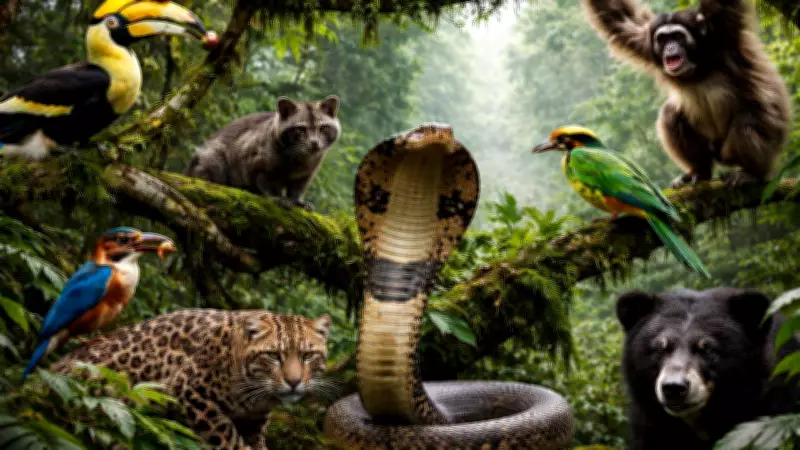
Mawsynram, a small village nestled in the northeastern state of Meghalaya, holds the extraordinary title of being the wettest place on Earth. With staggering annual rainfall that might seem inhospitable to many, this region has paradoxically fostered a lush, vibrant ecosystem teeming with life. The constant deluge has sculpted dense forests, misty landscapes, and fertile soils, transforming Mawsynram into a biodiversity hotspot. Here, we explore nine fascinating animals uniquely adapted to survive and flourish in this extreme climate.
Asiatic Black Bear: The Forest Climber
The Asiatic black bear, often called the moon bear due to the distinctive pale crescent mark on its chest, is a powerful inhabitant of these rain-drenched forests. Equipped with robust claws and an acute sense of smell, it skillfully navigates the treetops in search of food. While generally shy, this bear can become defensive if threatened, showcasing its resilience in this challenging environment.
Western Hoolock Gibbon: India's Sole Ape
The western hoolock gibbon stands out as the only ape species found in India, perfectly adapted to the arboreal life of Meghalaya's forests. With long arms designed for swinging through the canopy, it rarely descends to the ground. Its presence is often announced by loud, melodious calls, typically emitted in pairs, adding to the mystical ambiance of the region.

White-Throated Kingfisher: The Versatile Hunter
Easily recognized by its bright blue wings and white throat, the white-throated kingfisher defies expectations by not limiting its diet to aquatic prey. This adaptable bird consumes a diverse array of food, including reptiles, amphibians, rodents, and even other birds. Such dietary flexibility enables it to thrive across various microhabitats within Mawsynram's wet terrain.
Asian Palm Civet: The Nocturnal Seed Disperser
The Asian palm civet, a nocturnal mammal, spends most of its life in the trees, primarily feasting on fruits. This diet plays a crucial role in seed dispersal, aiding forest regeneration. While famous for its connection to civet coffee, concerns about its welfare highlight the delicate balance between human interests and wildlife conservation in this unique ecosystem.
Clouded Leopard: The Elusive Arboreal Predator
Clouded leopards are among the most elusive predators in Meghalaya's forests, distinguished by cloud-like spots on their fur. Unlike other big cats, they are exceptional climbers, spending much of their time in trees while hunting. Their flexible bodies and strong limbs make them ideally suited for dense forest habitats, though they face threats from habitat destruction and human encroachment.
Wroughton's Free-Tailed Bat: The Mysterious Mammal
Wroughton's free-tailed bat, one of India's least understood mammals, finds refuge in dark caves and dense forest areas of Mawsynram. Initially thought to inhabit only the Western Ghats, its recent discovery in Meghalaya has surprised researchers. Little is known about its behavior, population, or migration patterns, adding to the enigma of this rare species.
Binturong: The Popcorn-Scented Bearcat
The binturong, commonly known as the bearcat, is a tree-dwelling mammal with a prehensile tail that aids in climbing. Its most intriguing feature is the unique scent it emits, reminiscent of buttered popcorn, due to a chemical in its urine. This unusual odor serves as a territorial marker and communication tool among its kind, illustrating nature's innovative adaptations.
King Cobra: The Venomous Nest-Builder
The king cobra, the world's longest venomous snake, can exceed five meters in length and is known for its ability to lift its body to eye level when threatened. Despite its potent venom, it is not inherently aggressive and avoids human contact. Remarkably, it is the only snake species that constructs nests to protect its eggs, showcasing complex parental behavior in this wet habitat.

Great Hornbill: The Forest's Seed Spreader
The great hornbill, with its large size and prominent casque, is a striking bird in Meghalaya's forests. As a fruit-eater, it travels long distances in search of food, inadvertently dispersing seeds across the forest. This vital role in seed propagation helps sustain the forest ecosystem, emphasizing the interconnectedness of life in Mawsynram's rainy realm.
In conclusion, Mawsynram's extreme rainfall has fostered a rich tapestry of wildlife, from mammals and birds to reptiles, each uniquely equipped to thrive in one of Earth's most challenging climates. This biodiversity hotspot serves as a testament to nature's resilience and adaptability, reminding us of the wonders hidden in even the wettest corners of our planet.