

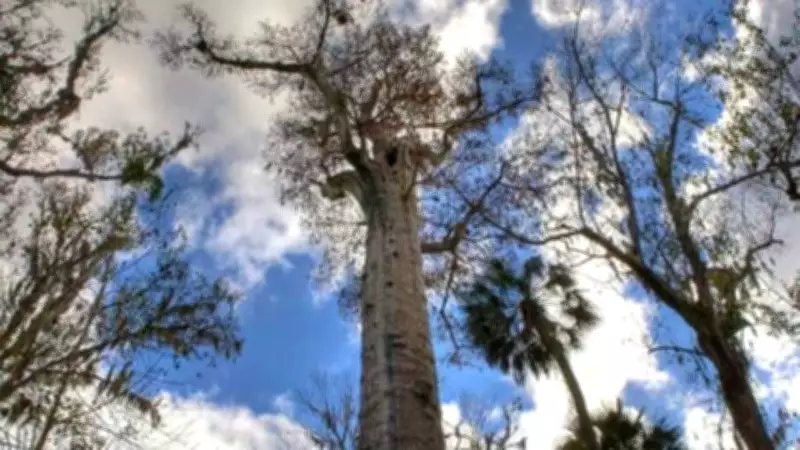
Ancient Chilean Tree 'Gran Abuelo' Harbors Unique Fungal Network, Key to Forest Carbon Cycle
In the temperate rainforests of Chile's Alerce Costero National Park, an ancient conifer known as 'Gran Abuelo' stands as a silent guardian of a hidden secret buried deep within the earth. A groundbreaking study published in the journal Biodiversity and Conservation has uncovered that this tree's greatest value lies not in its visible grandeur but in the rich, biodiverse soil beneath it, which hosts an undiscovered world of life critical to the forest's survival.
What Exactly Is the 'Gran Abuelo'?
The Gran Abuelo, meaning 'Great-Grandfather', is a massive Alerce tree (Fitzroya cupressoides) native to the Patagonian temperate rainforests. With a height exceeding 60 feet and a trunk diameter over 13 feet, it is a botanical marvel. While debates over its age persist, environmental scientist Jonathan Barichivich recently estimated through computer modeling and partial core sampling that Gran Abuelo is nearly 5,500 years old. This potentially makes it older than Methuselah, the Bristlecone pine in California, and possibly the oldest living individual tree on Earth, highlighting its ancient and resilient nature.
The Unbelievable Discovery Beneath Earth's Oldest Tree
The study's most astonishing finding is not the tree's age but the vibrant ecosystem it supports underground. Researchers used advanced DNA sequencing techniques to map the mycorrhizal networks around Gran Abuelo, revealing that the soil below this ancient giant is 2.25 times more biodiverse than soil under younger trees in the same forest. They identified a community of over 300 fungal species, many of which are unique to this location and found nowhere else on the planet, forming a microbial metropolis that underpins the entire forest's health.

How Fungi Kept the World's Oldest Tree Alive
This discovery positions Gran Abuelo not merely as a plant but as a central hub for a biological support system. Experts from the Royal Botanic Gardens in Kew explain that the fungi engage in a mutualistic relationship with the tree: the tree provides sugars through photosynthesis, while the fungi act as extensions of its roots, delivering essential nutrients like phosphorus and nitrogen, as well as water during droughts. This ancient mycorrhizal network has likely enabled Gran Abuelo to survive millennia of environmental stresses, including fires and climate fluctuations, by creating a resilient underground lifeline.
A 30,000-Year Timeline of Carbon Storage
Though Gran Abuelo itself is around 5,500 years old, the World Wildlife Fund notes that the region served as an 'ice age refuge', allowing soil biomes to evolve undisturbed for over 30,000 years. This long history has fostered extensive underground networks that store carbon dioxide deep within the earth. Scientists warn that if ancient trees like Gran Abuelo are lost due to climate change or human activities, it could trigger a domino effect, releasing vast quantities of greenhouse gases from this millennia-old carbon storage system and destabilizing the forest's entire carbon cycle.
The research underscores the critical role of ancient trees in maintaining ecological balance, emphasizing that their preservation is vital not only for biodiversity but also for global climate stability. As we uncover more about these hidden worlds, it becomes clear that protecting such natural wonders is essential for our planet's future.






