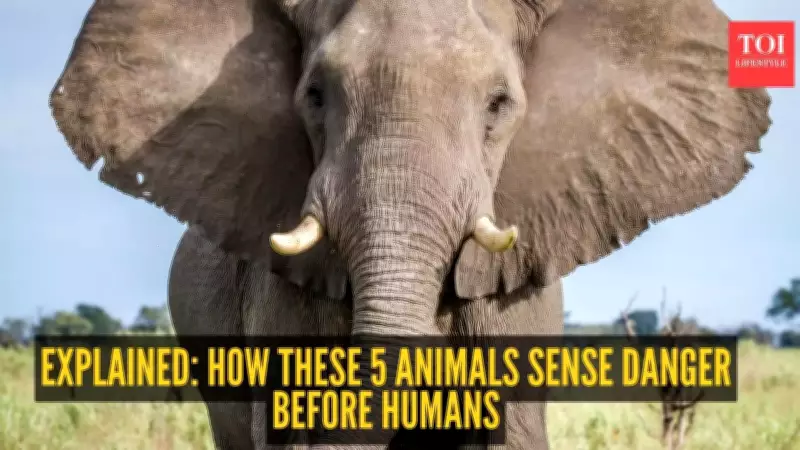
Nature's Early Warning System: 5 Animals That Sense Danger Before Humans
Most people only realize something is wrong when it becomes obvious: a loud noise, a visible alteration, or a clear signal. However, in the natural world, threats do not always announce themselves so plainly. Interestingly, animals frequently react much earlier, without panic or drama, through subtle behavioral changes.
A dog might refuse to move, birds can vanish from the sky, or a cat might quietly slip under the bed. While these actions may appear random, they usually are not. Here are five remarkable animals known for picking up early signs of danger, often well before humans notice anything unusual.
Dogs: The Alert Companions
Anyone who has spent significant time with dogs has likely witnessed this phenomenon. They suddenly become alert for no apparent reason, sometimes barking at empty spaces or appearing restless. What is happening behind the scenes is straightforward yet fascinating.

Dogs can hear much higher frequencies than humans, detect faint vibrations through the ground, and even notice minute changes in environmental smells. Consequently, while people remain unaware, dogs may already be reacting to distant sounds or subtle shifts in their surroundings, serving as an early warning system.
Elephants: Masters of Ground Vibrations
Elephants experience the world in a unique way. Beyond their acute hearing, they are exceptionally sensitive to vibrations that travel through the earth. These vibrations can originate from very far distances, enabling elephants to respond to disturbances long before they become visible.
When an elephant herd suddenly starts moving or changes direction without any clear trigger, it is often because they have already sensed something approaching, whether it be a predator, human activity, or environmental changes.
Birds: The Silent Sentinels
In many environments, birds provide the constant background soundtrack of daily life, which makes their sudden silence particularly noticeable. Before certain weather changes, especially storms, birds react swiftly.
They may stop chirping entirely or leave the area altogether. This behavior is their way of responding to changes in air pressure and environmental conditions. For humans, it might simply feel quiet, but for birds, it represents a clear signal to seek safety.
Snakes: Vibration Specialists
Snakes do not rely on hearing in the same manner as humans. Instead, they possess extreme sensitivity to vibrations. Using their bodies, they can detect movement through the ground, helping them notice even minor disturbances nearby.
This capability allows snakes to react early, often before any visible sign of danger appears, whether it be an approaching predator or seismic activity.
Cats: The Subtle Observers
Cats may not display their awareness openly, but they are constantly monitoring their surroundings. A cat suddenly becoming still, hiding, or staring intently in one direction is typically responding to something detected through their sharp senses.
With acute hearing and quick reflexes, cats often pick up on environmental changes before humans do, though they may not vocalize their concerns.
Why Animals Detect Danger Earlier
Animals depend heavily on their senses for survival. Over millennia, their abilities in hearing, smell, and vibration detection have remained highly developed. Humans, in contrast, rely more on visual cues and communicated information, which is why we frequently miss early warning signs that animals perceive instinctively.
Disclaimer: The behaviors described above are based on general observations of animal instincts and sensory capabilities. They may not occur in every situation or reliably indicate danger. Animals can react differently depending on factors such as their environment, health status, and individual behavioral traits.