The Blossom Chronicler: A 1,200-Year Record of Changing Springs
Each spring in Kyoto unfolds with a profound sense of anticipation. As buds swell and branches soften, the city's cherry blossoms briefly transform the landscape into an ethereal spectacle of pink and white. For Professor Yasuyuki Aono, this annual phenomenon represented far more than a cultural tradition—it was the focus of a lifelong scientific pursuit marked by extraordinary precision and dedication.
A Legacy Built on Patience and Precision
As a researcher at Osaka Metropolitan University, Professor Aono dedicated decades to tracing the timing of cherry blossom blooms across more than twelve centuries of history. His remarkable work involved stitching together fragments from the past to create a continuous, scientifically valuable record that revealed a subtle yet powerful truth: the very timing of spring itself is undergoing significant transformation.
Even during his final months, Aono continued updating his meticulous dataset, recording the 2025 bloom before his passing in August of that year. He left behind not merely data points, but a scientific legacy deeply rooted in centuries of careful observation and documentation.

Deciphering History Through Ancient Texts
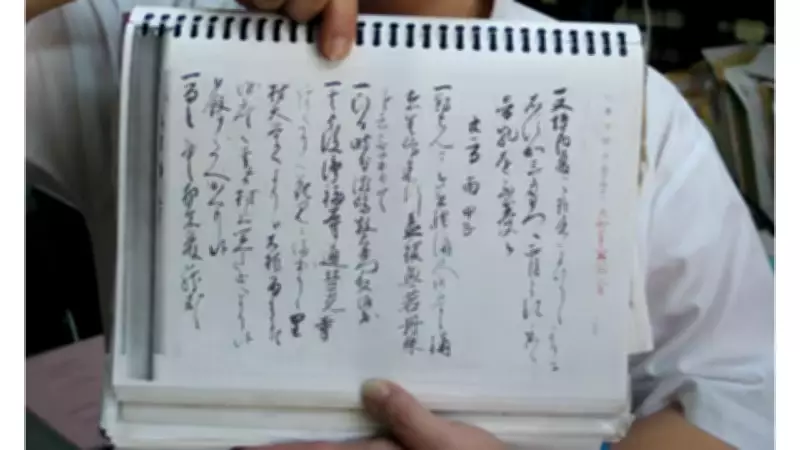
To fully appreciate Aono's contribution requires understanding his unique methodology. Rather than relying on modern instruments or satellite technology, he began with the most fundamental tools: ink, paper, and centuries-old manuscripts. In archives throughout Japan, he meticulously searched for references to cherry blossom viewing in ancient diaries and court records dating back to the 9th century.
Many of these historical documents were written in archaic forms of Japanese that remain inaccessible to most contemporary readers. Aono taught himself to read these older scripts, enabling him to interpret records spanning more than a millennium. From poetic descriptions and ceremonial accounts, he extracted precise dates, transforming literary fragments into a scientific chronology of spring itself.
The Mountain Cherry: A Consistent Witness
Aono focused specifically on the mountain cherry, known scientifically as Prunus jamasakura. This species, native to Japan and deeply embedded in both ecological and cultural history, offered crucial continuity with the past. Unlike the more widely planted Somei-yoshino variety that dominates modern forecasts, the mountain cherry provided a consistent reference point across centuries of observation.
Over time, this painstakingly assembled record began to reveal a compelling narrative. Bloom dates were unmistakably shifting earlier in the calendar. What had once been a predictable seasonal marker was gradually transforming, with the peak blooms of 2021 and 2023 occurring at some of the earliest points in the entire 1,200-year dataset.
Scientific Evidence of a Warming World
For climate scientists, these changes represent more than mere anecdotes. They constitute subtle yet persistent evidence of a warming climate fundamentally altering the rhythm of the natural world. The gradual advance of cherry blossom season provides a precise, human-scale record of environmental transformation that complements abstract temperature graphs and statistical models.
Aono's final entry came in April 2025, when he recorded the peak bloom occurring on April 4. Below this notation, he had already prepared a new line for the following year, with "2026" waiting with its space left blank—a poignant reminder of the continuity he had maintained for so long.
The Fragility of Long-Term Scientific Memory
Following Aono's death on August 5, 2025, the absence of his updates went largely unnoticed outside a small circle of researchers. The record he had maintained for decades, and extended across centuries, had quietly come to a halt. The first indication that something was amiss came not from Kyoto, but from the digital pages of Our World in Data, where researcher Tuna Acisu noticed the missing entry in visualizations based on Aono's work.

What Aono created is exceptionally rare not only for its extraordinary timespan, but for its remarkable continuity. Scientific records are frequently fragmented by time, funding limitations, or changing circumstances. To sustain a consistent dataset across twelve centuries represents a triumph over these inevitable interruptions.
Preserving a Scientific Legacy
The challenge of continuing Aono's work extended beyond simply finding another observer. It required identifying someone willing and able to replicate the exacting conditions of his methodology: the same species, the same location in Kyoto's Arashiyama district, and the same observational techniques.
Following a public appeal, a researcher in Japan has stepped forward to continue the observations, consulting the same historical and environmental markers that defined Aono's approach. While this individual remains unnamed, their commitment ensures the dataset will continue to grow and inform our understanding of climate patterns.
A Human-Scale Record of Global Change
Unlike abstract climate data, Aono's cherry blossom record is anchored in lived human experience. It reflects festivals held earlier, landscapes transformed sooner, and cultural traditions subtly reshaped by environmental forces that often remain beyond immediate perception. Those who knew Aono describe him as meticulous and quietly devoted—a scientist whose work required neither spectacle nor urgency, only unwavering consistency.
Year after year, he returned to the same fundamental question: When do the blossoms peak? The answer, once remarkably stable, is now demonstrably changing. Yet the record endures, not because continuation was inevitable, but because dedicated individuals recognized its profound scientific and cultural value.
In the end, Yasuyuki Aono's contribution extends far beyond a collection of dates and observations. It serves as a powerful reminder that even the most fleeting natural phenomena—a blossom opening, a petal falling—can contain within them the weight of centuries and compelling evidence of a world in transition. His legacy continues to bloom through the data he preserved and the scientific curiosity he inspired in others.