

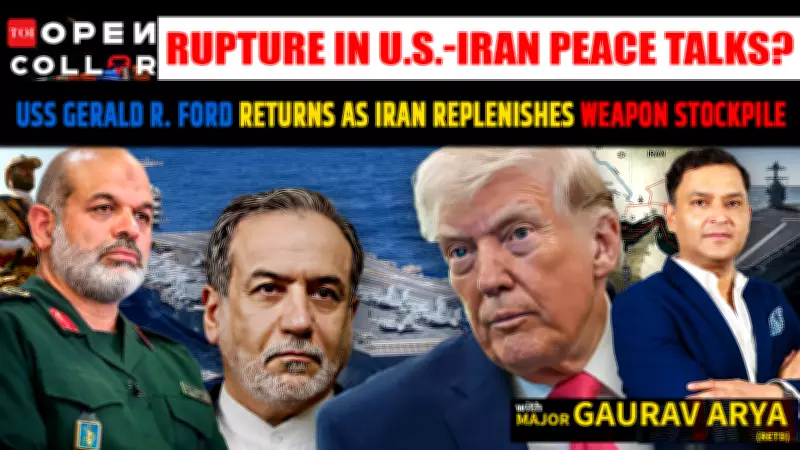
From Talks to Tensions: US-Iran Faceoff Intensifies in Hormuz Strait
In a detailed analysis on OPEN COLLAR, Major Gaurav Arya examines the rapidly deteriorating situation between the United States and Iran, with tensions spilling dangerously across the strategic Strait of Hormuz. The episode provides critical insights into how diplomatic efforts have collapsed while military posturing escalates, creating a volatile environment with global implications.
Internal Power Struggles and External Military Moves
The crisis is compounded by Iran's internal power struggle between its political leadership and the Islamic Revolutionary Guard Corps (IRGC), creating uncertainty about who holds actual negotiating authority. Simultaneously, the United States has taken provocative actions, including seizing an Iranian vessel and significantly reinforcing its naval presence in the region. These moves signal a hardening stance from Washington as Tehran's internal divisions complicate any potential diplomatic resolution.
Collapse of Peace Talks and Regional Fallout
Proposed peace talks in Islamabad have completely collapsed, leaving a diplomatic vacuum that both sides are filling with increased military activity. The failure of these negotiations has removed a crucial pressure valve, allowing tensions to build unchecked. This breakdown comes amid attacks on global shipping lanes, including multiple incidents involving Indian tankers, which are reshaping regional and global perceptions of the conflict's reach and economic impact.

Military Buildup and Escalating Rhetoric
As military forces concentrate in the Persian Gulf region, rhetoric from both Washington and Tehran has become increasingly confrontational. The United States continues to bolster its naval assets while Iran demonstrates its capability to disrupt vital shipping routes. This dangerous combination of physical military buildup and aggressive verbal exchanges raises serious concerns about the potential for miscalculation or accidental escalation that could trigger a broader regional conflict.
Global Shipping Under Threat
The attacks on commercial vessels, particularly those targeting Indian tankers, highlight how the US-Iran confrontation extends far beyond bilateral relations to threaten global economic stability. The Strait of Hormuz serves as a critical chokepoint for approximately one-fifth of the world's oil supply, making any disruption potentially catastrophic for energy markets and international trade. These incidents demonstrate how regional tensions can quickly translate into global economic consequences.
Uncertain Path Forward
With diplomatic channels effectively closed and military forces on high alert, the region appears to be approaching a dangerous inflection point. The combination of Iran's internal power struggles, failed peace initiatives, and escalating military actions creates a perfect storm for potential conflict. As both sides continue to test each other's red lines through vessel seizures, naval reinforcements, and attacks on shipping, the question remains whether cooler heads will prevail or if the region is indeed heading toward a larger, more destructive confrontation.






