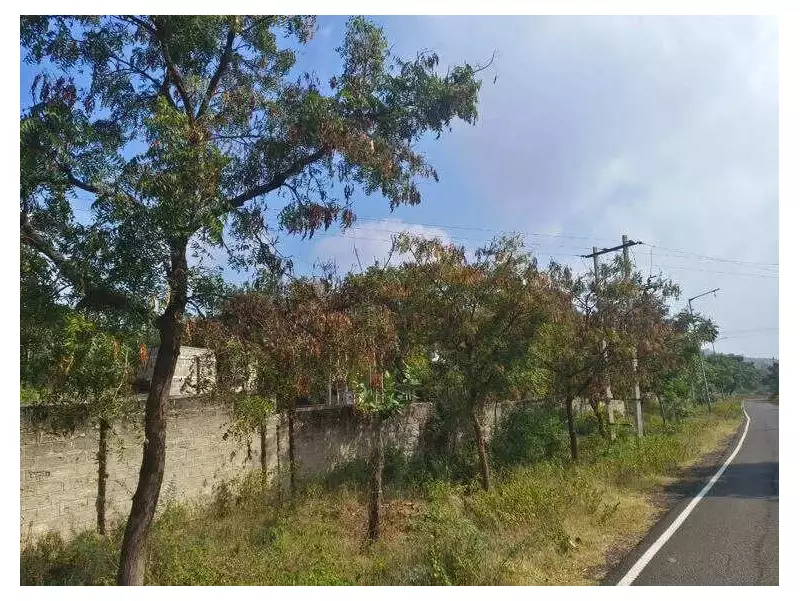
A major environmental concern has emerged at the Almatti dam site in Karnataka's Vijayapura district, where more than 100 renowned neem trees are drying up and losing their vitality. This alarming development threatens a unique green heritage and a significant source of income for local farmers.
An Iconic Green Legacy Under Threat
The neem trees of Almatti are celebrated across the state and the country for their high-quality timber, which is prized by the plywood industry. Their saplings are also in high demand due to their robust growth and excellent shade-providing capabilities. The history of these trees is deeply intertwined with the development and tourism of the Almatti dam area.
However, the current scene is worrisome. Over 100 trees are showing signs of severe distress, with their leaves and branches drying out and their stems weakening. Local activists fear that if immediate conservation steps are not taken, Almatti could lose a substantial part of its greenery and precious shade just before the harsh summer arrives.

Economic and Ecological Significance
Environmentalist Lingaraj Niduvani from Gadag highlighted the multifaceted value of these trees. He explained that Almatti neem trees are a vital income source for farmers who cultivate them on their field borders. The Almatti nursery is unique, nurturing over 200 varieties of trees compared to the 15-20 varieties typically found in other state forest nurseries.
"Every year in May-June, farmers and enthusiasts flock to the Almatti nursery to buy saplings, especially neem," Niduvani told TOI. He added that after seven years, these trees yield good profits for farmers statewide. The saplings from here have been planted across India. The red soil and ecosystem of the Almatti dam area are perfectly suited for neem and other trees.
Niduvani's organization buys 1,000 neem saplings annually from the nursery for developing Panchavati gardens. He emphasized neem's medicinal properties, its use in biodiesel production, and the commercial value of every part—seeds, leaves, and branches. "It's ironic and worrying that the neem tree, which itself acts as a pesticide, could be falling prey to an insect," he expressed.
Expert Analysis on the Possible Causes
Botany professor Arati Laddimath from Karnataka State Akkamahadevi Women University, Vijayapura, suspects multiple reasons for the disease affecting the trees. She listed potential causes including scarcity of nitrogen and magnesium in the soil, overwinter weather conditions, shading from other trees, improper water levels (either prolonged storage or scarcity), and fungus dieback disease.
"If the disease persists for a longer period, the entire tree may die," Professor Laddimath warned, underscoring the urgency of the situation.
Official Diagnosis and Promised Action
Range Forest Officer Mahesh Patil has identified a specific pest as the primary culprit. He stated that a disease caused by the 'tea mosquito bug' is responsible for the current condition. "These insects weaken the branches and stems of the tree, making the leaves appear burnt," Patil explained.
He assured that a review of the affected trees has been conducted and, crucially, no harm to the roots has been observed. "We will contact experts and soon undertake the suggested treatment. We are committed to protecting all the affected trees," Officer Patil asserted, offering a ray of hope for the conservation of Almatti's green icons.