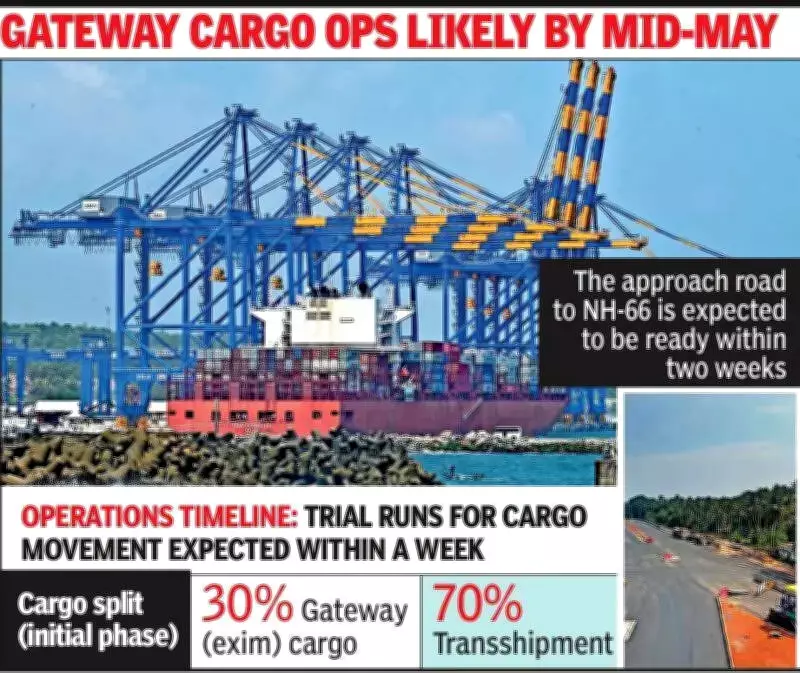
The rollout of export-import (Exim), or gateway cargo operations, at the Vizhinjam International Seaport is set to begin soon, marking a key milestone in the state's maritime infrastructure push.
Regulatory Clearances Secured
The port has secured crucial clearance from the Atomic Energy Regulatory Board (AERB) following a detailed site inspection earlier this month, clearing the way for handling containerised cargo. This approval is mandatory for ports commencing gateway cargo operations, as it ensures safety compliance for goods moving in and out of the country. According to port authorities, only the final nod from the customs department remains. Officials expect this clearance within a week, after which gateway cargo operations are likely to begin in the second week of May.
Preparatory Works Completed
Both the operator, Adani Vizhinjam Port Pvt Ltd (AVPPL), and Vizhinjam International Seaport Ltd (VISL) have completed preparatory works, citing strong demand from the exim community for direct cargo movement through Vizhinjam. A senior ports department official said commissioning exim operations would significantly cut logistics costs and transit time for exporters and importers in Kerala and neighbouring regions. "With regulatory clearances falling into place, Vizhinjam is ready to handle gateway cargo. This will open new trade avenues and reduce dependence on other ports," the official said.

Initial Phase: Gateway and Transshipment Split
In the initial phase, about 30% of operations will be gateway cargo, with the remaining 70% focused on transshipment. At present, the port's 800-metre berth can accommodate only two motherships at a time. Infrastructure critical to cargo evacuation is nearing completion.
Road Connectivity and Interim Arrangements
The approach road linking the port to NH-66 is in its final stages and is expected to be ready within two weeks. As an interim arrangement, container trucks will use this corridor and access the highway through a dedicated underpass designed for smooth merging. Under the plan, trucks exiting the port will move along the approach road and enter the underpass, bypassing surface intersections before merging with highway traffic. This system is expected to reduce congestion in nearby areas and ensure steady cargo flow, especially during peak hours.
Officials, however, point out that this is a temporary solution. The originally proposed cloverleaf interchange—meant to provide seamless, signal-free connectivity—has been delayed pending a decision by the state govt. Until then, the underpass will serve as the primary evacuation route, supported by traffic signals and safety signage approved by the National Highways Authority of India.
Logistics Infrastructure and Trial Runs
Meanwhile, essential logistics infrastructure within the port has been put in place. High-capacity scanners for inspecting container trucks have been installed, ensuring compliance with security and customs protocols. Trial runs for cargo movement are expected within a week, with operations initially handling limited volumes, largely comprising local goods.