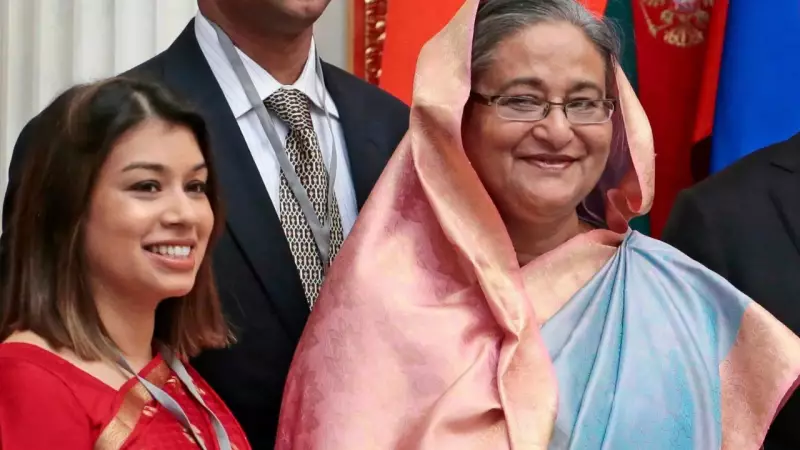
A court in Dhaka on Monday delivered prison sentences to Bangladesh's former Prime Minister Sheikh Hasina, her sister Sheikh Rehana, and Hasina's niece, British Labour MP Tulip Siddiq, in a case concerning alleged corruption in a major housing project.
Court Verdict and Sentences Pronounced
Judge Rabiul Alam of the Dhaka Special Judge Court-4 found the three women guilty of 'irregularities' in the allocation of plots under the Purbachal New Town project. The court handed down varying jail terms. Sheikh Hasina, who is already facing a death sentence for crimes against humanity, was sentenced to five years in prison. Her sister, Sheikh Rehana, received a seven-year sentence.
The court specifically found British parliamentarian Tulip Siddiq, who represents the Hampstead and Highgate constituency, guilty of misusing her 'special influence' as a UK politician. It was alleged she pressured Hasina to grant valuable pieces of land to her mother and siblings. Siddiq was sentenced to two years in jail.

International Ramifications and Reactions
The verdict has significant international implications, as Bangladesh does not have an extradition treaty with the United Kingdom. This makes it highly unlikely that Siddiq will serve her sentence. The Labour Party in the UK swiftly responded, stating it does not recognize the corruption judgment.
The party argued that Siddiq was denied a fair legal process. Siddiq herself has vehemently denied all charges, claiming that much of the prosecution's evidence was forged. She asserted that she was tried as a Bangladeshi citizen using a passport and tax ID she does not possess, having not held a Bangladeshi passport since childhood or paid taxes there.
Defiance from the Convicted British MP
Tulip Siddiq condemned the trial, calling the process 'flawed and farcical from the beginning to the end'. In a statement quoted by The Guardian, she labeled it a 'kangaroo court' with a predictable and unjustified outcome.
'I hope this so-called 'verdict' will be treated with the contempt it deserves,' Siddiq said. 'My focus has always been my constituents in Hampstead and Highgate, and I refuse to be distracted by politics of Bangladesh.' Her stance highlights the deep political divisions and legal controversies surrounding the case.