Philippines Takes Strong Action Against Offensive Foreign Vloggers
A significant online debate has erupted regarding how nations should handle foreign content creators accused of producing racist or offensive videos. This discussion gained momentum after the Philippines implemented stringent measures against several vloggers, drawing parallels to similar controversies involving influencers filming in India.
Philippines Declares It's Not a "Content Playground"
In the Philippines, authorities recently arrested two foreign vloggers and issued a public warning that the country would no longer tolerate being treated as a "content playground." Interior Secretary Jonvic Remulla emphasized that the government would rigorously enforce laws against foreigners who cause public nuisance, invade privacy, or harass local residents.
Estonian Vlogger Accused of Racist Monkey Gestures
One of the individuals arrested was an Estonian vlogger, identified as 34-year-old Siim Roosipuu. He was detained in Dumaguete City, Negros Oriental, earlier this week. Local officials accused him of harassing people in public spaces, chasing locals for reactions, and making racist remarks. In videos filmed in markets and on streets, he referred to Filipino men, including tricycle drivers, as looking or acting like "monkeys," accompanied by monkey sounds and gestures. Additionally, he faced accusations of overstaying his visa. Subsequently, the Dumaguete City Council officially banned him from the city.

Russian Vlogger's Clickbait HIV Claim Causes Alarm
Another arrest involved a 21-year-old Russian vlogger, Nikita Chekhov, detained in Quezon City this week. He gained notoriety after posting videos claiming he had come to the Philippines to "spread HIV." Authorities later confirmed he tested negative for HIV and admitted the statement was merely clickbait. He was charged with causing public alarm and nuisance. Both men were presented at a media briefing by Remulla, following the recent deportation of prank YouTuber Vitaly Zdorovetskiy earlier in January, who was expelled for harassing locals and performing dangerous stunts for his videos.
Should India Adopt a Similar Strict Approach?
A viral video summarizing these events praised the Philippines for "standing on business" and questioned whether other countries should follow suit. The clip argued that laws penalizing racist remarks, harassment, and privacy violations by foreign creators are long overdue. Many social media users responded by advocating for India to adopt a similar approach.
Japanese YouTuber's "Packed with Indians" Comment Sparks Backlash
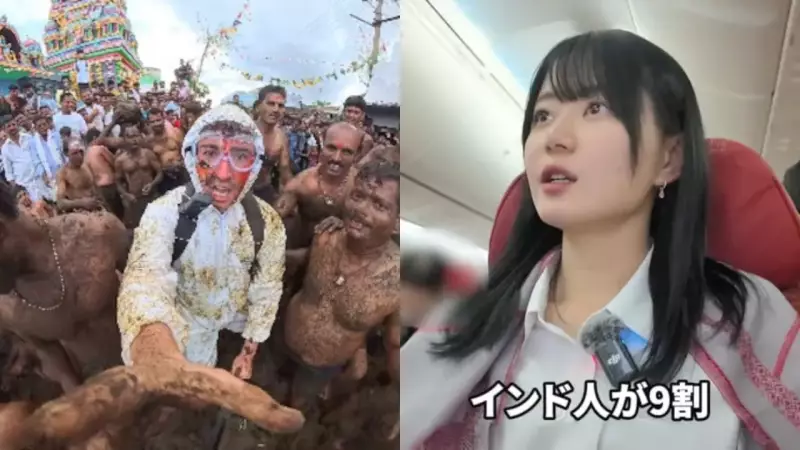
This reaction coincides with recent controversies involving vloggers filming content in India. One incident involved a Japanese YouTuber known as Ikechan, who faced significant backlash after posting about an Air India flight earlier this month. In her vlog and on social media, she wrote: "Taking the notoriously bad Air India for my first-ever trip to India!! The plane is packed with Indians." The comment went viral, with numerous users accusing her of making a racially insensitive remark by using the nationality of passengers in derogatory terms and framing it negatively.
American YouTuber Criticized for "Poop Throwing" Festival Coverage
Another controversy erupted over American YouTuber Tyler Oliveira, who filmed content at the Gorehabba festival in Gumatapura, Karnataka, last year. The festival, held after Diwali, involves villagers throwing dried cow dung as part of a local tradition. Oliveira posted clips captioned, "Happy Diwali! Yes, I went to India’s poop throwing festival." The internet accused him of mocking Indian culture and portraying the ritual as bizarre. Oliveira defended himself by stating, "It isn’t racist to film a poop-throwing festival," but the backlash persisted online. Reports later indicated that Oliveira announced he would not release a documentary on the festival after facing doxxing and intense criticism.
The ongoing debate highlights growing global concerns about the ethical responsibilities of foreign content creators and the need for robust legal frameworks to protect local communities from offensive and disrespectful behavior.