Saudi Arabia's Al-Habkah Cave Casts Moonlit Scorpion Shadow in Rare Natural Phenomenon
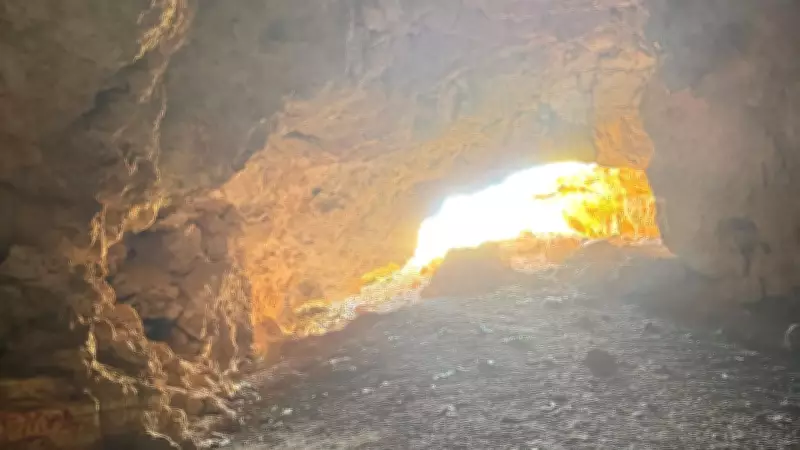
In the remote northern reaches of Saudi Arabia, a captivating natural spectacle unfolds under the cover of night. Al-Habkah Cave, nestled along a rocky hillside west of Rafha, reveals an unusual sight when specific conditions align. At night, as the full moon rises, light striking the cave entrance creates a shadow that distinctly resembles a black scorpion. This is no optical illusion or trick of the eye; it is a genuine interaction between moonlight and rock, visible only from a particular vantage point and at a precise moment in time.
A Desert Illusion Shaped Like a Scorpion
The phenomenon occurs when moonlight hits the cave entrance at an exact angle, causing the contours of the rock to cast a shadow that forms the outline of a scorpion. The image becomes clearer when viewed from the opposite hill, where the right side of the formation, facing east, stands out more prominently. The shape does not appear all at once; it gradually forms as the moon ascends, offering observers a limited window to witness it in its most defined state. This rare alignment of light and landscape has earned the cave the nickname "The Black Scorpion."
How Moonlight Creates the Effect
The explanation behind this striking phenomenon lies in basic principles of light behavior. Light travels in straight lines, and when the full moon’s rays strike the cave entrance horizontally, the uneven edges of the rock shape and redirect that light. These irregular surfaces act like a natural projector, casting a shadow on the ground that mimics a scorpion. Both timing and position are absolutely essential. Without the correct angle of light and the right viewing point, the formation either appears unclear or does not form at all, making it a fleeting and exclusive spectacle.

What the Astronomer Says
Barjas Al-Fulaih of the AFAQ Society for Astronomy, speaking to the Saudi Press Agency (SPA), has confirmed that the phenomenon is real and can be seen with the naked eye from a specific vantage point and at a precise time. He explained that when the moonlight strikes horizontally, the cave entrance protruding from the hillside appears like a black scorpion, with the right side facing east more clearly visible when viewed from the opposite hill. Al-Fulaih discovered the formation in winter while waiting for dawn to enter the cave. Around 8 PM, as the moon rises, the scorpion-like shape gradually forms at the base of the hill. He added that the phenomenon can also be observed again at sunrise, when similar lighting conditions recreate the effect for a brief period.
A Site Attracting Observers and Photographers
This rare alignment has begun to draw attention from observers and astrophotography enthusiasts. Capturing the moment requires more than just being present; clear skies, the right lunar phase, accurate timing, and the correct vantage point all play crucial roles. This makes the phenomenon particularly appealing to those interested in documenting natural light effects, as it cannot be easily replicated or viewed on demand, adding to its mystique and allure.
Inside Al-Habkah Cave
Beyond the visual phenomenon, Al-Habkah Cave itself is a notable natural feature in the Northern Borders Region. More than 500 metres of its passages have been explored so far. The cave includes three main corridors of varying width and height, along with several branching tunnels and pits, pointing to a complex underground formation shaped over time by geological processes.
Wildlife and Surrounding Landscape
The area around the cave supports a diverse range of wildlife, including wolves, hyenas, and foxes. Two years ago, the National Center for Wildlife reported finding remains of hunting leopards in the area, suggesting that the site has long been part of a broader ecological system, rich in biodiversity and natural history.

Where the Cave Is Located
Al-Habkah Cave is located about 160 kilometres west of Rafha, near the village of Al-Habkah, which is considered one of the region’s ancient water resources. With its mix of geological structure, wildlife presence, and a rare light-based illusion, the site offers a unique glimpse into how natural elements can align to create something both visually distinct and scientifically grounded, blending beauty with scientific intrigue.