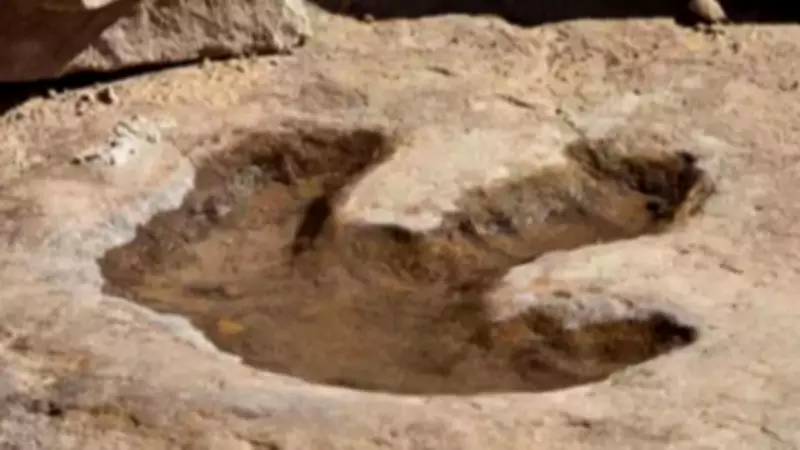
Massive Dinosaur Footprints Discovered in Western Australia
Researchers have made an extraordinary discovery in Western Australia, unearthing some of the largest dinosaur footprints ever recorded. These prints are so immense that an adult human could comfortably curl up inside a single footprint. This remarkable find challenges previous assumptions about prehistoric life and offers unprecedented insights into the ancient world.
Record-Breaking Discovery on Dampier Peninsula
The ancient footprints were uncovered along the Dampier Peninsula in Western Australia and have been officially recognized as the "Largest dinosaur footprint" by Guinness World Records. Preserved in fossil-rich sandstone dating back approximately 130 million years to the Early Cretaceous period, these prints represent a significant paleontological breakthrough.
What makes this site particularly remarkable is not just the size of the footprints, but their depth and diverse shapes, showcasing the variety of dinosaur species that once roamed northwestern Australia. This discovery provides more than just evidence of gigantic creatures; it offers a tangible connection to Gondwana, the ancient southern supercontinent that once included Australia.

Unprecedented Scale and Measurements
The largest footprint discovered measures an astonishing 1.7 meters long, equivalent to just over five and a half feet. This represents the largest dinosaur footprint ever documented worldwide. Researchers from the University of Queensland and James Cook University have identified these massive tracks as belonging to sauropods, the long-necked, plant-eating giants that dominated prehistoric landscapes.
A vertebrate paleontologist from the University of Queensland emphasized the scale, noting that many of these tracks are so large that most people could actually fit inside a single footprint. The dinosaurs that created these impressions likely stood between 5.3 to 5.5 meters tall at the hip, representing truly colossal creatures even by dinosaur standards.
Australia's "Jurassic Park" Revealed
The discovery site has been dubbed Australia's own "Jurassic Park" due to its exceptional concentration of dinosaur evidence. Along the coastal stretch where the Broome Sandstone extends, scientists have documented more than 150 tracks from at least 21 different dinosaur species.
This diverse collection includes:
- Large meat-eating theropods
- Two-legged plant-eating ornithopods
- Armored dinosaurs known as thyreophorans
- Numerous sauropod species
This makes the location one of the most varied dinosaur track sites in the world and provides Australia with its most comprehensive evidence of dinosaur life from the Early Cretaceous period.
Geological Significance and Preservation
The Broome Sandstone formation itself holds immense geological importance. Originally formed from river delta mud and sand millions of years ago, it now appears along today's coastline. What makes this site particularly fascinating is that many of these tracks are located in the intertidal zone, becoming visible only during low tide.
This unique geological circumstance has created a paleontological treasure trove, preserving these ancient impressions in remarkable detail while requiring precise timing for their observation and study.
Groundbreaking Revelations About Prehistoric Life
For the first time in Australia, researchers have discovered confirmed stegosaur footprints, providing evidence that these dinosaurs once roamed the continent despite their absence from previous fossil records. These findings corroborate earlier discoveries highlighted by National Geographic, which emphasized both the massive scale of the Kimberley prints and their significance in understanding dinosaur ecology.
Beyond their impressive size, these trackways offer valuable information about:
- How these giant creatures moved and behaved
- Their daily lives and social structures
- Their ecological roles within ancient ecosystems
Footprints like these capture fleeting moments from the distant past, enabling scientists to study actual dinosaur behavior rather than relying solely on skeletal remains.

Scientific Importance and Global Significance
This discovery fundamentally alters our understanding of prehistoric Australia and provides compelling evidence of the continent's rich dinosaur heritage. These fossil tracks represent more than mere impressions in stone; they are preserved snapshots of colossal sauropods, bustling dinosaur herds, and prehistoric landscapes frozen in time.
The site serves as a powerful reminder of the scale and vitality of the ancient world, offering visitors to Western Australia's coast the extraordinary opportunity to literally walk over one of the greatest dinosaur stories ever uncovered. When the tide recedes, it reveals a window into a world that existed 130 million years ago, providing ongoing opportunities for scientific discovery and public education about Earth's prehistoric past.