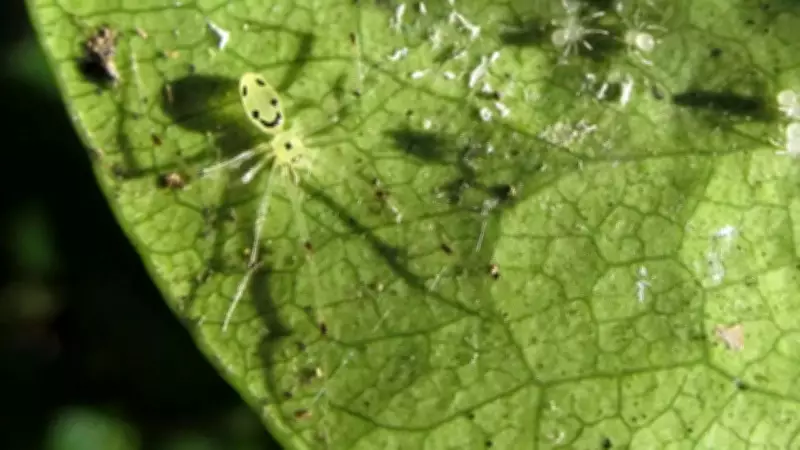
The Hawaiian Happy-Face Spider: Nature's Unexpected Smile
If someone mentioned a spider in Hawaiʻi sporting a smiley face on its back, you might dismiss it as an exaggeration or a playful joke. However, this diminutive creature is very much real, representing one of those nature tales that seem fabricated until you examine it closely. The Hawaiian Happy-face spider is remarkably small, completely harmless to humans, and astonishingly resembles a cartoon character with its cheerful expression. Discovering this spider feels akin to unearthing an ancient wooden tool in a modern junk drawer—unexpected, fascinating, and oddly charming. Once you delve into how this spider lives, loves, and nurtures its young, it transcends being "just a spider" and emerges as one of those quietly amazing life forms we nearly overlook entirely.
The Enigmatic Smiley Pattern on Its Back
The first feature that captivates observers is, undoubtedly, the face. On the spider's abdomen rests a pattern that bears an uncanny resemblance to a tiny clown or smiley emoji. This distinctive marking might serve to deter predators, or it could simply be a genetic coincidence that has persisted over time. Regardless of its origin, it has proven effective. Interestingly, there are multiple variants of this spider: some display clear faces, others lack them entirely, and some exhibit patterns that appear more abstract than happy. All are endemic to Hawaiʻi, meaning they exist nowhere else on Earth. Measuring under 5 millimeters in length, they are easily missed, which makes their bold pattern all the more surprising—like finding intricate graffiti on a mere grain of sand.
Hunting and Survival Strategies in Hawaiian Forests
Happy-face spiders inhabit the cool, wet high-altitude forests of Hawaiʻi, typically concealed beneath leaves. Think of it as nature's equivalent of residing on the shady side of the street. Unlike many spiders, they do not construct classic webs stretched between branches. Instead, they remain quiet and inactive during the day, almost as if pretending not to exist. At night, they transform into tiny, efficient hunters, utilizing silk to capture prey such as fruit flies. Their glassy yellow-green bodies provide excellent camouflage against leaves, a crucial adaptation since birds view them as bite-sized snacks.

Mating Rituals and Reproductive Behaviors
Spider romance is rarely a relaxed affair, and this species is no exception. As cited by Hawai'i Pacific Parks, males approach females with caution, performing a kind of courtship dance. This interaction is polite, careful, and undoubtedly nerve-wracking for the male. The female observes closely before deciding whether he is an acceptable mate, highlighting the delicate dynamics of their reproductive process.
Conservation Threats Facing the Species
Despite their charming appearance, these spiders confront significant threats. Invasive species, such as coqui frogs, prey on them, while habitat loss continues to shrink their already limited forest homes. Climate change introduces additional uncertainty by altering the delicate environmental conditions they depend on. Protecting native forests not only aids this spider but also supports entire ecosystems that have co-evolved over millions of years, emphasizing the broader importance of conservation efforts.
The Color-Changing Phenomenon: A Dietary Influence
According to a study referenced by the University of California, Berkeley, titled "Exploring the colour pattern frequencies," the Hawaiian Happy-face spider (Theridion grallator) possesses a remarkable ability to change its body color based on its diet. Typically, its abdomen appears pale yellow and almost translucent. However, after consuming certain insects, its belly can adopt different hues. The spider's transparent body and its dietary intake collaborate to influence its appearance in the wild, adding another layer of intrigue to this already fascinating species.