Japanese Research Team Rewrites Deep-Sea Biology Record with Groundbreaking Discovery
A remarkable breakthrough in marine biology has been achieved by a Japanese research group, fundamentally rewriting the known limits of deep-sea life. During a scientific expedition to the Kuril-Kamchatka Trench in the northwestern Pacific Ocean, researchers from Hokkaido University made an unprecedented find at a staggering depth of 6,200 meters.
Unprecedented Discovery in the Abyssal Zone
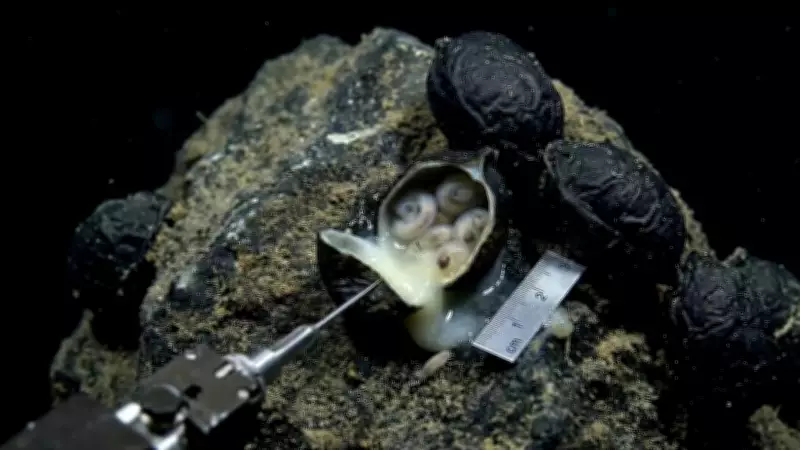
While conducting systematic sampling operations, the scientific team recovered several unusual leathery black cocoons firmly attached to rock specimens from the trench floor. These mysterious structures, measuring approximately 3 millimeters in diameter, presented an intriguing puzzle for the investigating scientists. The discovery location represents one of the deepest marine environments ever explored for biological specimens.
Inside the Mysterious Black Cocoons
According to the detailed report published in the prestigious journal Biology Letters, these leathery capsules contained developing embryos of free-living flatworms belonging to the phylum Platyhelminthes. When Dr. Keiichi Kakui and his colleagues carefully examined the specimens under microscopic analysis, they discovered each cocoon contained between three and seven flatworm embryos suspended in a nutrient-rich yolk substance.

The protective yolk served multiple crucial functions:
- Providing essential nutrients for embryonic development
- Shielding the delicate embryos from extreme hydrostatic pressure
- Creating a stable microenvironment in the harsh chemical conditions of the deep sea
Remarkably, some embryos displayed clear signs of developed internal organs, indicating advanced developmental stages despite the extreme environmental conditions.
Setting a New World Record
This discovery establishes a definitive new world record for this species of flatworm, nearly doubling the previous depth record of 3,232 meters. The finding demonstrates that organisms with relatively simple body plans can thrive in environments previously considered too extreme for complex biological processes.
Evolutionary Implications and Survival Mechanisms
The research provides groundbreaking insights into how marine organisms have colonized the deepest regions of our oceans over geological time scales. The study reveals that many flatworm species share similar embryonic morphology, allowing them to migrate from shallow coastal waters into the hadal zone—the deepest part of the ocean.
The leathery cocoons essentially function as "time capsules" that protect developing embryos during this migration process. This protective adaptation enables the organisms to withstand crushing underwater pressures exceeding 600 atmospheres and the chemically challenging environment of the abyss.
Scientific Significance and Future Research Directions
This represents the first documented discovery of intact flatworm embryos at such extreme depths, an achievement that was previously considered unpredictable by marine biologists. The findings establish a crucial foundation for future investigations into how organisms with simple anatomical structures have successfully colonized the planet's most inhospitable marine environments.
The research team from Hokkaido University emphasizes that their discovery challenges previous assumptions about pressure tolerance in marine organisms. Their work suggests that life forms with complex developmental processes can maintain essential biological functions regardless of the immense pressures encountered in deep-sea habitats.
This groundbreaking study opens new avenues for understanding evolutionary adaptation, deep-sea ecology, and the remarkable resilience of marine life in Earth's most extreme environments.