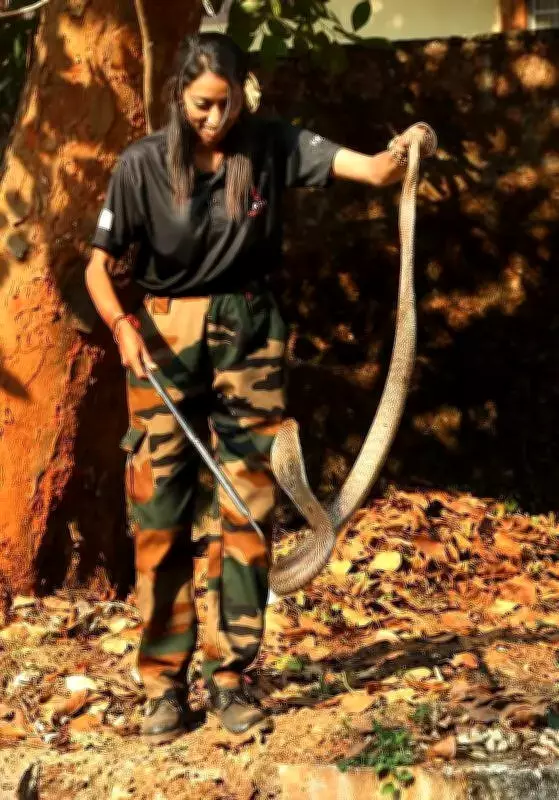
Thiruvananthapuram: With snakebites surging, people call catchers without checking if snakes are venomous, and this fear-driven trend harms local ecology. Yet the issue is often ignored, as the forest department is focused on removing the problem rather than solving it holistically.
Forest Department's Relocation Practices
The forest department has been relocating rescued snakes mostly into forest areas, as there has been considerable resistance against releasing them even in sparsely populated areas. Often, rescued snakes are released together in large numbers. Their release can also impact the ecology in the forest, as these snakes can spread infection. It is estimated that around 2,000 snakes are being rescued every month.
Expert Warnings on Long-Distance Translocation
Experts say that large-scale relocation of snakes into forests or areas far from their habitat would cause their death and lead to an increase in the rodent population in human settlements, which will have long-term consequences. Dileep Kumar R from the Centre for Venom Informatics at the University of Kerala stated that long-distance translocation, typically over three kilometers, of snakes often leads to severe negative outcomes. Snakes moved far from their home range frequently exhibit frantic, erratic movements as they try to navigate an unfamiliar landscape. He also mentioned that access to feed would be difficult because the snakes are used to feeding on rodents and other creatures in human habitats.

Scientific Release Protocols Needed
Dileep Kumar emphasized that the forest department should have a standard operating procedure to release rescued snakes in a scientific manner by considering all aspects of the snakes and the characteristics of the wild. Albert Rajendran, a herpetologist and former professor of zoology from Tirunelveli, added that a full-grown snake must have lived in the area for at least 10 years. He noted that while people think it is safe to relocate them, it will take time for snakes to adapt to new surroundings, and they may meet a predator. He highlighted that a rat snake released in a forested area will die within two to three days, underscoring how much remains unknown about the life of snakes.
Contrasting Views on Relocation Success
However, Muhammed Anwar, nodal officer of Mission Sarpa, offered a different perspective. He stated that there is a guideline to release snakes. Non-venomous snakes are released in areas away from residential areas by volunteers who record the event in an app, while poisonous snakes are handed over to rapid response teams to be released in the forest. He claimed that relocated snakes will establish themselves in new surroundings, as snakes are by nature designed to survive from the time of birth.
Ecological Imbalance Overlooked
Often faced with antagonism from the people, the forest department feels it may be inappropriate to talk about the ecological imbalance caused by removing snakes from localities. The department's focus remains on addressing immediate public concerns rather than the broader ecological consequences.