

Uttarakhand Researchers Achieve Landmark Success in Cultivating Rare Morel Mushrooms
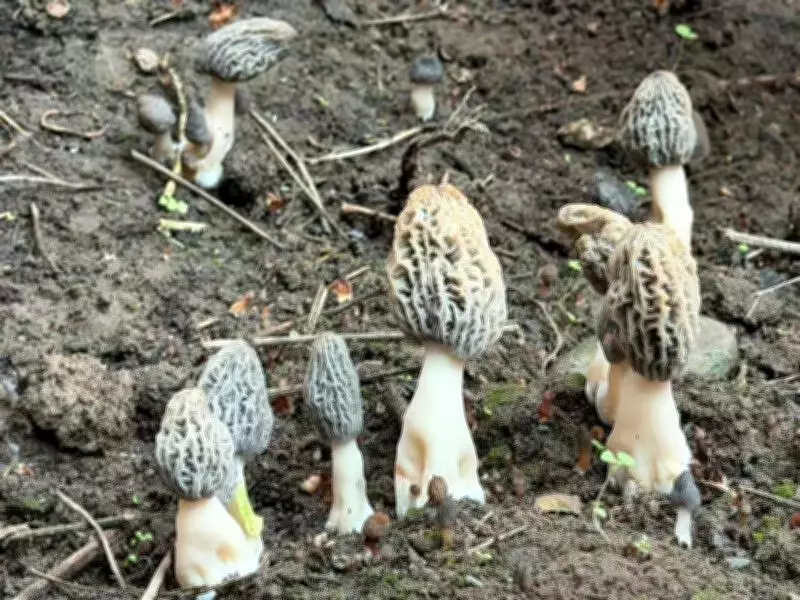
In a remarkable scientific achievement that could transform Himalayan agriculture, researchers based in Uttarakhand have successfully cultivated morel mushrooms (Morchella) artificially in the plains of Haldwani. This rare and highly prized wild fungus, traditionally found only in high-altitude Himalayan forests, has long resisted artificial cultivation due to its sensitive ecological requirements.
Overcoming Decades of Scientific Challenges
Morel mushrooms typically appear for just a brief period during March and April at elevations ranging from 5,000 to 11,500 feet. Until this breakthrough, their growth was largely confined to wild forest environments, with artificial cultivation considered extremely complex and nearly impossible. The successful experiment, conducted over a full year in Haldwani's plains, demonstrates that advanced scientific techniques and carefully controlled environmental conditions can overcome these challenges.
"Defying these obstacles, our experiment has proven that morel cultivation is achievable through precise scientific methods," explained Anup Shah, an environmentalist and Padma Shri award-winning photographer who participated in the research. "This represents a significant advancement in mycological science and agricultural technology."

Developing Advanced Varieties and Future Directions
The research team has also developed four advanced morel varieties at an altitude of approximately 7,000 feet, with results expected within the next two months. The multidisciplinary team includes mycologists and morel specialists Dr. Naveen Verma and Dr. GS Mer, along with Anup Shah and research aides Deepak Pandey and Yash.
While the plains experiment succeeded, Shah emphasized that morels remain naturally better suited to high-altitude Himalayan climates. "The next phase will focus on implementing our cultivation technology in higher Himalayan regions to assess commercial viability and maximize production potential," he revealed. This strategic approach aims to optimize growing conditions while expanding cultivation possibilities.
Economic and Nutritional Significance
Morel mushrooms command exceptionally high market prices due to their rarity and strong demand in culinary markets worldwide. Beyond their economic value, they offer substantial nutritional benefits:
- High-quality protein content
- Significant dietary fiber
- Vitamin D for bone health
- Iron for blood health
- Powerful antioxidants known to boost immunity
Vice Chancellor of Kumaon University, DS Rawat, praised the research team's efforts, recognizing the project's potential to significantly improve economic conditions for mountain farmers. "This pioneering accomplishment has achieved what agricultural universities and government agriculture departments hadn't even attempted," he stated. "It stands as a proud milestone in advancing sustainable hill agriculture and represents a transformative development for regional economies."
The university has extended its support to collaborate with the research team, indicating institutional recognition of the breakthrough's importance. This successful cultivation of morel mushrooms in non-traditional environments opens new possibilities for agricultural diversification, economic development in Himalayan communities, and sustainable food production methods that could be replicated in similar regions worldwide.






