

NASA Issues Sharp Rebuke to Boeing Over Starliner Program Failures
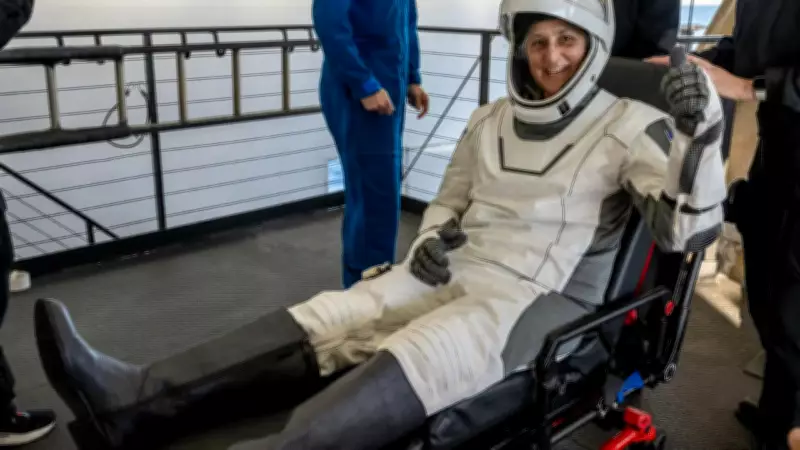
NASA has delivered a scathing critique of Boeing's Starliner spacecraft program following a comprehensive investigation into the troubled 2024 mission to the International Space Station. The mission resulted in astronauts Sunita Williams and Butch Wilmore being stranded in space for approximately nine months, far exceeding the planned eight-to-14-day duration.
Highest Classification for Mission Failure
The U.S. space agency has officially designated the Starliner test flight as a "Type A mishap"—its most severe classification for mission failures. This designation has previously been applied to catastrophic events such as the Columbia shuttle disaster that claimed the life of Kalpana Chawla and six other astronauts, and the Challenger explosion that also killed seven crew members.
"We are formally declaring a Type A mishap and ensuring leadership accountability so situations like this never reoccur," NASA stated. "We look forward to working with Boeing as both organizations implement corrective actions and return Starliner to flight only when ready."

Technical and Management Deficiencies Exposed
NASA Administrator Jared Isaacman revealed that the investigation uncovered serious concerns extending beyond mere hardware issues. While acknowledging that "Starliner has design and engineering deficiencies that must be corrected," Isaacman emphasized that "the most troubling failure revealed by this investigation is not hardware. It's decision-making and leadership."
He warned that if left unchecked, this mismanagement "could create a culture incompatible with human spaceflight." The report indicated that programmatic advocacy had exceeded reasonable bounds, placing the mission, crew, and America's space program at risk in ways not fully understood at the time.
Critical Moments During Docking
According to the investigation findings, the most significant risk to the crew occurred when Starliner's thrusters malfunctioned as the spacecraft approached the International Space Station. Although enough thrusters were eventually restored to enable successful docking, officials acknowledged the outcome could have been far worse.
"At that moment, had different decisions been made, had thrusters not been recovered or had docking been unsuccessful, the outcome of this mission could have been very, very different," Isaacman stated during a briefing.
NASA's Response and Future Plans
NASA has made it clear that the agency will not proceed with another Starliner mission until all technical issues are thoroughly resolved. "NASA will not fly another crew on Starliner until technical causes are understood and corrected," Isaacman declared, adding that the spacecraft is currently "less reliable for crew survival than other crewed vehicles."
Despite the harsh criticism, NASA officials confirmed they will continue working with Boeing. "NASA will continue to work with Boeing, as we do all of our partners that are undertaking test flights," Isaacman said.
Boeing's Response and NASA's Accountability
In response to the investigation findings, Boeing issued a statement affirming its commitment to the Starliner program. "Boeing has made substantial progress on corrective actions for technical challenges we encountered and driven significant cultural changes across the team that directly align with the findings in the report."
NASA officials also acknowledged their own responsibility in the matter. "We managed the contract. We accepted the vehicle, we launched the crew to space. We made decisions from docking through post-mission actions," Isaacman stated. "A considerable portion of the responsibility and accountability rests here."
NASA Associate Administrator Amit Kshatriya expressed particular concern about the impact on the astronauts, stating: "They have so much grace, and they're so competent, the two of them, and we failed them. The agency failed them."
The astronauts were ultimately returned to Earth in March 2025 via a SpaceX Dragon spacecraft, concluding their unexpectedly extended stay in space.






