

Laser Technology Unlocks Secrets of Darwin's Sealed Specimen Jars
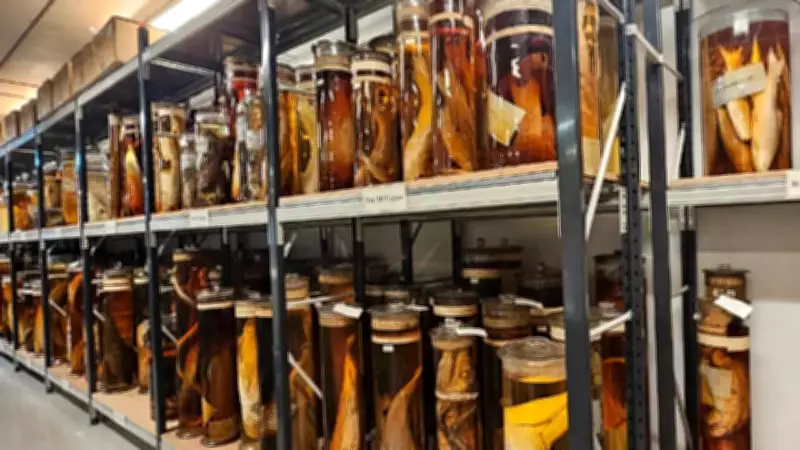
For nearly two hundred years, glass jars containing animals collected by the legendary naturalist Charles Darwin have remained hermetically sealed within museum storage facilities. Any effort to open these containers risked evaporation, contamination, and irreversible harm to some of the world's most historically significant biological specimens. Consequently, critical details about their preservation methods remained shrouded in uncertainty. That situation has now been dramatically transformed.
Breakthrough Analysis Without Opening
Researchers from the Natural History Museum in London, collaborating with scientists at the STFC Central Laser Facility under UK Research and Innovation, have successfully identified the chemical preservation fluids inside Darwin's jars using an innovative laser-based technique. This groundbreaking achievement provides rare insights into early scientific methodologies and represents a major advancement in global museum conservation practices.
Darwin's Historic Specimen Collection
The specimens were gathered during Darwin's transformative voyage aboard the HMS Beagle from 1831 to 1836. Throughout this pioneering expedition, Darwin meticulously collected mammals, reptiles, fish, and invertebrates from South America and the Galápagos Islands. Many of these samples eventually became part of the prestigious collections at London's Natural History Museum, where they remain central to the documented history of biological science.

"These jars are more than mere storage containers," emphasized Wren Montgomery, a research technician at the museum. "They represent tangible records of how scientific inquiry was conducted and how preservation practices evolved across generations."
Darwin collected animals primarily to answer fundamental biological questions rather than simply to fill museum shelves. He systematically compared species from different geographical regions to comprehend variation and adaptation mechanisms. Mammals and reptiles enabled him to study bone structure and physical morphology. Fish specimens revealed how organisms adapt anatomically to aquatic environments. Invertebrates, including delicate jellyfish, offered crucial insights into simple body plans and developmental processes.
Collectively, these carefully preserved specimens formed the evidentiary foundation that ultimately shaped Darwin's revolutionary theory of natural selection, years before his seminal work On the Origin of Species was published in 1859.
Revolutionary Laser Analysis Technique
The research team analyzed forty-six historic specimens using Spatially Offset Raman Spectroscopy, commonly known as SORS. This sophisticated technique directs laser light through glass containers and precisely measures how the light scatters upon interaction with contents. The resulting signal reveals the detailed chemical composition of liquids inside completely sealed vessels.
Dr. Sara Mosca from the STFC Central Laser Facility highlighted the technique's advantages. "Previously, identifying preservation fluids necessitated physically opening jars," she explained. "That approach risked specimen contamination and undesirable chemical alterations. Our non-invasive method allows us to properly care for these fragile historical items while maintaining their sealed integrity."
Preservation Patterns Revealed
The laser analysis uncovered clear preservation patterns across different animal groups:

- Mammals and reptiles were typically fixed in formalin shortly after collection to stabilize tissues and prevent decay, then later transferred to ethanol for safer long-term storage.
- Fish specimens were mainly stored in ethanol, with many showing evidence of earlier formalin use during initial preservation stages.
- Invertebrates, including jellyfish and shrimp, displayed the greatest preservation variability. Some were preserved in formalin, while others were kept in buffered water-based solutions. Several samples contained glycerol, likely added to prevent shrinkage and structural collapse in soft-bodied organisms.
The laser technique successfully identified preservation fluids in approximately eighty percent of specimens, with another fifteen percent partially identified. Beyond liquid analysis, the scans also determined whether containers were glass or plastic, helping researchers track storage changes over time and previous conservation efforts.
"Understanding both the preservation fluid and container material is crucial," Montgomery noted. "Certain combinations age more favorably than others. This knowledge provides early warning systems before visible damage occurs."
Global Conservation Implications
More than one hundred million fluid-preserved specimens are housed in museums worldwide, many lacking comprehensive documentation. The ability to analyze these items without opening containers could fundamentally transform how global collections are monitored, maintained, and protected for future generations.
"This breakthrough extends far beyond Darwin's specimens," Mosca emphasized. "It provides museums worldwide with a powerful tool to safeguard irreplaceable scientific material for ongoing and future research endeavors."
A Quiet Conservation Revolution
While the study did not uncover new species or hidden biological secrets, its profound impact lies in how it protects scientific heritage. By definitively confirming how Darwin's animals were preserved and demonstrating this can be accomplished safely, scientists have established a new conservation standard for historical collections.
As Montgomery succinctly stated, "Comprehending exactly what these specimens are stored within helps ensure their survival for the next two centuries of scientific inquiry."





