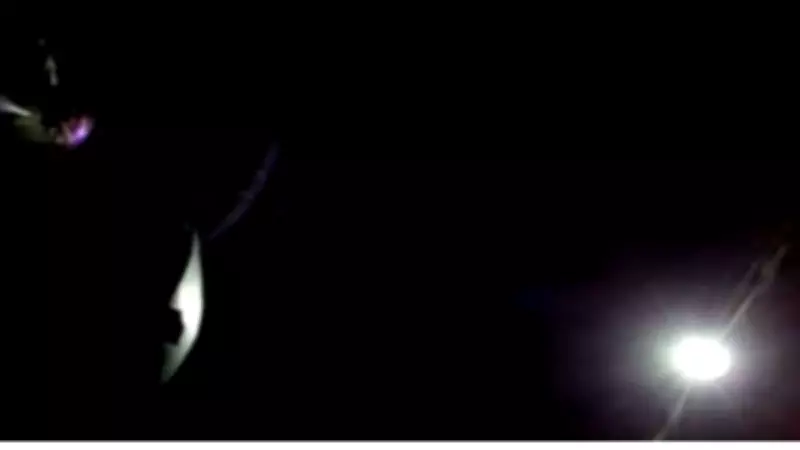
Artemis 2 Astronauts Document Rare Cosmic Eclipse During Lunar Mission
In a groundbreaking moment for space exploration, the crew of NASA's Artemis 2 mission has successfully observed and recorded a rare cosmic eclipse while positioned behind the Moon. This extraordinary event, which occurred during their lunar orbit, provided a unique perspective on celestial alignments that are seldom visible from Earth or previous space missions.
Unprecedented View from Lunar Orbit
The astronauts, who are part of NASA's ambitious program to return humans to the Moon, captured stunning video footage showing Earth and the Sun aligning in a precise cosmic eclipse. This phenomenon, where the Earth partially or fully blocks sunlight from reaching the Moon's far side, created a dramatic visual spectacle that highlights the intricate dynamics of our solar system.
Mission Significance and Scientific Value

This observation is not merely a visual marvel; it holds substantial scientific importance. By studying such events from behind the Moon, researchers can gain new insights into solar radiation, Earth's atmosphere, and lunar geology. The data collected could enhance our understanding of space weather and its effects on future manned missions, including those planned for Mars.
Technical Achievements and Crew Experience
The successful documentation of the cosmic eclipse underscores the advanced capabilities of the Artemis 2 spacecraft and its crew. Equipped with state-of-the-art imaging technology, the astronauts were able to record high-resolution video, providing clear details of the eclipse's progression. This achievement marks a significant milestone in human spaceflight, demonstrating the crew's ability to conduct complex observations in a challenging environment.
Implications for Future Missions
This event has broader implications for NASA's long-term goals. As the agency prepares for sustained lunar exploration and eventual missions to Mars, understanding celestial events like this cosmic eclipse is crucial. It helps in planning safe trajectories, optimizing communication systems, and developing protocols for astronaut safety during extended space travel.
Public Engagement and Educational Outreach
NASA has released portions of the video footage to the public, sparking widespread interest and excitement. This move aims to inspire future generations of scientists and engineers, while also educating the global community about the wonders of space. The footage serves as a powerful tool for STEM education, illustrating real-time applications of physics and astronomy.
Looking Ahead: Artemis Program and Beyond
The Artemis 2 mission is a key step in NASA's Artemis program, which seeks to establish a sustainable human presence on the Moon by the end of the decade. Observations like the cosmic eclipse contribute valuable data that will inform subsequent missions, including Artemis 3, which plans to land astronauts on the lunar surface. As space exploration advances, such discoveries pave the way for deeper investigations into our universe.