

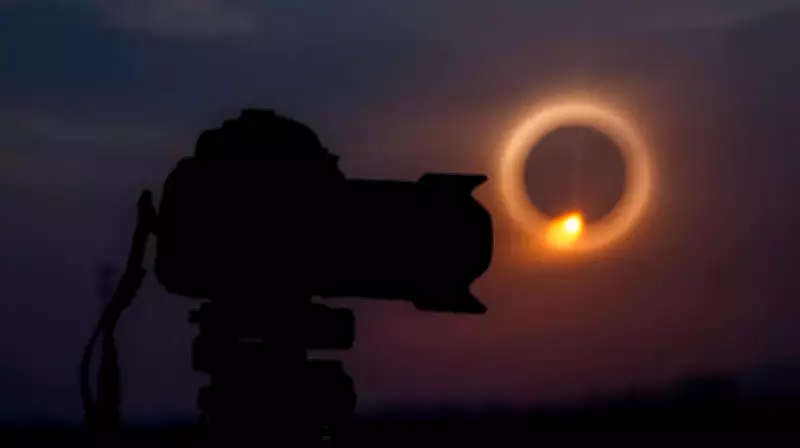
2026 Solar Eclipse: A Complete Guide to Safe and Effective Photography
Capturing a solar eclipse has become a popular pursuit for enthusiasts worldwide, drawing crowds eager to document the celestial spectacle as the Moon passes in front of the Sun. With the first solar eclipse of 2026 scheduled for February 17, many are already planning ahead to ensure they can photograph this rare event safely and successfully. This annular eclipse, often referred to as a "ring of fire," occurs when the Moon aligns between Earth and the Sun without completely obscuring it, leaving a brilliant ring of sunlight visible around the lunar edge.
Path and Visibility of the 2026 Annular Eclipse
The eclipse will commence over the southern Indian Ocean, traverse sections of Antarctica, and conclude in the southern Atlantic Ocean. Due to its central path primarily crossing Antarctica and the adjacent Southern Ocean, very few observers will have the opportunity to witness the complete annular phase in person. However, a broader region across the Southern Hemisphere will experience a partial eclipse, offering more people a chance to view and photograph the phenomenon.
Essential Safety Measures for Eclipse Photography
Photographing a solar eclipse demands more than simply aiming a camera skyward; safety is the foremost priority, followed by meticulous preparation and an understanding of how lighting conditions will evolve during the event. From selecting appropriate filters to adjusting exposure and composing shots of the surrounding landscape, each decision significantly impacts the final outcome. The following guidance, supported by NASA, outlines practical steps to capture the eclipse clearly while safeguarding both vision and equipment.

Use certified solar filters to protect eyes and cameras during all partial phases. Direct sunlight can cause permanent eye damage and burn camera sensors within seconds. Standard sunglasses are insufficient; certified solar viewing glasses that meet international safety standards are essential for all partial stages. Cameras also require a dedicated solar filter securely attached over the lens front. Neutral density filters are not suitable for this purpose. During totality, when the Sun is fully covered, filters can be briefly removed to photograph the corona but must be reinstated immediately as bright sunlight reappears.
Equipment and Techniques for Capturing the Eclipse
Any camera can capture a solar eclipse with proper planning. High-end gear is not necessary; a DSLR, mirrorless camera, or modern smartphone can all record the event if used carefully. Longer lenses bring the solar disc closer for detailed shots, while wide lenses can showcase the changing light across the landscape. A tripod helps minimize blur as light levels decrease, and using a shutter delay reduces movement when pressing the button. Manual focus often proves more reliable, and many photographers utilize digital magnification to sharpen the Sun's edge before capturing images.
Optimizing Exposure and Focus for Eclipse Detail
Testing exposure on the uneclipsed Sun prior to the event can save valuable time. With an aperture between f/8 and f/16, shutter speeds may range from 1/1000 second to around 1/4 second during partial phases. The corona during totality varies in brightness, so taking multiple exposures can help capture intricate details. Keeping the Sun near the center of the frame is common for telephoto images, and some photographers combine timed shots into a single composite to illustrate the progression of stages.
Capturing the Human and Environmental Impact
The wider landscape reveals the human side of an eclipse as light changes rapidly with the Moon's advance. Shadows sharpen, and leaves project small crescent shapes onto pavements and walls. Observers look up, point, and wait in anticipation. Photographs of these reactions often convey as much emotion and story as the Sun itself, adding a personal touch to the astronomical event.






