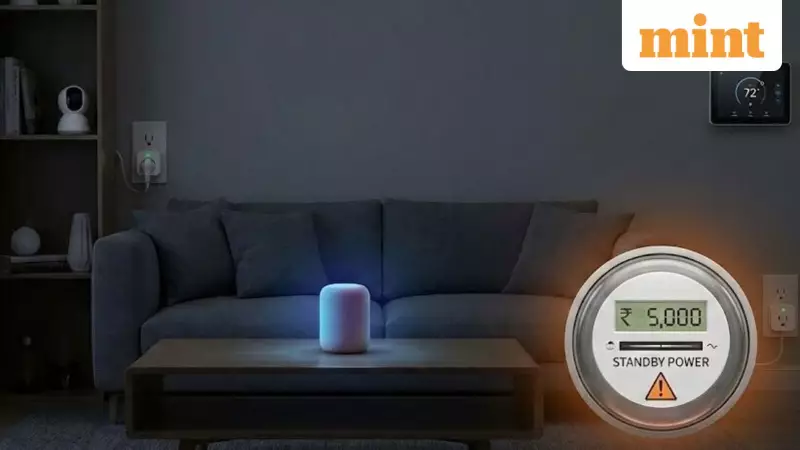
The convenience of smart homes comes with a hidden cost that many Indian households are discovering too late - steadily rising electricity bills. While voice-controlled lights and pre-scheduled appliances promise efficiency, they're quietly contributing to higher power consumption that hits your wallet every month.
The Always-On Energy Drain
Modern Indian homes are increasingly packed with connected devices that never truly power down. Smart plugs, security cameras, and voice assistants maintain constant readiness, drawing small amounts of electricity around the clock. What begins as a few watts per device quickly multiplies into significant energy consumption when you consider the typical urban Indian home might have multiple smart plugs, streaming devices, and security systems all operating simultaneously.
The problem intensifies with devices designed for constant operation. Security cameras and smart doorbells must remain active 24/7 to fulfill their purpose, continuously uploading footage and maintaining internet connectivity. Similarly, smart speakers wait endlessly for wake words, while televisions and streaming boxes sit in standby mode, ready to spring to life at the slightest command.

Automation Gone Wrong
Home automation, while promising efficiency, often creates its own energy problems when not properly configured. Motion sensors that trigger lights unnecessarily when pets move around, or climate control systems that operate "just in case" someone is home, can waste substantial electricity. Many users report conflicting routines where one automation turns devices on while another attempts to turn them off simultaneously.
Night-time activities represent another hidden energy cost. Firmware updates, cloud backups, and system checks typically occur during off-peak hours, keeping devices active when the household sleeps. These background processes, while individually small, contribute to what energy experts call "phantom load" - the cumulative energy consumed by devices in standby or low-power modes.
The Standby Mode Reality Check
That instant response capability consumers love about smart gadgets comes with an energy trade-off. Most devices never fully power down, instead operating in standby modes that continuously draw electricity. While a single device might consume only 1-5 watts in this state, a typical smart home with 10-15 connected devices can easily add 50 watts or more of constant power draw.
Over weeks and months, this persistent energy consumption translates into noticeable increases on electricity bills. For Indian households already grappling with rising power costs, these incremental additions can push monthly expenses significantly higher without any obvious change in usage patterns.
The solution isn't abandoning smart technology altogether, but rather adopting more mindful usage practices. Unplugging rarely used devices, optimizing automation schedules, and conducting regular energy audits can help control costs while maintaining the convenience that makes smart homes appealing. As Bharat Sharma highlighted in the original analysis published on 21st November 2025, sometimes simple fixes are all that's needed to reconcile smart living with sensible energy consumption.