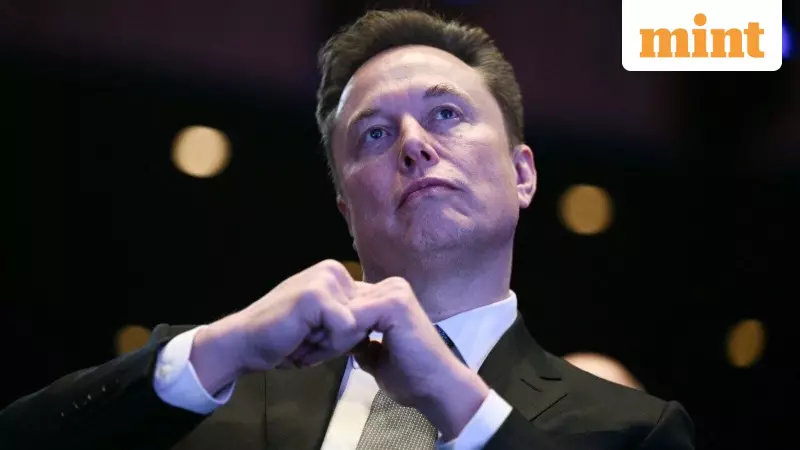
Elon Musk's High-Stakes Legal Battle Against OpenAI Heads to Trial in April
In a landmark case that could reshape the artificial intelligence industry, billionaire entrepreneur Elon Musk is taking OpenAI to federal court, with the trial scheduled to begin in April in Oakland, California. The lawsuit centers on Musk's early financial contributions to OpenAI and allegations that the AI giant misled him about its nonprofit intentions.
The Core of the Legal Dispute: Early Funding and Nonprofit Promises
According to recently unsealed court documents, Musk donated approximately $38 million to OpenAI during its formative years between 2015 and 2020. These funds were intended to support what Musk believed was a nonprofit mission dedicated to benefiting humanity through artificial intelligence development.
Musk, who currently holds the title of world's richest person, is now seeking between $79 billion and $134 billion in damages from OpenAI and its major investor Microsoft. The lawsuit alleges that OpenAI manipulated Musk into thinking he was contributing to a purely nonprofit venture, while the company's leadership had other plans for its corporate structure.

Power Struggles and Corporate Evolution
OpenAI was founded in 2015 by a group including current CEO Sam Altman and President Greg Brockman. While Musk served as the primary initial funder, tensions soon emerged over control of the venture. The power struggle between Musk and Altman culminated in Musk stepping down from OpenAI's board in 2018 and ceasing his financial contributions by 2020.
Since Musk's departure, OpenAI has experienced explosive growth, with the company currently raising as much as $100 billion in a funding round that could value the AI giant at approximately $830 billion. This dramatic transformation from a nonprofit to a highly valuable corporate entity forms the basis of Musk's legal claims.
Microsoft's Role in the Controversy
The lawsuit extends beyond OpenAI to include Microsoft, which Musk accuses of having knowingly aided and abetted OpenAI while benefiting from his early donations. Microsoft became an investor in OpenAI in 2019 and has since contributed billions to the company.
Following OpenAI's conversion to a more traditional corporate structure last fall, Microsoft's 27% stake was reported to be worth approximately $130 billion. Microsoft's legal team has formally denied Musk's allegations in court filings, setting the stage for a contentious courtroom battle.
Revelations from Unsealed Documents
In January, more than 100 documents were unsealed as part of the ongoing legal proceedings, offering unprecedented insight into the relationships between Silicon Valley's elite. The documents include:
- Text messages and emails between Musk and Altman
- Deposition transcripts from Musk, Altman, and Microsoft CEO Satya Nadella
- Private diary entries from OpenAI President Greg Brockman
One particularly revealing email from 2016 shows Musk advising Altman to pursue a cloud computing deal with Microsoft rather than Amazon, stating: I think Jeff is a bit of a tool and Satya is not, so I slightly prefer Microsoft. During his September deposition, Musk elaborated on this comment, noting his competitive relationship with Amazon founder Jeff Bezos through their respective rocket companies.
OpenAI's Response and Counterclaims
OpenAI has vigorously defended itself against Musk's allegations, publishing a blog post in mid-January titled The truth Elon left out. The company claims that its founders and Musk had actually agreed in 2017 that a for-profit structure would be the next phase for OpenAI, but negotiations collapsed when Musk demanded full control of the venture.

The company accuses Musk of cherry-picking snippets from Brockman's journal entries and characterizes the lawsuit as part of a broader strategy of harassment aimed at slowing OpenAI's progress while advancing Musk's own AI company, xAI. Musk founded xAI in 2023 as a direct competitor to OpenAI, and the company recently completed a $20 billion funding round in early January.
Evidence from Private Journals
Musk's legal team has pointed to private journal entries written by Brockman in 2017 as evidence that OpenAI's founders secretly had other plans regarding the company's corporate structure. In one entry, Brockman allegedly wrote: We've been thinking that maybe we should just flip to a for profit. Making the money for us sounds great and all.
During his September deposition, Brockman clarified that this entry referred to developing a revenue plan to pursue OpenAI's mission, suggesting the founders remained open to both nonprofit and for-profit approaches depending on funding availability.
As the April trial date approaches, this case promises to reveal unprecedented details about the inner workings of one of the world's most influential AI companies and the complex relationships between tech industry titans. The outcome could have significant implications for corporate governance, nonprofit accountability, and the future development of artificial intelligence technologies.