

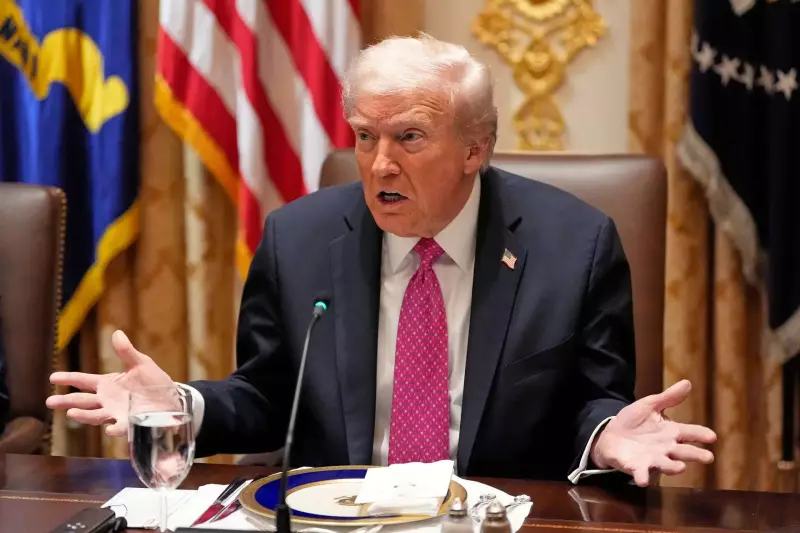
In a significant move that could shape the future of American technology, former US President Donald Trump has issued an urgent call for Congress to establish a single federal standard for artificial intelligence regulation. He warned that America's current patchwork of state-level rules threatens the nation's crucial lead over China in the intensifying global AI competition.
Republican Push Faces Bipartisan Resistance
Taking to his Truth Social platform, Trump expressed clear frustration with what he sees as overregulation by individual states, arguing this undermines AI-driven economic growth. "If we don't, then China will easily catch us in the AI race," he declared in his post, highlighting the high stakes involved.
The former president specifically urged lawmakers to include the AI measure in the upcoming National Defense Authorization Act or pass it as a separate bill, advocating for "one Federal Standard instead of a patchwork of 50 State Regulatory Regimes."

However, this Republican-led initiative faces substantial resistance across party lines. Trump's intervention comes as House Majority Leader Steve Scalise explores reviving a controversial moratorium on state AI laws—an effort that crashed spectacularly this summer when 99 senators rejected it during budget negotiations.
Republican Senators Marsha Blackburn and Josh Hawley have championed state-led initiatives protecting children from AI threats, while Florida Governor Ron DeSantis has publicly opposed what he views as the latest federal overreach attempt. Both conservative and liberal states have already enacted AI regulations that would be swept away by federal preemption. California mandates security protocol disclosures from major AI developers, while other states have pursued varied approaches addressing everything from copyright protections to child safety measures.
Innovation Concerns Fuel Regulatory Debate
The debate centers on whether unified federal standards or diverse state regulations better serve American interests in the AI race. Silicon Valley giants and trade groups like NetChoice argue that navigating 50 different regulatory regimes stifles innovation and surrenders ground to China's streamlined approach.
Adding weight to this argument, Nvidia CEO Jensen Huang has publicly warned that Beijing's unified regulatory framework gives Chinese AI companies a decisive strategic advantage in the global marketplace.
Yet critics fear overly broad federal language could inadvertently block crucial protections, including children's online safety laws and copyright controls. The debate underscores deeper tensions between accelerating AI development and implementing safeguards against fraud, job displacement, and threats to democratic processes.
Congress faces a tight December deadline for finalizing defense legislation, with more details on potential AI language expected before Thanksgiving. The outcome will determine whether the United States maintains a unified front in the critical technological competition with China or continues with a fragmented regulatory approach that some argue benefits America's competitors.






