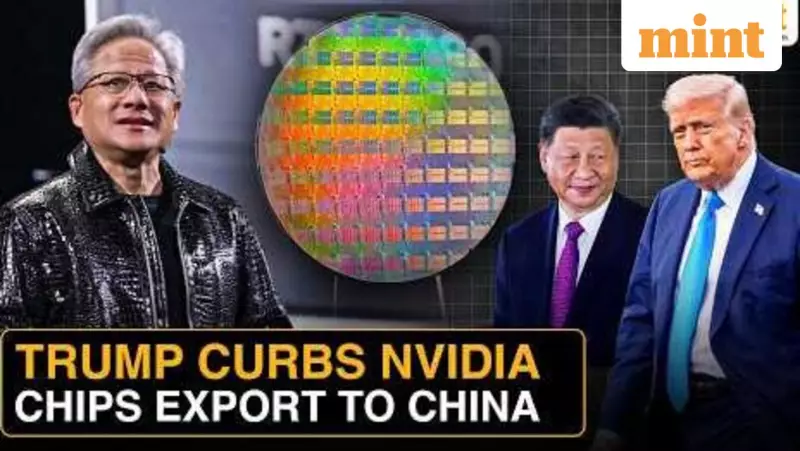
In a significant escalation of the technological cold war, former US President Donald Trump has declared his intention to block Nvidia from shipping its cutting-edge Blackwell chips to China, asserting that American semiconductor technology maintains a formidable decade-long advantage over global competitors.
The Blackwell Chip Embargo
During a recent public appearance, Trump revealed plans to prevent the California-based tech giant from exporting its most advanced artificial intelligence processors to Chinese markets. "Those chips are made here," Trump emphasized, "and they're not going to any country that shouldn't have them."
Technological Supremacy Claim
The former president made bold claims about America's semiconductor dominance, stating that current US chip technology, particularly Nvidia's Blackwell architecture, stands approximately ten years ahead of competing nations. This declaration underscores the strategic importance of semiconductor manufacturing in global power dynamics.

Nvidia's Position in the AI Revolution
Nvidia has emerged as the undisputed leader in the artificial intelligence hardware space, with its processors becoming essential infrastructure for training and running advanced AI models worldwide. The Blackwell platform represents the company's latest breakthrough, offering unprecedented computational power for machine learning applications.
Broader Implications for Tech Industry
This proposed export restriction signals a potential hardening of US technology transfer policies toward China. The move could significantly impact:
- Chinese technology companies' access to cutting-edge AI hardware
- Global supply chains for advanced computing components
- The competitive landscape in artificial intelligence development
- International trade relations in the technology sector
Historical Context of Tech Restrictions
The United States has progressively tightened controls on advanced technology exports to China in recent years, citing national security concerns. Previous administrations have implemented various restrictions on semiconductor equipment and design software, but Trump's latest statements suggest an even more aggressive approach toward preserving American technological superiority.
Industry analysts suggest that such restrictions could accelerate China's domestic chip development efforts while potentially creating market opportunities for alternative suppliers in other regions. The global technology community watches closely as these geopolitical tensions continue to reshape the semiconductor industry landscape.