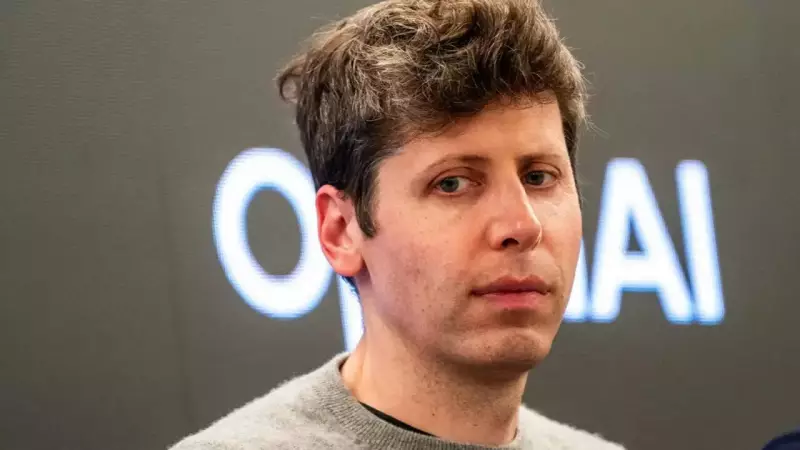
OpenAI CEO Sam Altman Turns to Middle East for Fresh Capital Injection
In a strategic pivot, OpenAI CEO Sam Altman is now actively seeking funding from a new market: the Middle East. This move comes at a critical juncture for the artificial intelligence giant, which is grappling with internal challenges and financial pressures despite its staggering $500 billion valuation. The development follows a stark warning from veteran investor George Noble, who cautioned that the AI company is "falling apart in real time".
Middle Eastern Sovereign Wealth Funds in Focus
According to a Bloomberg report, OpenAI is currently engaged in discussions with Middle Eastern sovereign wealth funds to secure investments for a new multibillion-dollar funding round. A source familiar with the confidential talks revealed that this investment round is expected to total approximately $50 billion, although the final figures may be subject to change. It is important to note that term sheets have not yet been signed, indicating that negotiations are still in progress.
Sam Altman is personally involved in these efforts, having recently visited the United Arab Emirates to participate in the investment discussions. The funding round is anticipated to be finalized by the first quarter of the year, marking a significant step in OpenAI's ongoing capital-raising endeavors.

OpenAI's Meteoric Rise and Previous Funding Success
OpenAI ignited the global AI boom with the launch of its revolutionary chatbot, ChatGPT, in 2022. Since then, the company has emerged as one of the world's fastest-growing commercial entities, attracting billions of dollars in investment as it expands its operations, develops new AI models, and introduces innovative features.
The company's fundraising history is impressive:
- Last year, OpenAI closed a monumental $40 billion financing round led by SoftBank, which stands as the largest private tech funding round on record.
- This round saw participation from core investor Microsoft, along with other notable firms such as Coatue, Altimeter, and Thrive.
- In October, OpenAI further bolstered its financial position by selling $6.6 billion worth of shares, elevating its valuation to an astounding $500 billion.
Investor George Noble's Grave Concerns About OpenAI
George Noble's warning sheds light on several alarming indicators that suggest OpenAI is facing substantial headwinds. One of the most concerning developments is the internal "Code Red" memo from December 2025, in which Sam Altman allegedly instructed employees to abandon all other tasks as Google's Gemini began to challenge ChatGPT's dominance in the AI landscape.
This threat has materialized in tangible ways:
- ChatGPT has experienced a decline in traffic for two consecutive months.
- Meanwhile, Google's Gemini has surged to an impressive 650 million monthly active users.
The financial challenges are particularly severe. Noble highlights Microsoft's disclosures, which indicate that OpenAI spent a staggering $12 billion in a single quarter. Deutsche Bank projects that the company will accumulate a daunting $143 billion in total losses before it can achieve profitability. Even OpenAI's own video tool, Sora, incurs a daily operational cost of $15 million, prompting the lead engineer to admit that the economics are "completely unsustainable."
Talent Exodus and Product Setbacks
OpenAI is also contending with a significant talent drain. Key personnel, including Chief Scientist Ilya Sutskever, CTO Mira Murati, and half of the AI safety team, have departed the company. This exodus compounds the challenges posed by product performance issues.
For instance, the launch of GPT-5 was met with widespread disappointment, as users found it underwhelming and complained about its capabilities in basic tasks such as math and geography. The backlash was so intense that OpenAI had to reinstate GPT-4 within 24 hours. Subsequent releases, including GPT-5.1 and GPT-5.2, have faced similar criticisms for being too corporate, safe, and robotic.

Legal Challenges and Future Projections
Adding to OpenAI's woes is a high-stakes lawsuit from Elon Musk, valued at up to $134 billion. A federal judge has ruled that the case will proceed to a jury trial in April, citing substantial evidence that OpenAI may have breached promises to maintain its nonprofit structure—a commitment that initially secured Musk's $38 million in early funding.
Noble's analysis concludes that the AI hype cycle is reaching its peak just as reality sets in. He estimates that OpenAI needs to grow its revenue by 15 times over the next five years to justify its projections, all while costs continue to escalate. In his own words, "Someone is going to lose a phenomenal amount of money."
As OpenAI navigates these turbulent waters, its pursuit of Middle Eastern funding represents a crucial effort to stabilize its operations and sustain its ambitious growth trajectory in an increasingly competitive and scrutinized AI market.