In a significant development that has captured global attention, NASA has officially debunked widespread rumors suggesting that the interstellar comet 2I/Borisov might be an alien spacecraft. The space agency has released detailed images and scientific data that conclusively prove the object's natural cometary origins.
The Interstellar Visitor That Sparked Speculation
The story began when astronomers discovered an unusual object traveling through our solar system in late 2019. Designated as 2I/Borisov, this marked only the second known interstellar object to visit our cosmic neighborhood after the famous 'Oumuamua in 2017. What made this discovery particularly intriguing was the object's mysterious characteristics and unusual trajectory.
As images and data started circulating, speculation ran wild across social media platforms and conspiracy theory circles. Some enthusiasts claimed the comet's behavior and appearance suggested it might be an artificial object - possibly an alien probe or spacecraft. These theories gained traction online, creating significant public interest and confusion about the true nature of this interstellar visitor.

NASA's Scientific Investigation and Findings
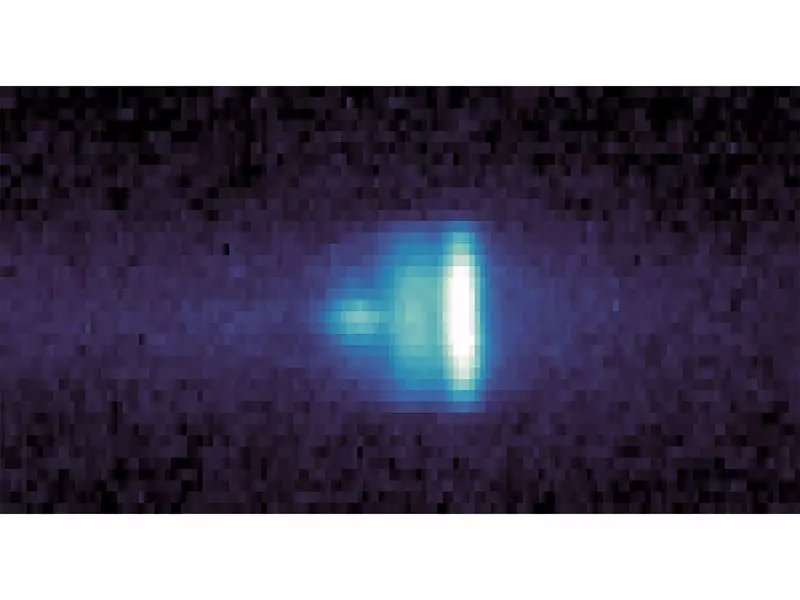
NASA stepped in to address these rumors with concrete scientific evidence gathered through the Hubble Space Telescope. Between December 2019 and January 2020, Hubble captured multiple high-resolution images of the comet as it made its closest approach to the Sun. These observations provided crucial data that allowed scientists to study the object's composition and behavior in unprecedented detail.
The research team, led by prominent astronomers, analyzed the comet's structure and found it exhibited classic characteristics of a natural comet. David Jewitt, a planetary science professor at UCLA, who led the Hubble team, explained that they observed the comet fragmenting as it swung around the Sun. This fragmentation process, captured in multiple Hubble images, clearly demonstrated the object's icy composition and natural origins.
The scientific community emphasized that while 2I/Borisov originated from outside our solar system, its behavior and characteristics align perfectly with what astronomers expect from comets. The observed dust cloud and gaseous emissions match patterns seen in countless other comets that originate from within our own solar system.
Putting Alien Spacecraft Theories to Rest
The detailed analysis revealed that 2I/Borisov has a nucleus approximately 500 meters across - about the length of five football fields. This size, combined with its observed composition and behavior, makes the alien spacecraft theory scientifically implausible. The fragmentation events observed by Hubble provided particularly compelling evidence against artificial origins, as no known spacecraft would exhibit such natural disintegration patterns when exposed to solar heat.
Scientists also noted that the comet's trajectory and speed - traveling at approximately 100,000 miles per hour - are consistent with natural interstellar objects ejected from their home star systems through gravitational interactions. The research team confirmed that 2I/Borisov likely came from a red dwarf star in the constellation Cassiopeia, further supporting its natural origins.
This isn't the first time interstellar objects have sparked alien speculation. The first known interstellar visitor, 'Oumuamua, also generated similar debates within the scientific community and among the general public. However, in both cases, thorough scientific investigation has consistently pointed toward natural explanations.
Significance for Future Space Research
The study of 2I/Borisov represents a landmark achievement in astronomy. As only the second confirmed interstellar object studied in detail, it provides valuable insights into planetary formation in other star systems. The comet's composition suggests that the processes that form comets around other stars may be remarkably similar to those in our own solar system.

NASA's successful debunking of the alien spacecraft theory demonstrates the importance of relying on scientific evidence rather than speculation. The agency continues to monitor the skies for unusual objects while maintaining a commitment to sharing accurate, evidence-based information with the public.
As technology advances and our ability to detect interstellar objects improves, astronomers expect to discover many more visitors from other star systems. Each new discovery will provide additional opportunities to study the diversity of planetary systems throughout our galaxy, while also requiring careful scientific analysis to separate fact from fiction.