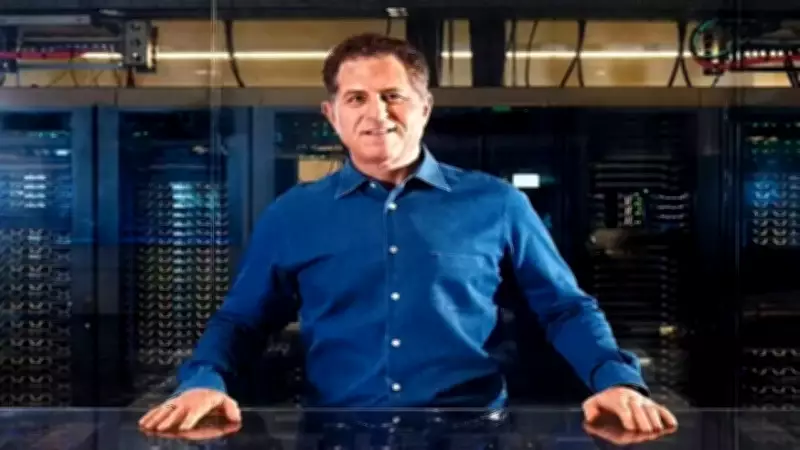
Success is rarely a straight path, and every success story has a unique narrative. In today's world, the conventional wisdom dictates: study hard, earn good grades, attend a prestigious university, obtain the right degree, and everything else will fall into place. This narrative is perpetuated by parents, reinforced by educational systems, and repeated so often that it is accepted as the natural order of things. Michael Dell has spent his entire career proving this notion wrong. The founder and CEO of Dell Technologies did not follow this prescribed route. He did not graduate with honors. He never completed his degree. Instead, he dropped out of university at the age of nineteen to sell computers from his dorm room. From that decision, he built a global empire.
Quote of the Day by Michael Dell
"You don't have to be a genius or a visionary or even a college graduate to be successful. You just need a framework and a dream."
What the Quote Actually Means
At first glance, this quote might appear to be a simple reassurance. However, there is a more substantive idea beneath it, one that reflects how Dell actually built his company and how he views success. The quote dismantles three common assumptions about what success requires.

The First Assumption: Genius
There is a tendency to look at founders of great companies and assume they succeeded due to extraordinary, innate intelligence that sets them apart. Dell challenges this. Genius is not the most important variable because many highly intelligent people never create anything of lasting value.
The Second Assumption: Vision
It is often said that great entrepreneurs possess a unique ability to foresee the future, a mystical gift to perceive opportunities invisible to others. Dell does not dismiss the value of good ideas, but he suggests that vision alone is insufficient and not as rare as commonly believed.
The Third Assumption: The Degree
This is perhaps the most culturally loaded assumption. The belief that a formal education, especially a university degree from a respected institution, is a prerequisite for meaningful success is deeply embedded in many societies. Dell's quote and his career directly challenge this notion.
What Dell proposes instead is simpler and, in some ways, more demanding: a framework and a dream. A dream provides direction. A framework provides structure—a practical system for organizing efforts, making decisions, and moving consistently in the right direction. Neither requires genius. Neither requires a specific educational credential. Both require clarity, commitment, and the willingness to persist when challenges arise.
Why This Message Matters Today
The pressure to follow a specific path to success has not diminished since Dell dropped out of his dorm room. If anything, it has intensified. The cost of university education has skyrocketed. Competition for places at elite institutions is fiercer than ever. Social media has created a new layer of comparison anxiety, making it easier to feel that everyone else is ahead, better qualified, and more certain of their direction. In this environment, Dell's quote serves as a practical corrective, not an empty slogan. It does not claim that hard work is unimportant, that planning is optional, or that desire alone guarantees achievement. Instead, it offers a more specific and useful insight: the qualities that actually drive success are not limited to the naturally gifted or formally educated. They are available to anyone willing to cultivate them. The framework and the dream. Two things. Neither requires genius. Neither requires a diploma. Both require a decision.
A Simple Takeaway
Michael Dell built one of the world's greatest technology companies from a university dormitory with a thousand dollars, no degree, and no guarantee of success. What he had was a clear idea, a practical model for executing it, and the willingness to bet on himself when the conventional path advised staying put.

About the Author: TOI Tech Desk
The TOI Tech Desk is a dedicated team of journalists committed to delivering the latest and most relevant news from the world of technology to readers of The Times of India. Their coverage spans gadget launches, reviews, trends, in-depth analysis, exclusive reports, and breaking stories that impact technology and the digital universe. From how-tos to the latest in AI, cybersecurity, personal gadgets, and platforms like WhatsApp, Instagram, and Facebook, the TOI Tech Desk brings news with accuracy and authenticity.