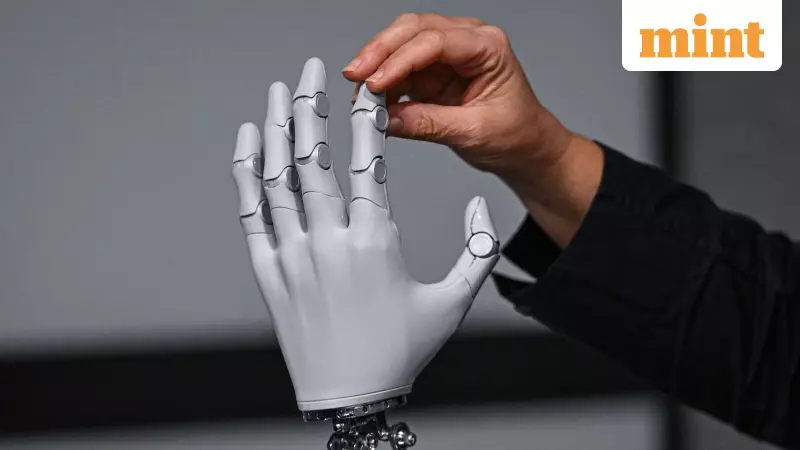
While global tech leaders dream of AI curing cancer or eliminating poverty, China is deploying artificial intelligence for a more immediate and monumental task: reinforcing its position as the world's factory floor. Faced with a shrinking workforce, rising domestic costs, and international trade pressures, the nation is undergoing a rapid, large-scale industrial transformation powered by robots and AI.
The Scale of Automation: Robots and AI Take Charge
The numbers behind China's automation push are staggering. According to the International Federation of Robotics, China installed 295,000 industrial robots last year. This figure is nearly nine times the number installed in the United States and exceeds the combined total for the rest of the world. By 2024, China's stock of operational robots had surged past two million, the largest of any country.
This robot rollout is part of a broader technological embrace. The World Economic Forum has recognized 45 sites in mainland China for their advanced use of technologies like AI to boost productivity, compared to just three in the U.S. The driving force is a sense of urgency from Communist Party leaders who fear China could lose its foundational manufacturing status.

AI in Action: From Factory Brains to Smart Ports
The transformation is visible across diverse industries. In Jingzhou, home appliance giant Midea operates a washing-machine factory under the command of an AI "factory brain." This system acts as a central nervous system, coordinating 14 virtual agents that communicate to optimize tasks on the factory floor. The result is a more flexible, productive operation where humanoid robots transport components and AI-powered glasses help human workers identify errors in seconds instead of minutes.
The push for efficiency is also revolutionizing China's logistics backbone. At the Port of Tianjin, one of the country's largest, a fleet of self-driving trucks whiz about and an AI system called OptVerse AI Solver manages complex scheduling. Planning that once took 24 hours now concludes in just 10 minutes. The port has also developed PortGPT, an AI model that analyzes video with the potential to replace human safety officers.
This automation extends to heavy industry. At Baosteel's "dark factory" in Shanghai, AI has reduced the need for human intervention from once every three minutes to once every thirty minutes. In the cement sector, Conch Group, partnering with Huawei, uses AI to predict the strength of a key ingredient with over 85% accuracy, leading to significant coal savings.
The Driving Forces and Global Implications
China's aggressive adoption of AI is a strategic response to several critical challenges:
- A shrinking population, projected to fall by 200 million in the next three decades.
- Higher factory wages that outpace competitors like India.
- A shortage of skilled manufacturing labor, which Beijing forecast could reach 30 million people this year.
- External pressures, including tariffs from the US under the Trump administration.
Chinese leaders are betting that AI-driven productivity gains will offset job losses in manufacturing. The country also holds a cultural advantage; a survey found that 83% of Chinese respondents believe AI is more beneficial than harmful, double the level of optimism found in the U.S.
However, China's path is not without obstacles. It continues to lag the U.S. in frontier AI technology and advanced chips, hampered by American export controls. Yet, the emergence of models like DeepSeek demonstrates the skill of Chinese engineers. The lack of independent labor unions in China also allows for faster deployment of automation, a stark contrast to the U.S., where unions have successfully negotiated limits on AI and automation in ports.
As China's Vice Minister of Industry and Information Technology, Zhang Yunming, stated, embracing AI is "a necessary task and not an optional one." For China, the race is not just about technological supremacy, but about securing its economic future.